Work of Art

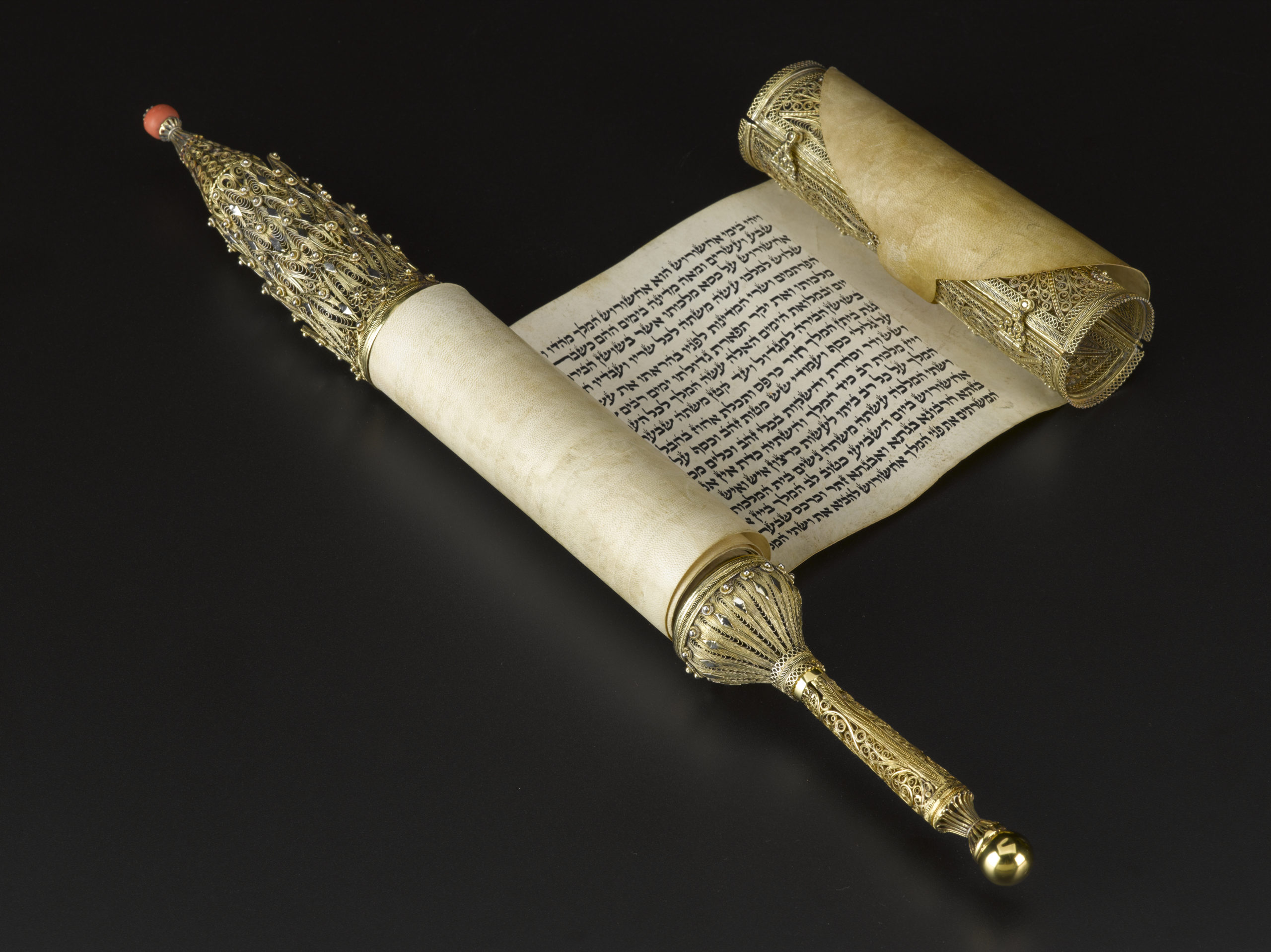
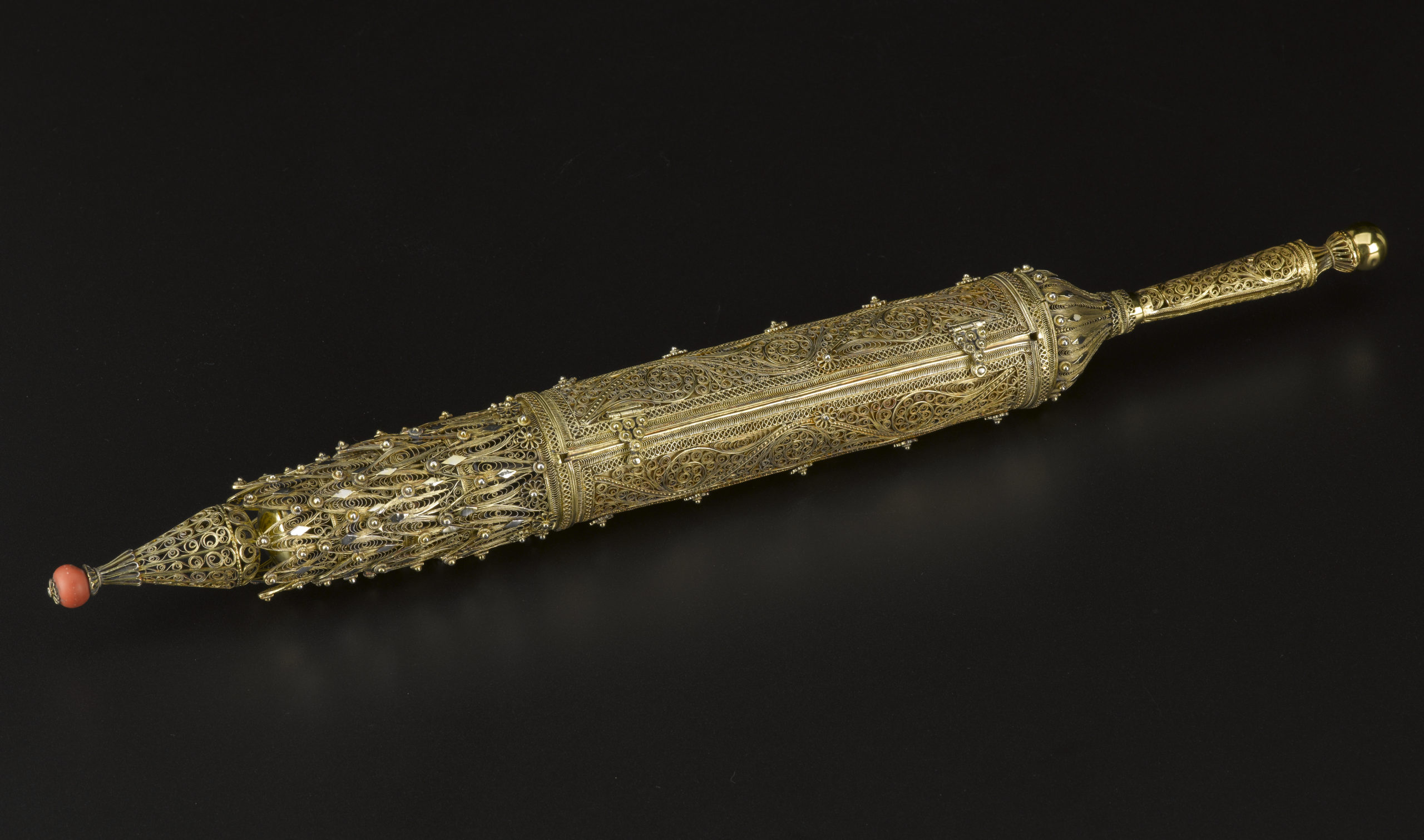
Esther Scroll and Case

Created
1800s
Artist
Artist Unknown
Dimensions
17 1/16 inches (43 centimeters)
Credit

Gift of Dr. and Mrs. Robert Lacin

Object Number
2007.9
Classification
Metal
Department
Judaic

Key Ideas

  • This rare ornamental case contains a handwritten scroll of the Book of Esther, one of the books from the Writings section (Kituvim in Hebrew) in the Hebrew Bible. It comes from a Jewish community in the Ottoman Empire (present-day Turkey).
  • Traditionally the Book of Esther (Megillat Ester in Hebrew) is read aloud in the synagogue during the festival of Purim. It celebrates how Esther, one of the king’s wives, was a courageous woman who helped save her Jewish community from disaster.
  • The Megillat Ester is written in Hebrew on vellum or parchment (made from the skin of a kosher animal) and rolled on a handle within a protective case.

Learn More

Jewish communities were located across a wide expanse of the Ottoman Empire. Among the Jews of Izmir (Western Turkey on the coast of the Aegean Sea) under the Ottoman Empire, it was customary for the father of a “marriageable” daughter to present a prospective suitor with an Esther scroll in a lavishly decorated case.

The fish motifs on this Esther scroll case have symbolic meaning. Purim occurs during the Hebrew month of Adar, and its zodiac symbol is Pisces (fish). The fish images also represent a biblical text that refers to fish in terms of fertility. These types of scrolls often served as engagement gifts. 

Read Less Keep Reading

Additional Resources

Resources for Teachers:


Resources for Students:

Read Less Keep Reading

Related Concepts

Learn More

Share