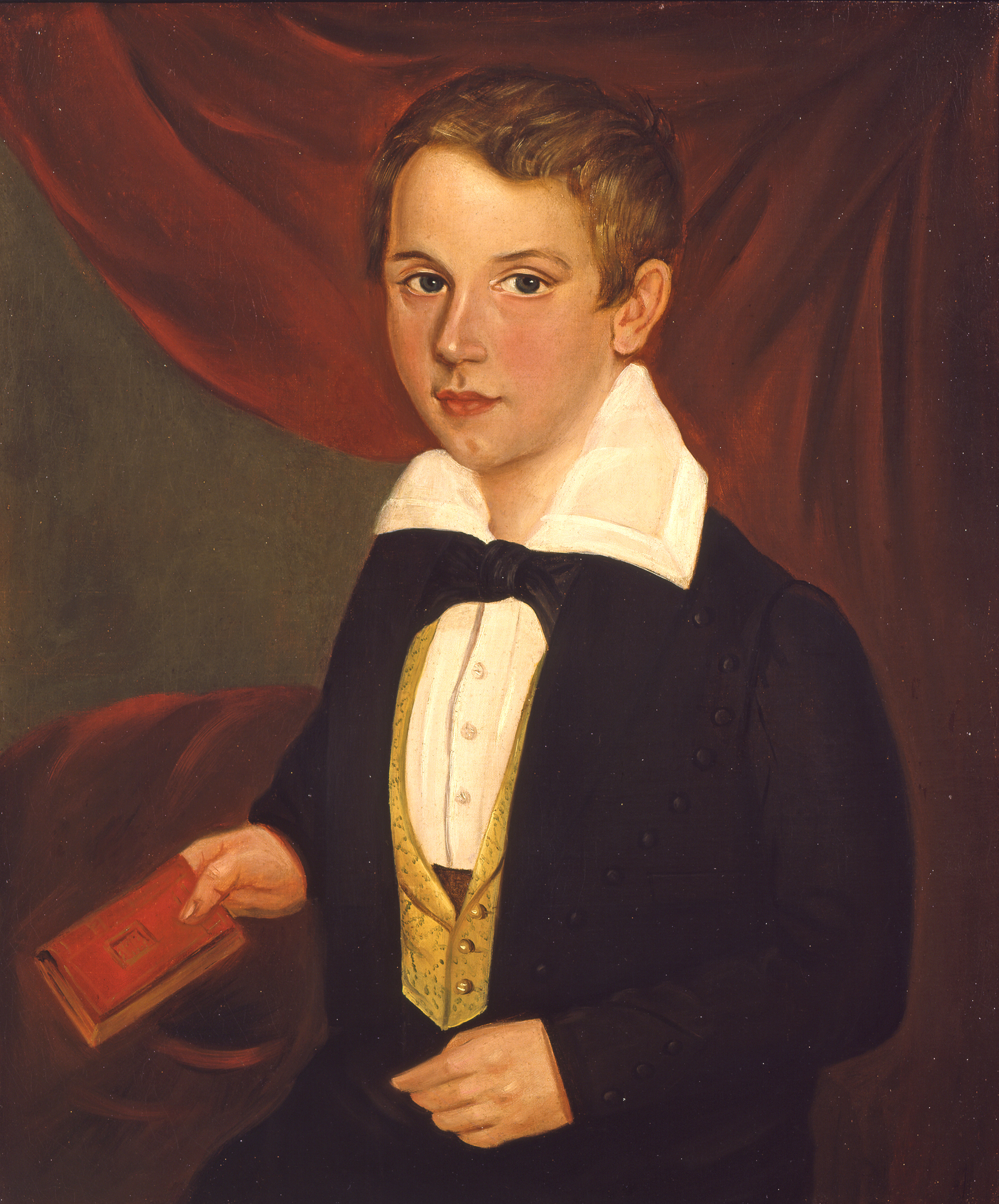
Portrait of a Boy depicts a young boy whose name is unknown. This is unusual because portraits are generally made to remember a specific person. Even without his name, the painting gives us clues about the boy’s life. He wears neat clothing and holds a book, which suggests that he came from a family with some wealth and that he was being educated. The painting shows how families valued education and wanted to present themselves in a certain way. It also shows how artists helped document their communities.
The artist who created this painting, Jacob Marling, was one of the first professional painters to live and work in Raleigh. He moved to Raleigh in the early 1800s to find work. At that time he may have been the only trained artist in the city. He became known for painting people and places in careful, accurate detail.
Marling painted Raleigh residents as well as state leaders. One of his subjects was William Blount, a leader during the War of 1812 and a member of the state government. Like the boy in this portrait, the general is shown holding a book. This detail may have been used to show learning, intelligence, or social status.
In addition to painting portraits, Marling painted images of government buildings, including the North Carolina State Capitol before it was destroyed by fire in 1831. His work remains an important record of the past.
Marling also played several roles in his community. He worked as an art teacher and decorator, and he helped manage one of North Carolina’s earliest museums. The North Carolina Museum opened in 1813 and served as a place for reading and object-based learning about the state’s history.
tags: fashion, drapery, childhood