Artist

Jan Brueghel the Elder

Nationality
Flemish
Birth/Death
1568-1625

Learn More

Work of Art

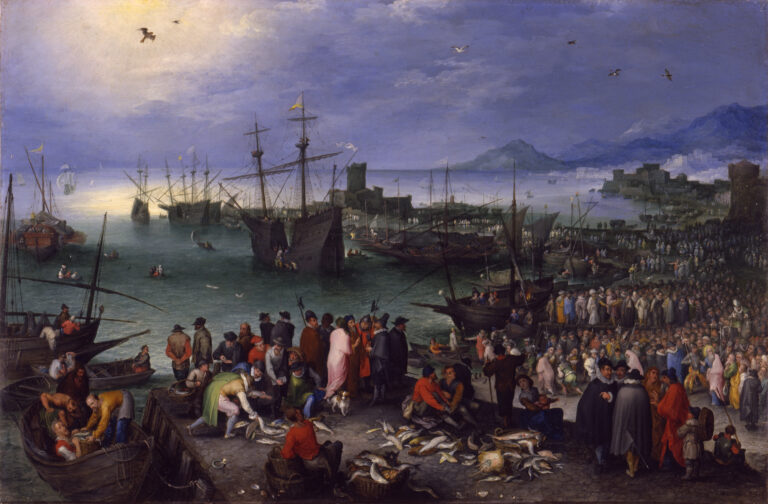
Harbor Scene with St. Paul’s Departure from Caesarea

Artwork by Jan Brueghel the Elder
Work of Art
Harbor Scene with St. Paul’s Departure from Caesarea

About

Jan Brueghel the Elder was a member of a family of artists (notably his father and his brother). He is known as “the Elder” because his son, also named Jan, became a well-known painter. Brueghel (the Elder) was nicknamed the “Velvet Brueghel” because of his ability to paint fine details. He worked mostly in Antwerp, Belgium, which became a major port city and cultural hub during his lifetime. Jan chose a wide and varied range of subject matter for his pictures, including still lifes, landscapes, allegorical and mythological subjects, and religious scenes. He was a prominent member of the painters’ guild and a close friend and collaborator with Peter Paul Rubens.

From Wikipedia

source content
Jan Brueghel the Elder ( BROY-gəl, US also BROO-gəl; Dutch: [ˈjɑm ˈbrøːɣəl] ; 1568 – 13 January 1625) was a Flemish painter and draughtsman. He was the younger son of the eminent Flemish Renaissance painter Pieter Bruegel the Elder, and brother to Pieter Brueghel the Younger. A close friend and frequent collaborator with Peter Paul Rubens, the two artists were the leading Flemish painters in the Flemish Baroque painting of the first three decades of the 17th century. Brueghel worked in many genres including history paintings, flower still lifes, allegorical and mythological scenes, landscapes and seascapes, hunting pieces, village scenes, battle scenes and scenes of hellfire and the underworld. He was an important innovator who invented new types of paintings such as flower garland paintings, paradise landscapes, and gallery paintings in the first quarter of the 17th century. However, he generally avoided painting large figures, as in portraits, though he…