Devorah Sperber is an American artist based in Marin County, California. Sperber uses everyday materials to create mixed media artworks that reinvent famous works of art. She is interested in exploring the reproduction of images in the digital era. She uses her work to explore visual perception (how the eye and brain make sense of the visual world) and the intersection of art and technology.
I am interested in the link between art, science, and technology, how the eyes and brain prioritize, and reality as a subjective experience vs. an absolute truth. As a visual artist, I cannot think of a topic more stimulating and yet so basic, than the act of seeing—how the human brain makes sense of the visual world.
Devorah Sperber (from her artist statement)
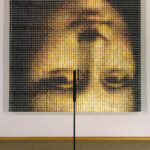
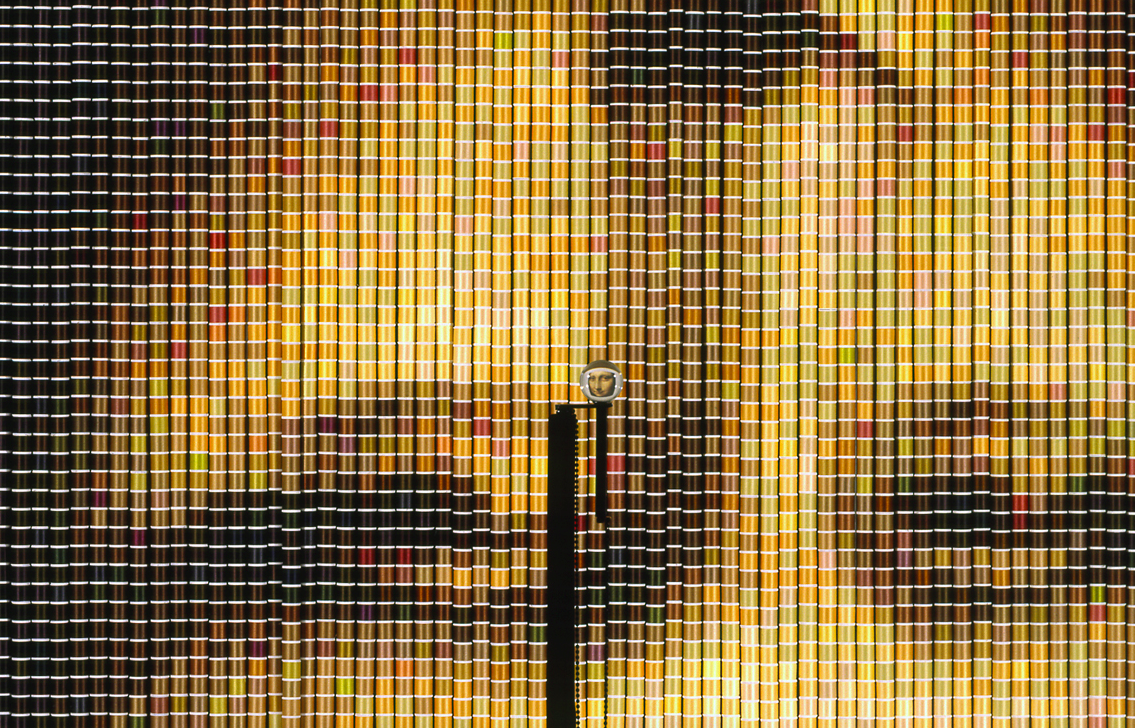
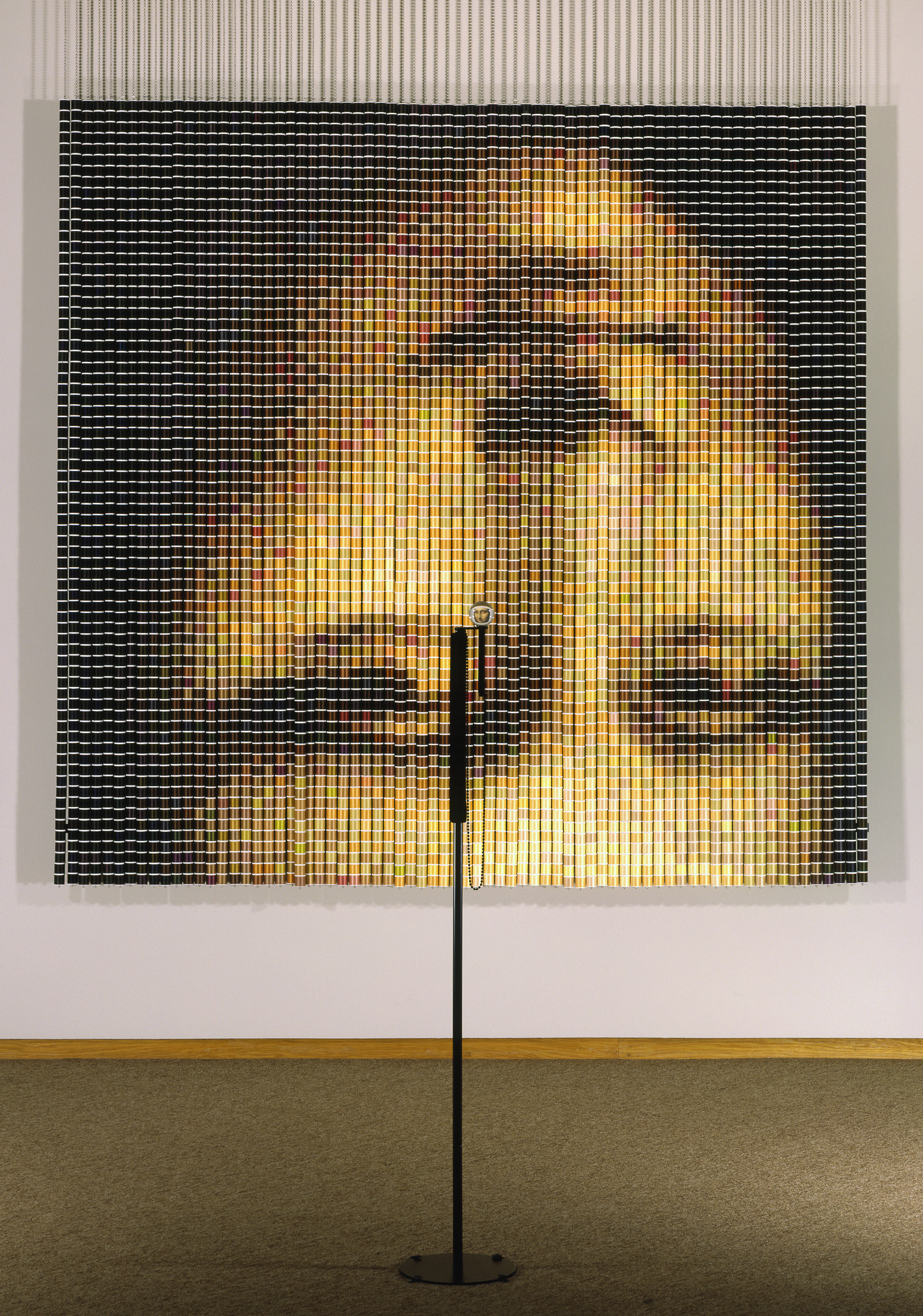
Sperber starts by scanning a reproduction of a painting to create a color-charted map. She remakes the map in three dimensions using small objects to mimic the color pixels of the image. In After the Mona Lisa 2, each spool of thread functions like a color pixel in a digital image. The arrangement of the colored spools in a specific order creates the image of an upside-down Mona Lisa. Viewing the work through the acrylic sphere simulates peripheral vision. It flips the image right side up and shrinks it until the image is recognizable.
The Mona Lisa is a famous painting by Leonardo Da Vinci. It is a half-length portrait of a woman, considered to be Lisa del Gioncondo. Da Vinci painted it around 1503 to 1506, during the Italian Renaissance. The painting was acquired by King Francis I of France after Da Vinci’s death. It has been on display at the Louvre Museum in Paris since 1797.
tags: optics, reuse, observation, order, problem solving, variation, physics