Two months after the signing of the Declaration of Independence, Benjamin Franklin traveled to France. His mission was clear. He needed to convince the French government to help the American colonies in their fight against Britain.
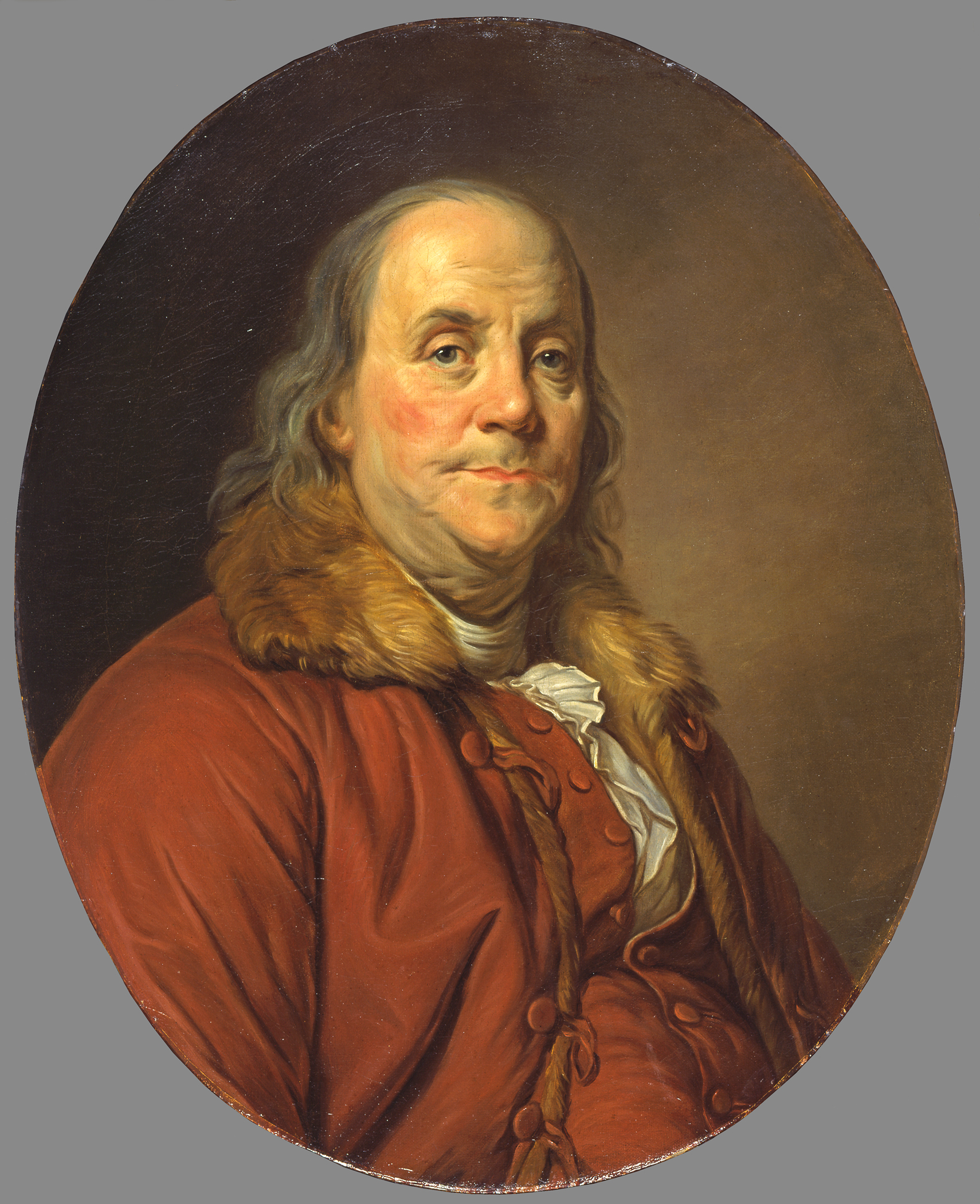
Franklin quickly became famous in France. Many people saw him as a symbol of the “New World.” He was seen as smart, independent, and guided by reason. Franklin understood that this image could help his cause, so he did little to change it. He dressed simply and acted modestly, which made him stand out in a society that was impressed by fancy clothes and formal manners. Scientists, writers, diplomats, and wealthy hosts wanted to meet Franklin. Soon his face was everywhere. Artists painted and sculpted him. His image was even featured on everyday items like snuffboxes and chamber pots.
This portrait of Franklin was painted by Joseph Duplessis, a well-known French artist. Duplessis is best known for his 1785 portrait of Benjamin Franklin, which is featured on the $100 bill. In this painting Duplessis depicts Franklin as wise, calm, and determined. He wears simple clothing, without a powdered wig or decorated jacket. The portrait became so popular that Duplessis was asked to paint many copies. This version is one of those replicas.
tags: communication, identity, perspective, place, US History