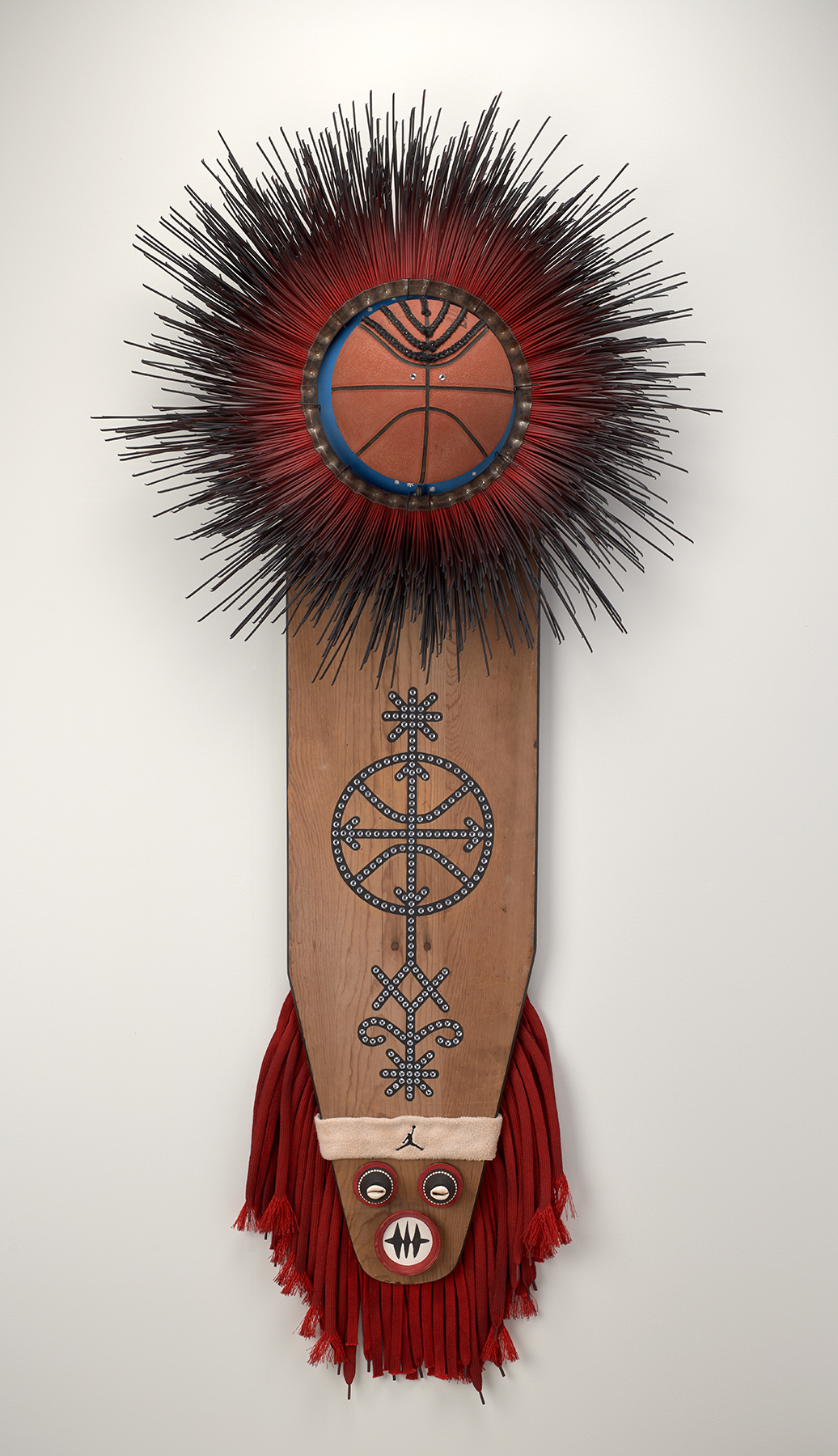
Black Magic (It’s Fantastic) is part of a series about basketball and black athletes. This work is especially important when taken in a geographic context. North Carolina has played a key role in the desegregation of professional sports. In 1944 an all-white basketball team from Duke University and an all-black basketball team from North Carolina Central University (NCCU) met secretly to play one another in the first racially integrated college basketball game in the American South. The game had to be kept secret from the public and the media because it violated the state’s strict segregation laws.
For many people, this rare moment of racial collaboration and mutual respect felt magical. The “Secret Game” was the beginning of the integration of professional sports, or the “Black Magic” era, as it is now known, as the students from NCCU beat Duke by 119-34. Raleigh-based artist André Leon Gray references this historic event in the title of this work.
“This piece was inspired by African masks and also a little bit of Native American iconography. The idea behind it was more about the appearance of Black athletes in sports, whether collegiate level or professional level, and how they seem to defy gravity. The name…Black Magic…[is] this idea of having this kind of otherworldly powers on the basketball court.”
-André Leon Gray
The sculpture’s form and decoration resemble the plank masks created by the Bwa people in central Burkina Faso, in West Africa. Plank masks are carved out of respect for Bwa ancestors and are used in ritual performances like funerals, agricultural festivals, and rites of passage. Black Magic (It’s Fantastic) incorporates symbols of Black culture, such as cowrie shells that often adorn African ritual objects, braided hair that acknowledges the importance of hairstyling and barbering in Black cultures, and various basketball-related items such as a ball, shoelaces, and a Jordan Jumpman headband.