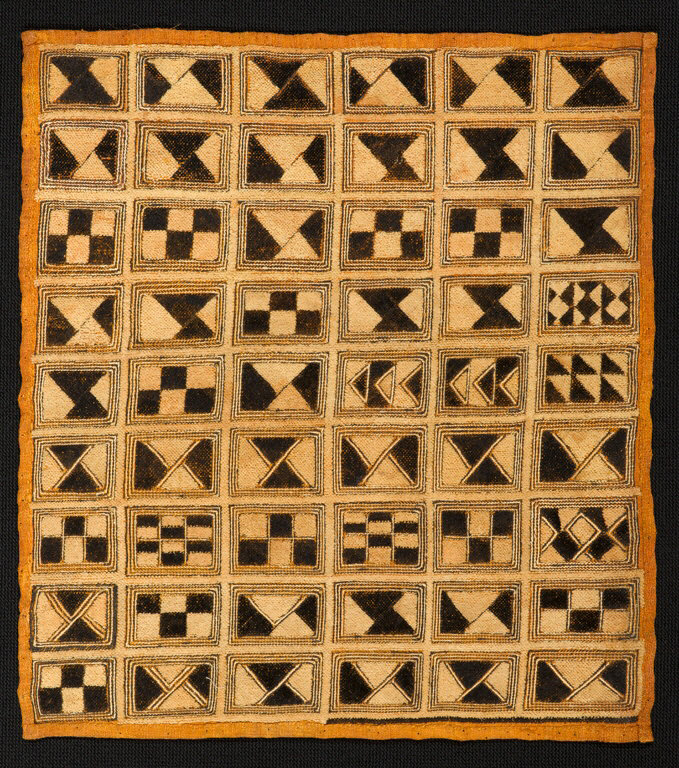
Kuba textiles have long been valued for their artistry and creative designs. Rectangular cut-pile panels were often used as prestige items and diplomatic gifts. They could also show a person’s social status and wealth. The textiles were sometimes used in sacred burial ceremonies.
Hundreds of years ago, artists from the Shoowa chiefdom, part of the Kuba Kingdom, became famous for their detailed textile designs. This tradition continues today. Men traditionally weave the cloth from raffia palm fibers. Women then add designs using embroidery and looping techniques. Each person’s work helps create the finished textile.
One of the most distinctive features of cut-pile embroidery is its raised surface. To create cut-pile, artists loop thread through the woven cloth and cut the loose ends. This creates dense areas of short fibers with a soft, plush texture. Because this texture is similar to velvet, cut-pile textiles are sometimes called Kasai velvet. These textiles were highly valued by royal courts in the Kuba region and in Europe as early as the 1700s.
Kuba artists use many shapes, colors, and textures to create a wide range of geometric patterns. They continue to use traditional techniques while creating new designs. Kuba methods and patterns have also influenced modern artists around the world.