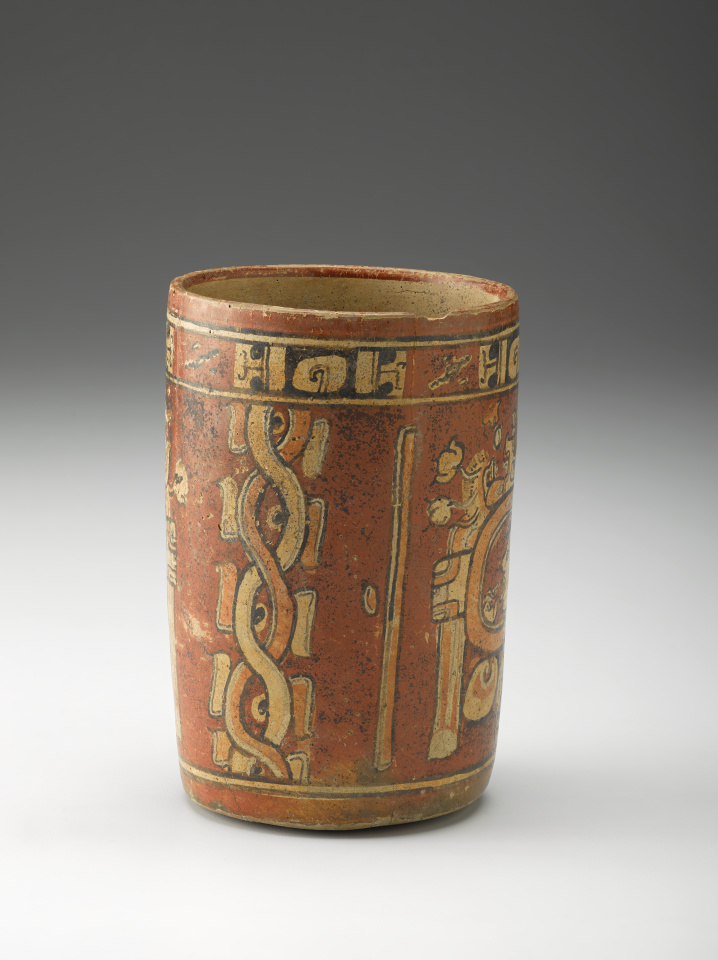
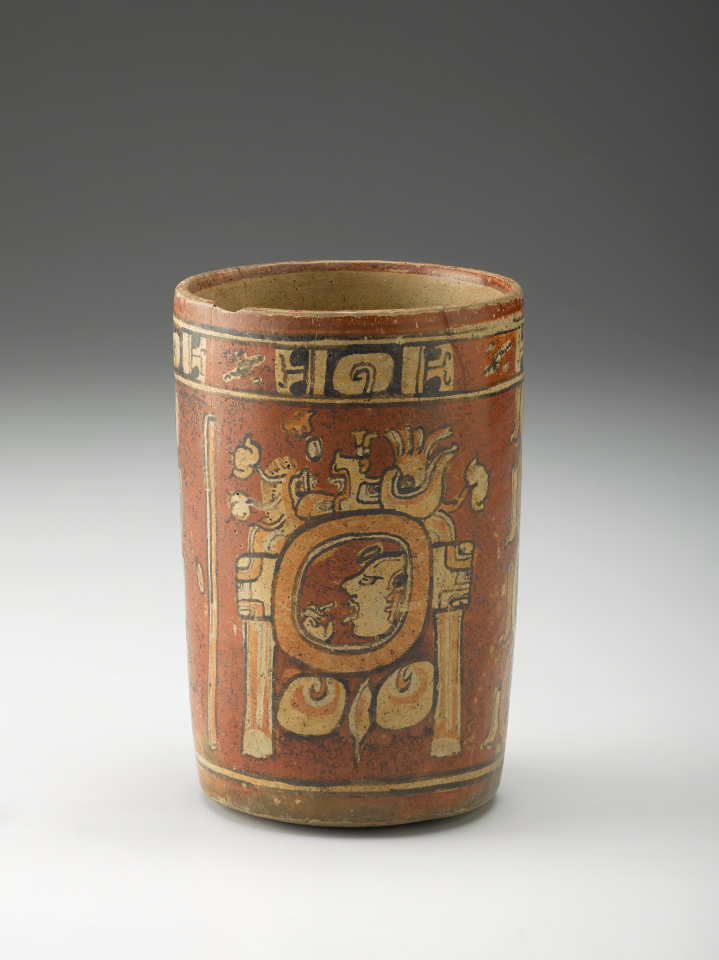
Beautifully painted cylinder vases were used by wealthy, royal members of Maya society. They used the vases for drinking chocolate, alcoholic, and hot masa (corn-based) beverages. The scene painted on this vase includes the face of the Young Corn God inside a cartouche, which is an ancient hieroglyphic name plate. A cartouche is usually oval-shaped and may have symbols inside it that represent the name of a royal person, a god, or a goddess. Cartouches may recall calendar dates, historical events, births, deaths, and mythical events. The two square signs on either side of the cartouche on this vase represent the border between the natural world and the supernatural world. The design above the cartouche (and draped on either side of it) is a hunal, a royal headdress worn by a king.
Although painting was one of the main forms of artistic expression among the Maya, very few of their frescoes and illustrated books still exist. Painted ceramics were status symbols used by the wealthy classes. This pottery survived because it was preserved in tombs. The Maya artists who made the pottery created it by hand using a coil method. Some of the finest pots include inscriptions that suggest they were made by members of the royal family. The artists may have been sons who were not in line to become a king. All master pottery painters belonged to the elite class of Maya society and were educated in hieroglyphic writing.
tags: function, power, identity, food, communication, cycle, ritual, time, pattern