Egúngún masquerades originated in Nigeria among the Yorùbá peoples. The Yorùbá make up the largest ethnic group in Africa. The egúngún masquerade ceremony is now honored and performed in Africa and throughout the world, from the Republic of Benin and Sierra Leone to parts of the Caribbean and the Americas. The Yorùbá honor their ancestors during this annual ceremony.
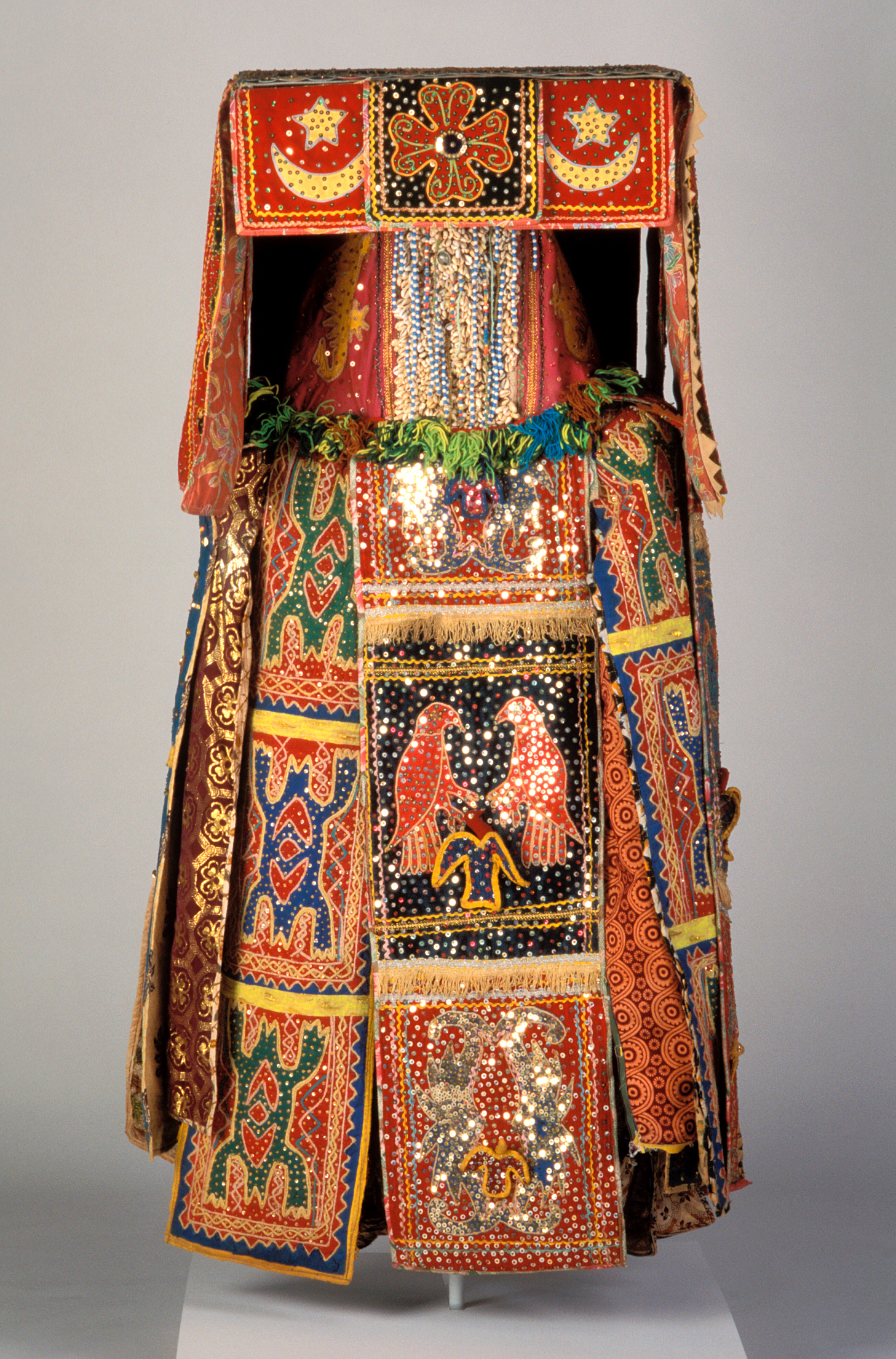
The artist who made this costume decorated its panels with designs from Yorùbá, Islamic, and European traditions. The dancer who wore it could see through the mesh face panel. The face panel is decorated with cowrie shells, beads, and coins. This person would have spun rapidly, making the fabric panels open to show the costume’s colorful layers. The layers of these costumes are built up over time. Patrons purchase luxurious, expensive cloth to be added to the costume. Sometimes the fabric is locally produced. Other times it is imported.
For the Yorùbá the costume represents the importance of the ancestor spirits. It is also a statement of status for the patron. The valuable fabrics and symbols of wealth that adorn the costume (cowrie shells, beads, and coins) show respect to the ancestors. The Yorùbá word AYELABOLA is embroidered on the back of the costume. In English the translation of this word is “we found wealth on earth.” The movements, gestures, and playful actions that would accompany an egúngún masquerade performance are missing from this costume in its current museum form.
tags: pattern, movement, animals, collaboration, ritual, part/whole, variation, family