Work of Art

Glass, Seattle

Created
2004
Artist
Nationality
American
Birth/Death
1963-
Dimensions
44 × 56 inches (111.8 × 142.2 centimeters)
Credit

Gift of Allen G. Thomas Jr. in memory of Joseph N. Quinn Jr.

Object Number
2007.4.2
Culture
Classification
Photography
Department
Modern

Key Ideas

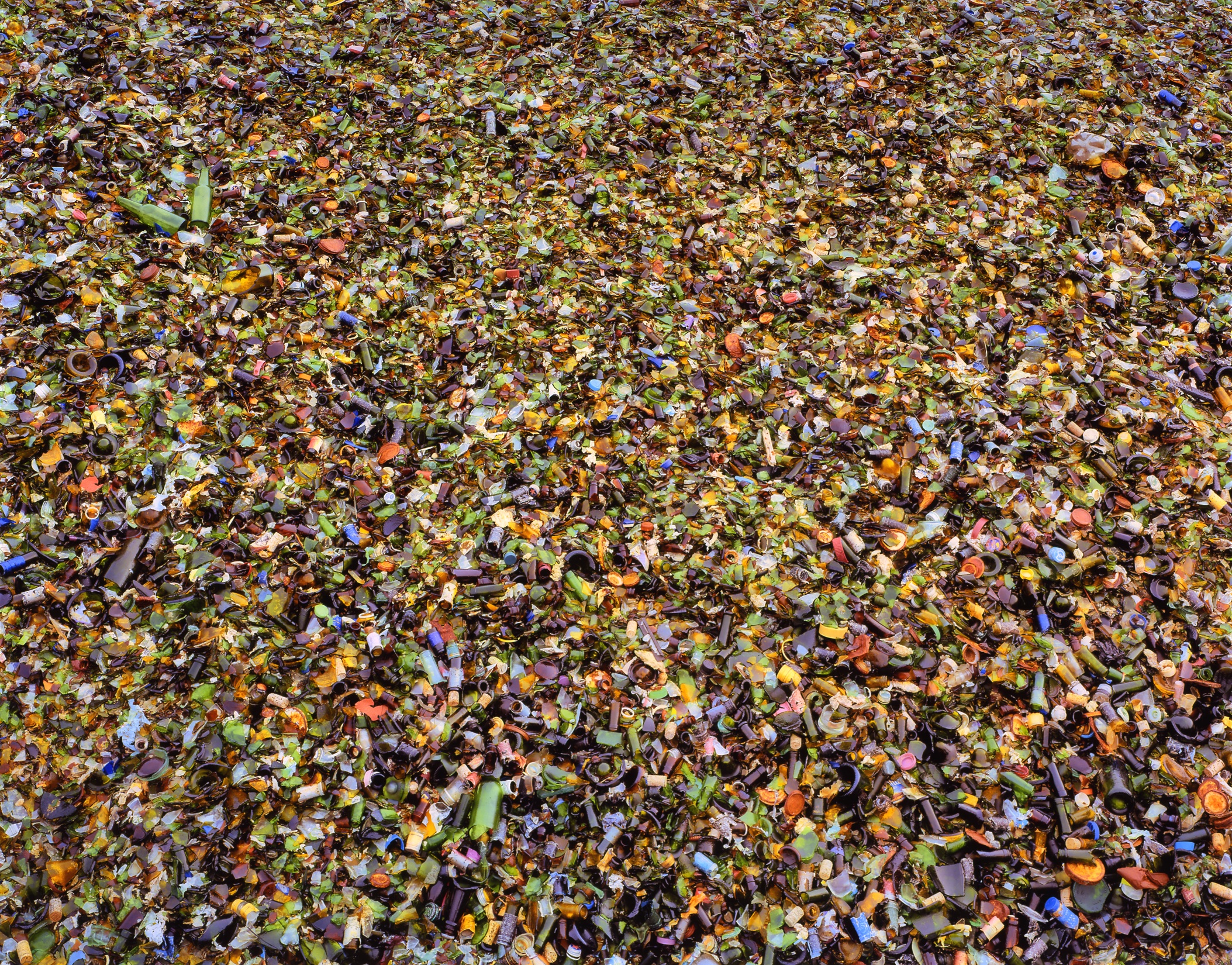
  • Chris Jordan uses photography to show the huge number of items people throw away. This image is made up of thousands of bottles and pieces of broken glass in a landfill.
  • Jordan’s photographs look different from far away than they do up close. What appears to be a colorful design becomes a collection of discarded objects. 
  • Jordan’s work invites viewers to think about how their choices affect the environment.

Learn More

Chris Jordan is a photographer who creates large, detailed images of waste from modern life. His work features broken glass, cell phones, cigarette butts, and other thrown-away materials. From a distance the images look like colorful patterns or abstract art. A closer look shows the individual objects that make up the composition.


Jordan’s photographs help people understand how much waste people produce. The large number of discarded objects shows how small choices can add up over time. Bright colors and designs draw viewers in before they realize what the images are really made of.  


At first glance Glass, Seattle may appear to be a vibrant surface filled with green, brown, yellow, and red shapes. As viewers spend more time with the image, they realize it is made up of thousands of bottles and pieces of broken glass. This shift in perspective helps people see the scale of glass waste in a new way.


All of my work is meant to evoke a whole bunch of different layers of discord between the attraction and repulsion that we feel toward our consumer habits and our consumer lives.

Chris Jordan


Glass, Seattle is part of Jordan’s project titled Intolerable Beauty: Portraits of American Mass Consumption (2003 to 2005). The series features documentary photographs of real industrial yards, landfills, and recycling centers. Through these images Jordan encourages people to think about how their daily choices affect the world around them.


I’m just becoming more and more aware of this truly profound responsibility that we carry as individuals. And it’s a responsibility not only to ourselves and to our families, but to the billions of people who still have to come in the future who will be dealing with our legacy.

Chris Jordan


Read Less Keep Reading

Additional Resources

Resources for Teachers

  • Read an interview with Jordan to learn about his Intolerable Beauty project and view more images from the series.
  • Read an article about another photography project by Jordan.
  • Visit a website to explore a variety of articles, interviews, videos, and podcasts featuring this artist.


Resources for Students

  • Visit a web page to explore and zoom in on images from Jordan’s Intolerable Beauty series.
  • Visit the artist’s website to view a virtual gallery of his work.
  • Watch a video to hear Jordan talk about his work and his concerns about the environmental effects of consumer culture and mass consumption.
Read Less Keep Reading

Chris Jordan

2007.4.2

Chris Jordan uses photography to show the huge number of items people throw away. This image is made up of thousands of bottles and pieces of broken glass in a landfill.
Jordan’s photographs look different from far away than they do up close. What appears to be a colorful design becomes a collection of discarded objects. 
Jordan’s work invites viewers to think about how their choices affect the environment.

Chris Jordan is a photographer who creates large, detailed images of waste from modern life. His work features broken glass, cell phones, cigarette butts, and other thrown-away materials. From a distance the images look like colorful patterns or abstract art. A closer look shows the individual objects that make up the composition.
 
Jordan’s photographs help people understand how much waste people produce. The large number of discarded objects shows how small choices can add up over time. Bright colors and designs draw viewers in before they realize what the images are really made of.  
 
At first glance Glass, Seattle may appear to be a vibrant surface filled with green, brown, yellow, and red shapes. As viewers spend more time with the image, they realize it is made up of thousands of bottles and pieces of broken glass. This shift in perspective helps people see the scale of glass waste in a new way.
 
All of my work is meant to evoke a whole bunch of different layers of discord between the attraction and repulsion that we feel toward our consumer habits and our consumer lives.
Chris Jordan
 
Glass, Seattle is part of Jordan’s project titled Intolerable Beauty: Portraits of American Mass Consumption (2003 to 2005). The series features documentary photographs of real industrial yards, landfills, and recycling centers. Through these images Jordan encourages people to think about how their daily choices affect the world around them.
 
I’m just becoming more and more aware of this truly profound responsibility that we carry as individuals. And it’s a responsibility not only to ourselves and to our families, but to the billions of people who still have to come in the future who will be dealing with our legacy.
Chris Jordan
 

Gift of Allen G. Thomas Jr. in memory of Joseph N. Quinn Jr.

2004

44 × 56 inches (111.8 × 142.2 centimeters)

Photography

Modern

Related Concepts

Learn More

Share