Theodore Robinson was an American artist known for his landscape paintings. He was born in Vermont and grew up in Evansville, Wisconsin. In 1874 he moved to New York City to attend classes at the National Academy of Design and the Art Students League. In 1876 he moved to Paris to study at the École des Beaux-Arts. There he exhibited his paintings at the 1877 Paris Salon. He spent that summer living in an artist colony in Grez-sur-Loing. After returning to America, he set up a studio in New York and worked as a professional painter and art teacher. He was also a member of the Society of American Artists.
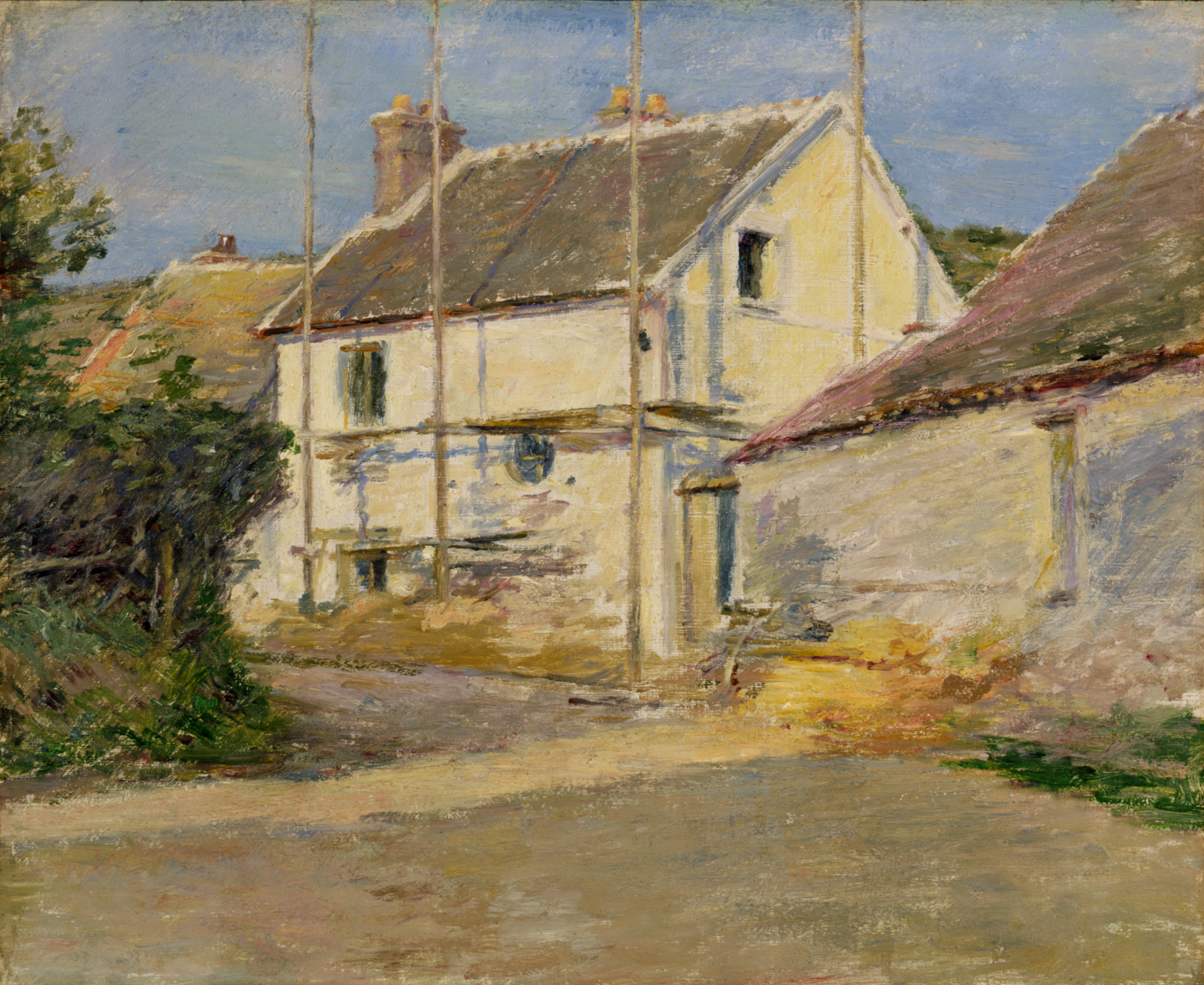
In 1884 Robinson returned to France and saw impressionist art. Impressionism was an art movement that began in Paris in the 1800s. Impressionist artists used quick, loose brushstrokes and bright paint colors to create outdoor scenes. They often depicted different weather conditions, the movement of water, and the effects of sunlight at different times of day. Robinson was one of the first American artists to embrace this style. He adopted the impressionist practice of plein air painting, a French term that means “in the open air.” House with Scaffolding, Giverny is an example of Robinson’s ability to depict light and shadow.
Robinson was friends with impressionist painter Claude Monet, and they even lived near each other. When Monet visited Robinson’s studio, he liked the idea of including the scaffolding in the painting and encouraged Robinson to complete it.
tags: movement, perception, place, observation, seasons