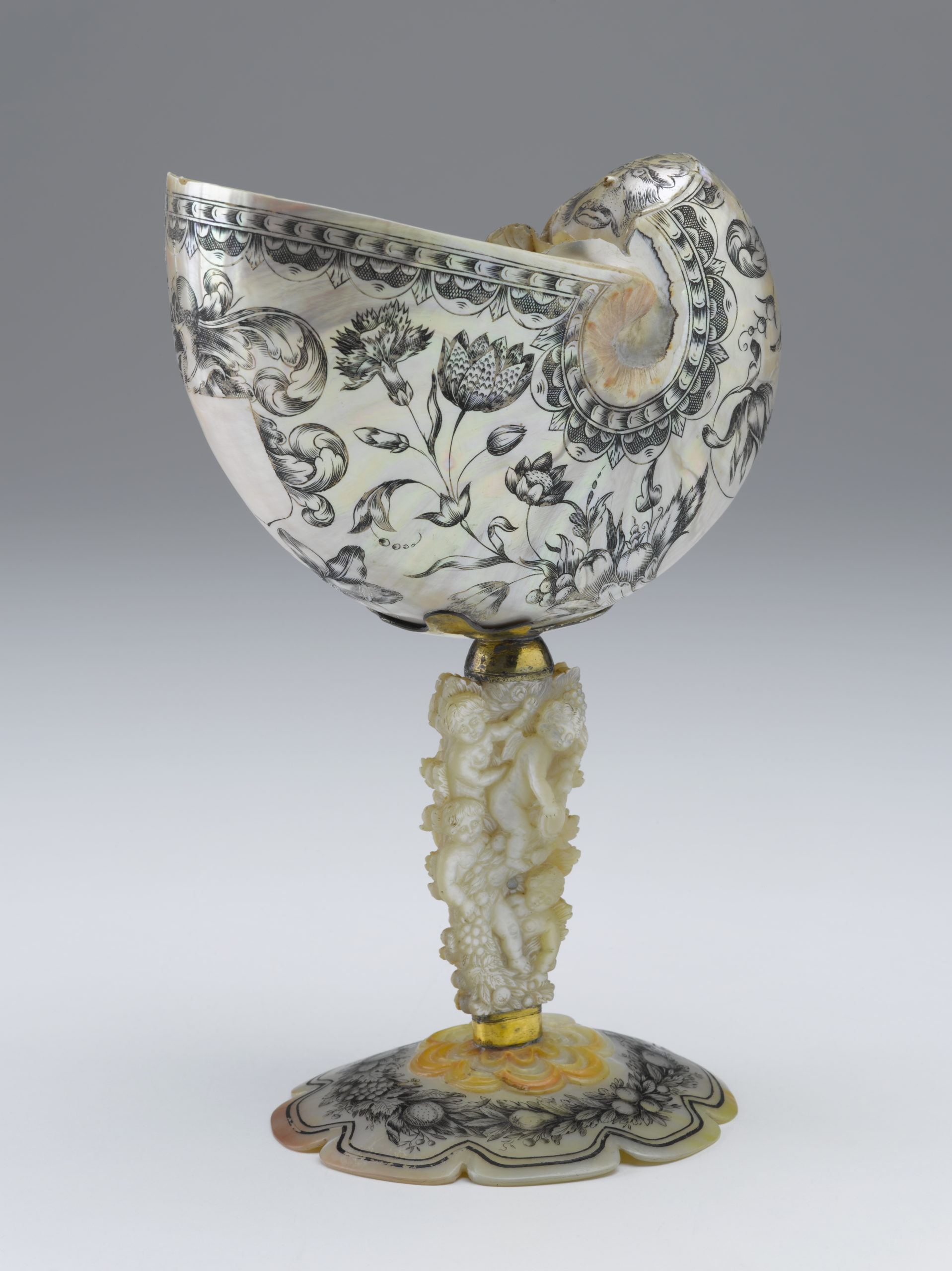
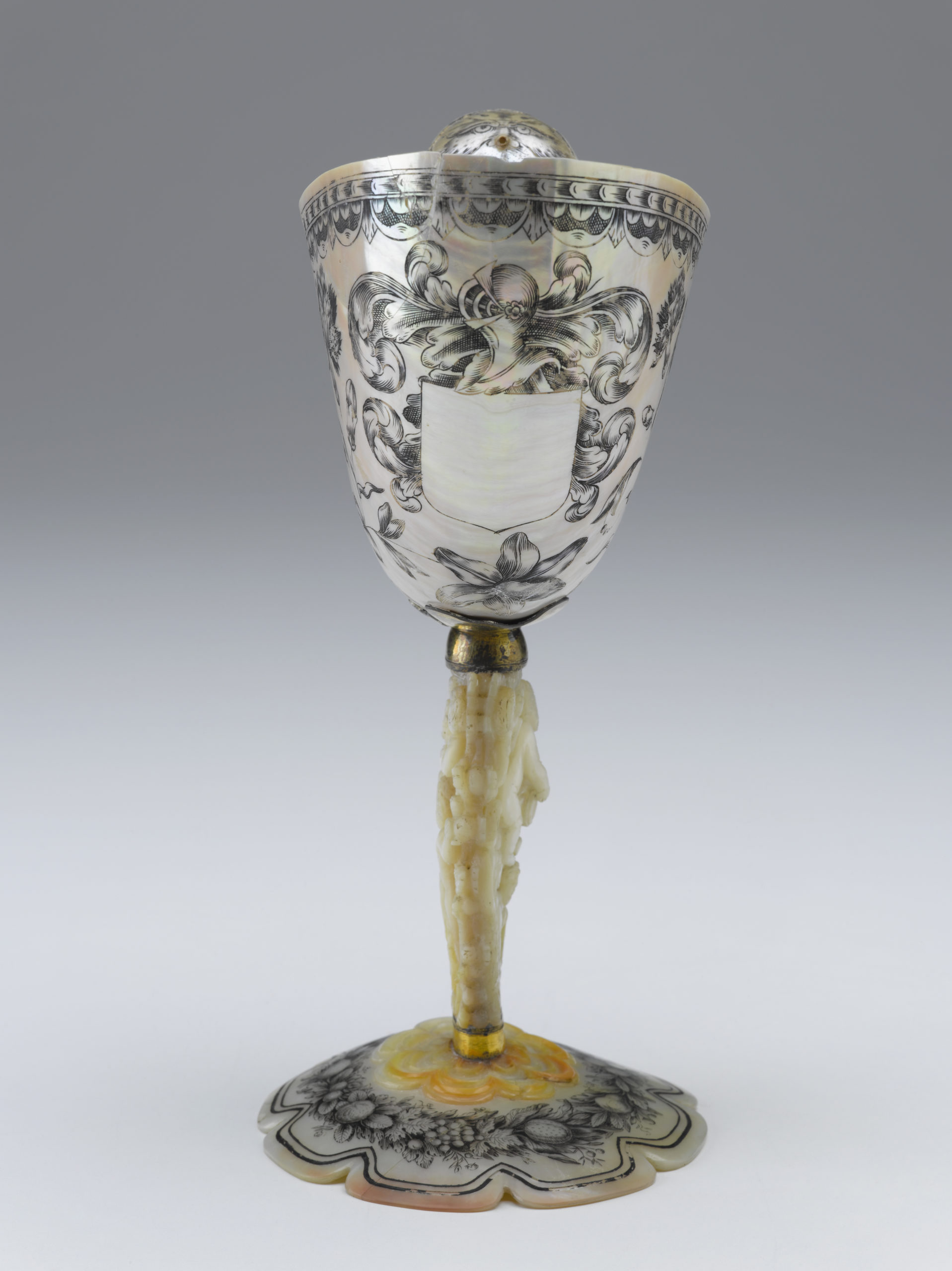
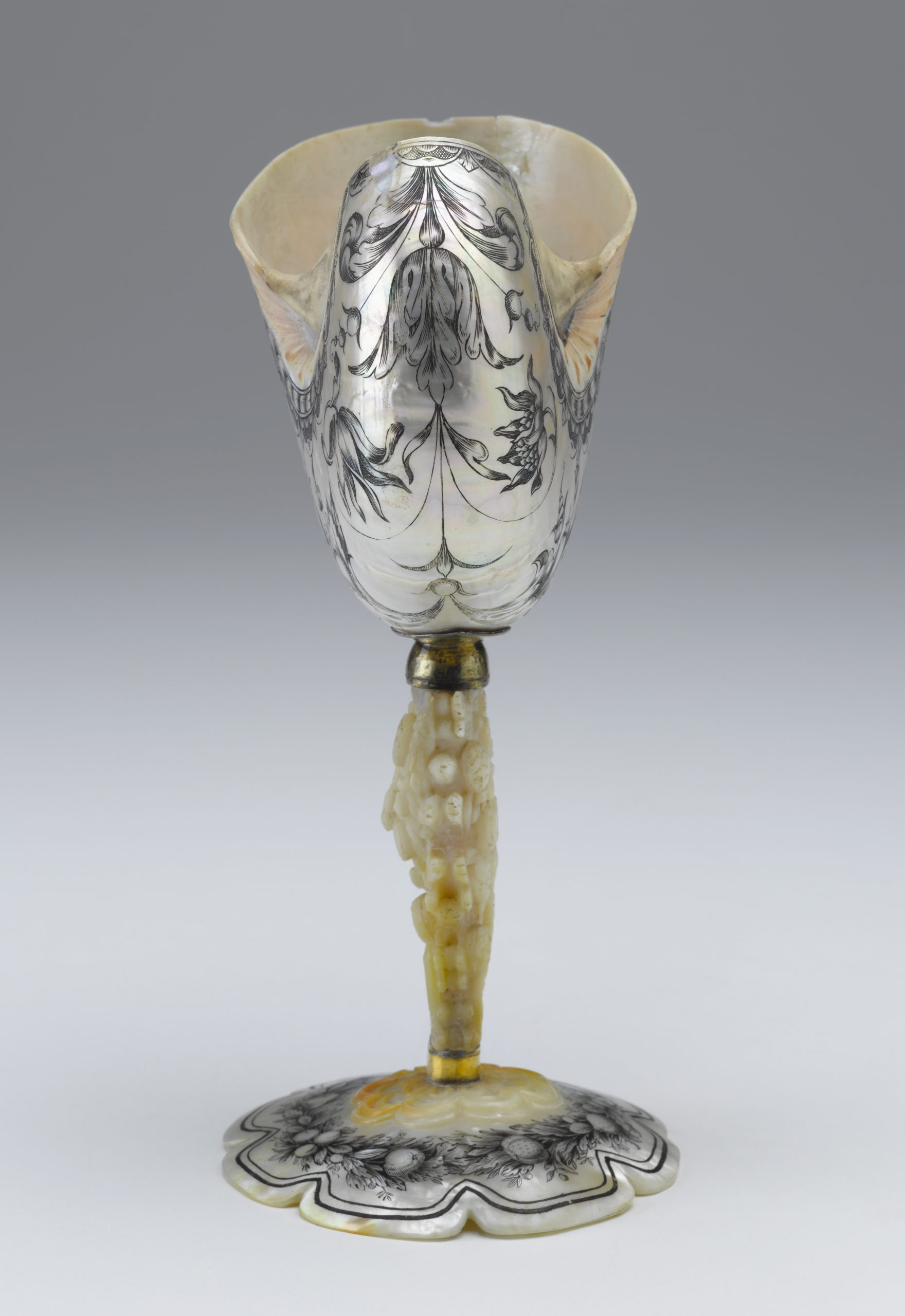
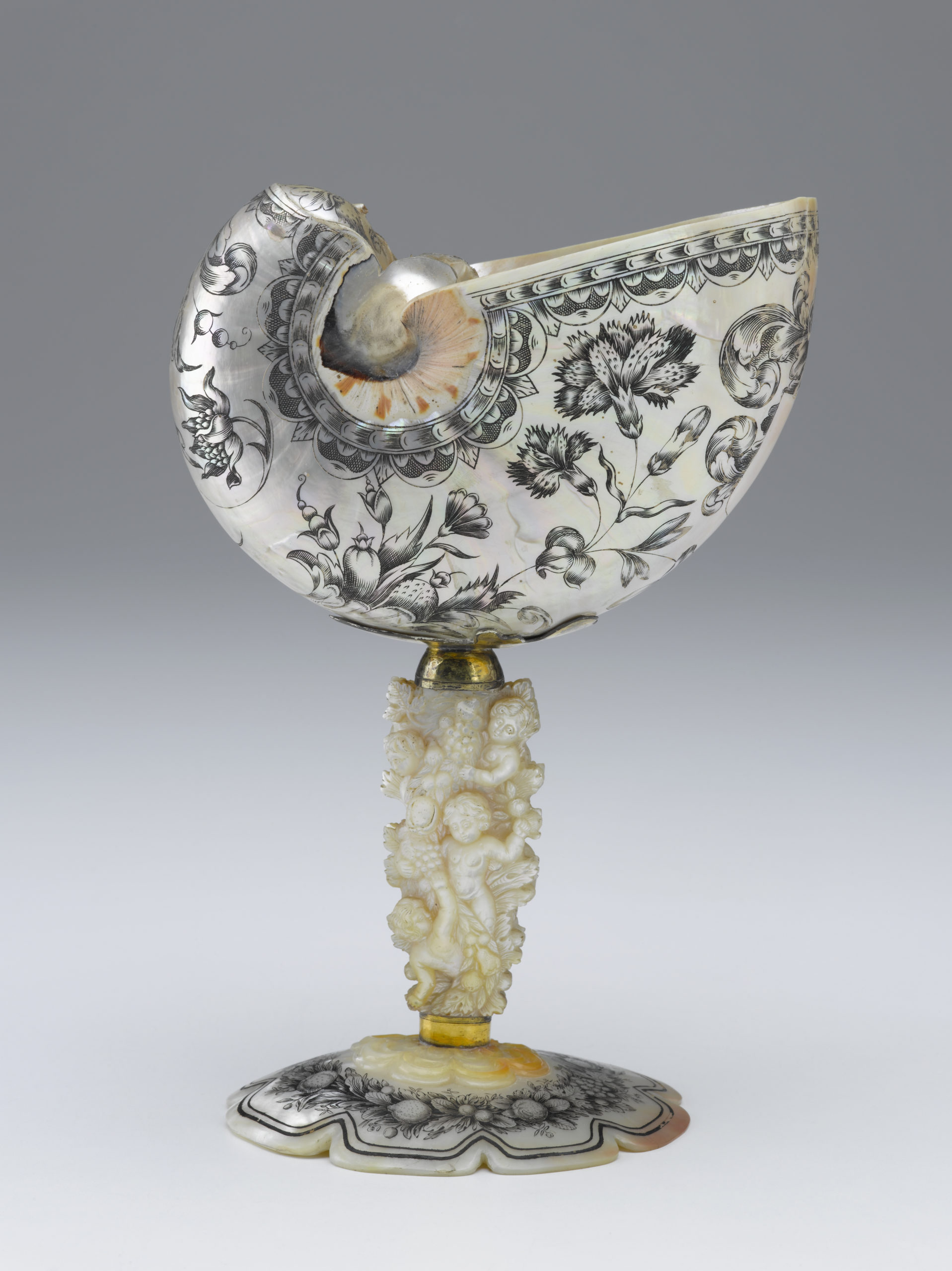
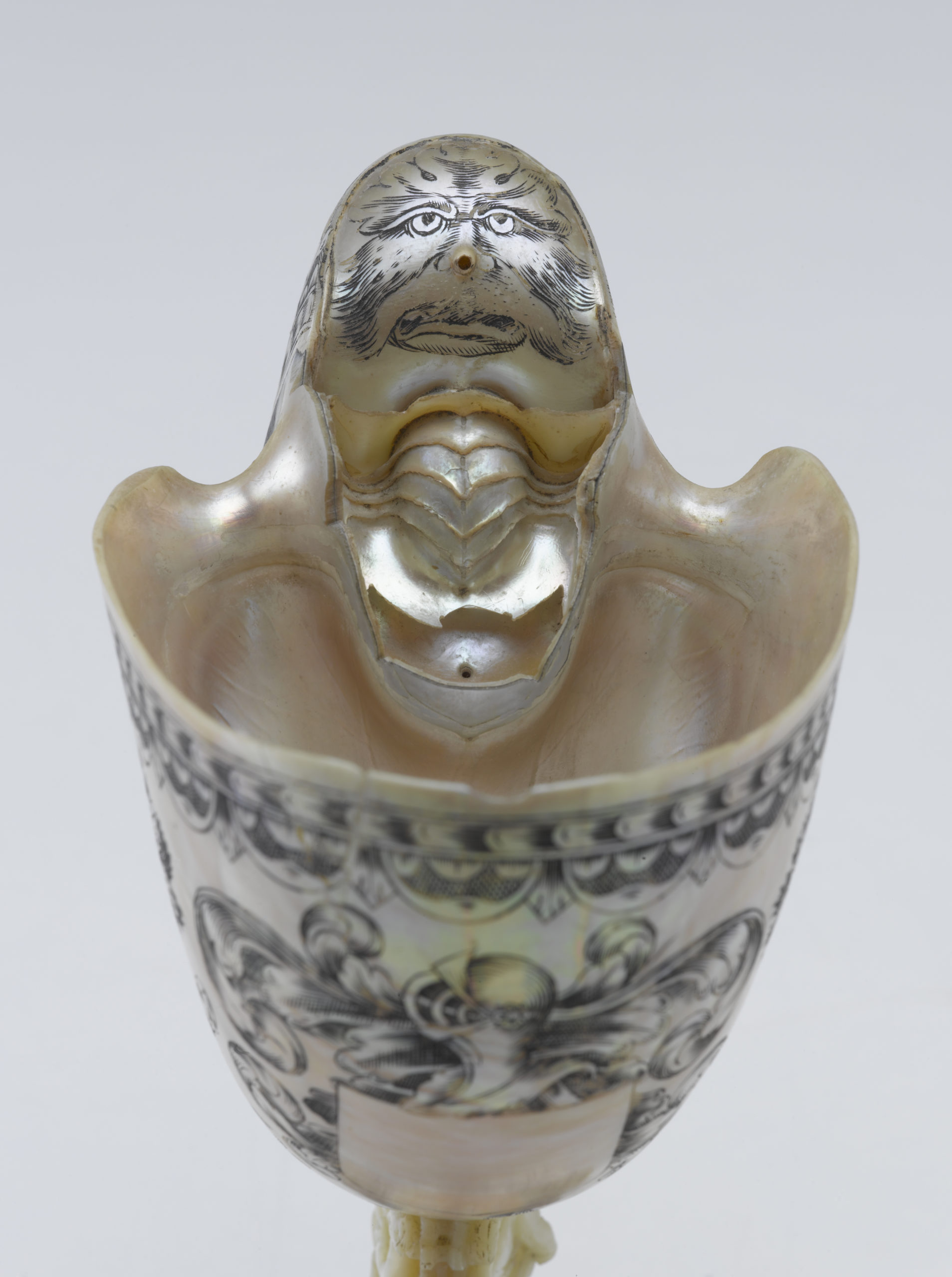
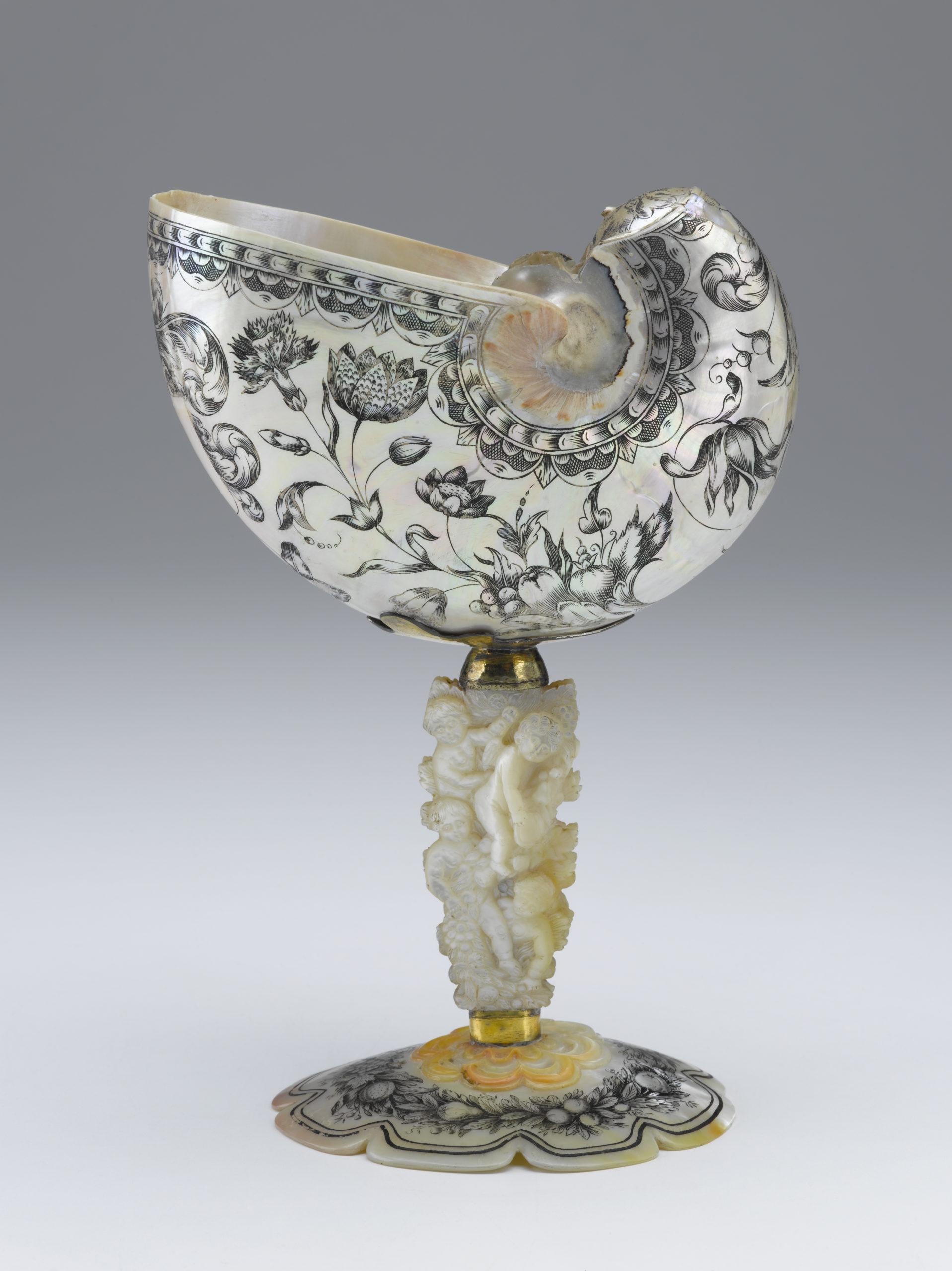
Nautilus Shell Cup is an example of functional art. It serves a useful purpose. It also combines natural beauty with fine craftsmanship. Drinking vessels like this one were considered treasures to be admired. They were often used on special occasions by wealthy Dutch collectors. Many Dutch artists made nautilus cups in the 17th century. During this time the shells of the chambered nautilus were being imported from Indonesia by the Dutch East India Company. This company was one of the first international trade corporations. It shipped millions of tons of Indonesian goods (by boat) to other countries. The trading company brought wealth to the Netherlands. It did not equally benefit the people of Indonesia. The company’s main purposes were trade, exploration, and colonization. A variety of products imported from Indonesia can be seen in many Dutch still life paintings from the 17th century.
Cornelis van Bellekin was a sculptor and a painter. He removed this nautilus shell’s rough outer surface and used the smooth, white surface below it as his canvas. The artist decorated the shell (the main part of the cup) with carved and painted floral designs. He made the cup’s stem and foot from oyster shells that he carved and decorated with cupid figures, fruit, and grapevines. The grapevine may indicate that the cup was intended for drinking wine.
tags: change, environment, function, nature, trade, food