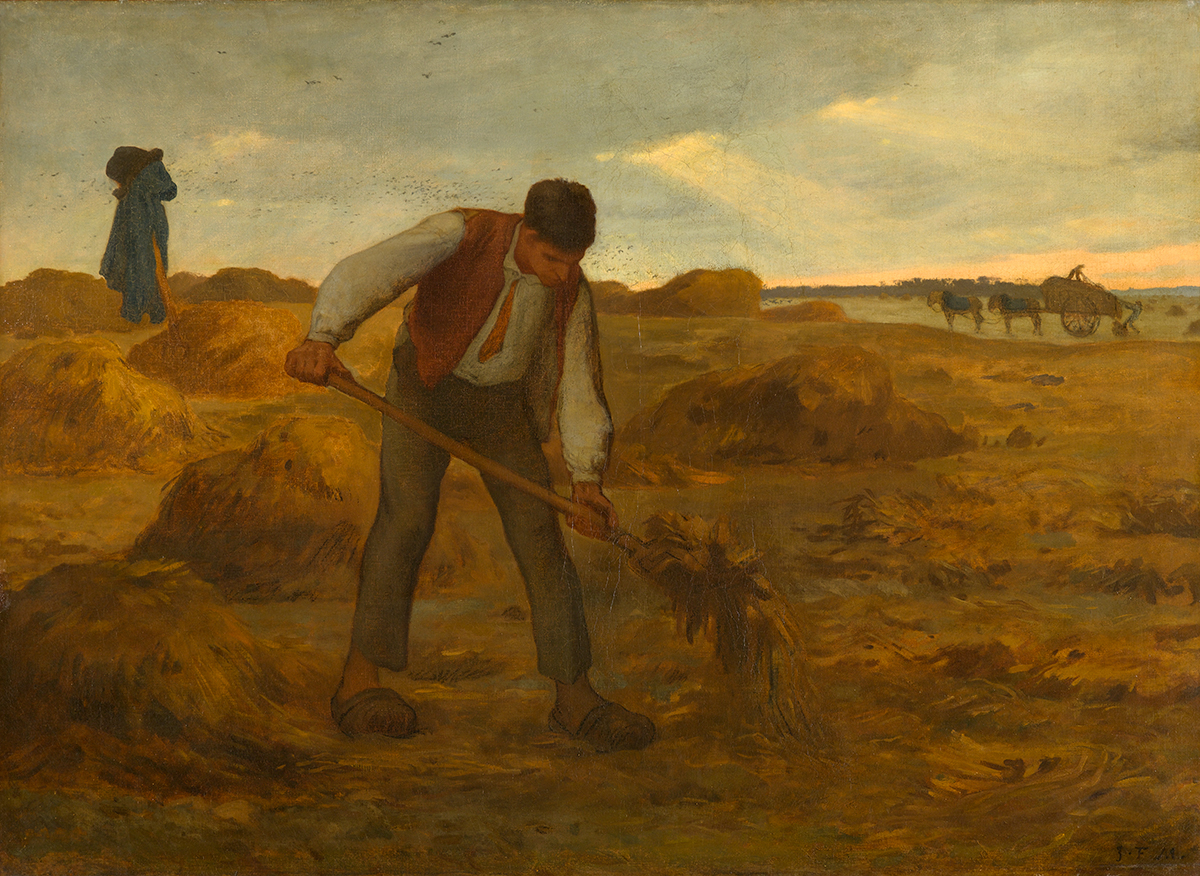
Jean-François Millet was the son of farmers. His paintings depicted the struggle and hard labor of French peasants who worked outdoors in rural areas. By the late 1870s, Millet and like-minded artists became known as the Barbizon school. This group of artists focused on painting landscapes. They eventually gained acceptance by early impressionist painters like Manet, who admired the naturalism of their landscapes. Before the Barbizon school was accepted by the art world, the French Academy did not recognize landscapes as “legitimate” subjects on their own. According to the Academy, landscapes had to include references to mythology or poetry in order to be taken seriously.
Millet intended to complete this painting in time for the Paris World’s Fair of 1855, but he was unable to do so. His friend and fellow painter Théodore Rousseau bought the unfinished painting from him.
tags: cycle, environment, work, farm