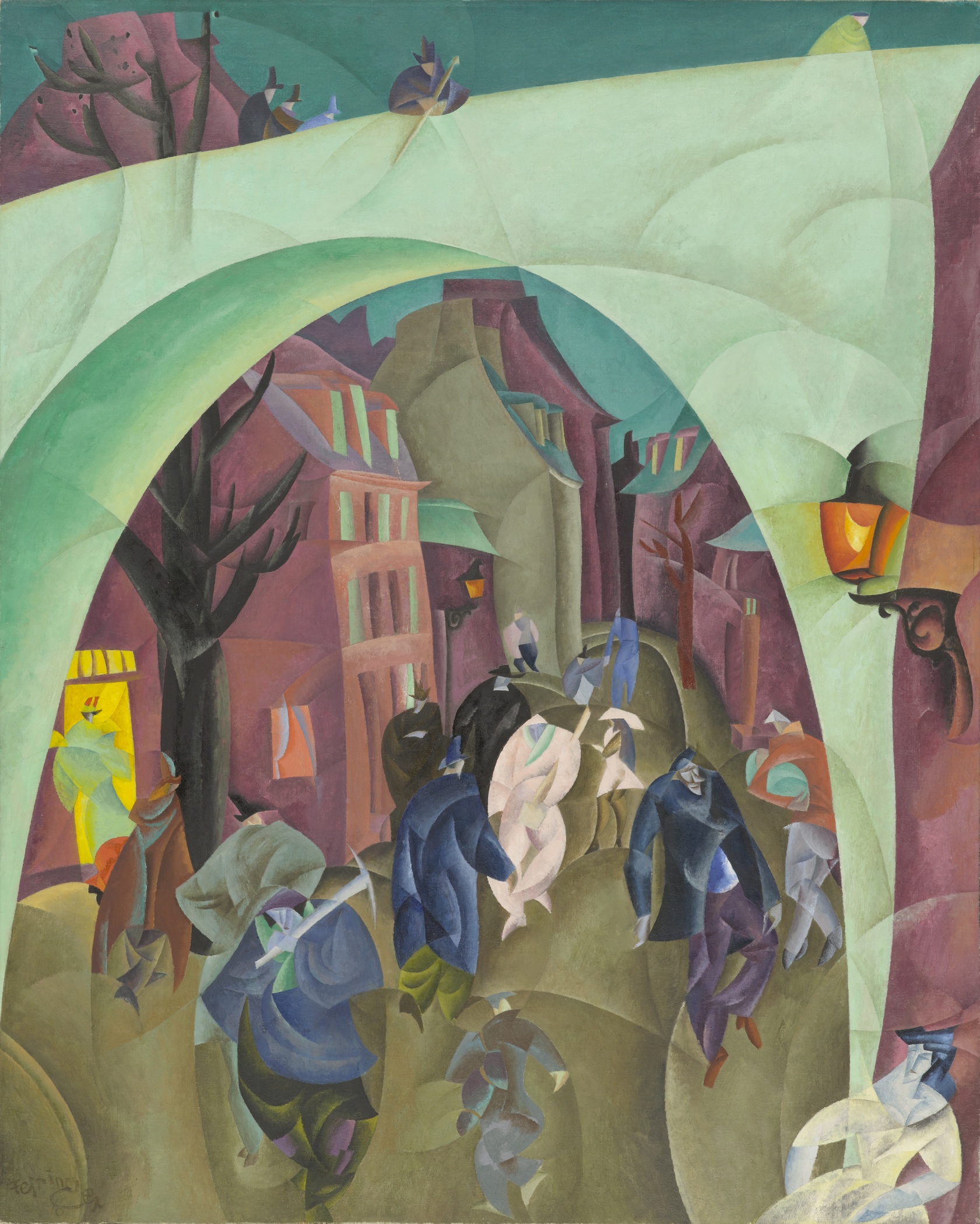
The scene is Paris: not the fashionable boulevards and cabarets of the “City of Light,” but a working-class neighborhood. It is evening, and the people—solitary travelers cloaked against the chill—move slowly along the gaslit street. The mood is subdued, yet the artist energizes the composition by gently distorting the space, and bending and breaking the parts into planes of color. The height and spectacle of the bridge create a divide between the figures below, on the street, and those looking down from the bridge.
This painting is Feininger’s second version of the same green bridge. He created the first one, a hand-colored etching on paper titled The Green Bridge, in 1911. The etching was displayed at the Salon des Indépendants, an annual art show in Paris in which the most famous artists in the area presented their work. During his time in Paris, Feininger learned and absorbed the lessons of cubism that are evident in this painting.
Feininger was born in the United States to German immigrant parents and moved to Germany at age 16 to study art. He worked as a cartoonist and caricature artist before exploring the world of fine arts. He eventually became a leader in the German expressionist movement and taught art both in Germany and the United States, including in North Carolina!
tags: shape, line, design, place, change, perspective, urban, narrative