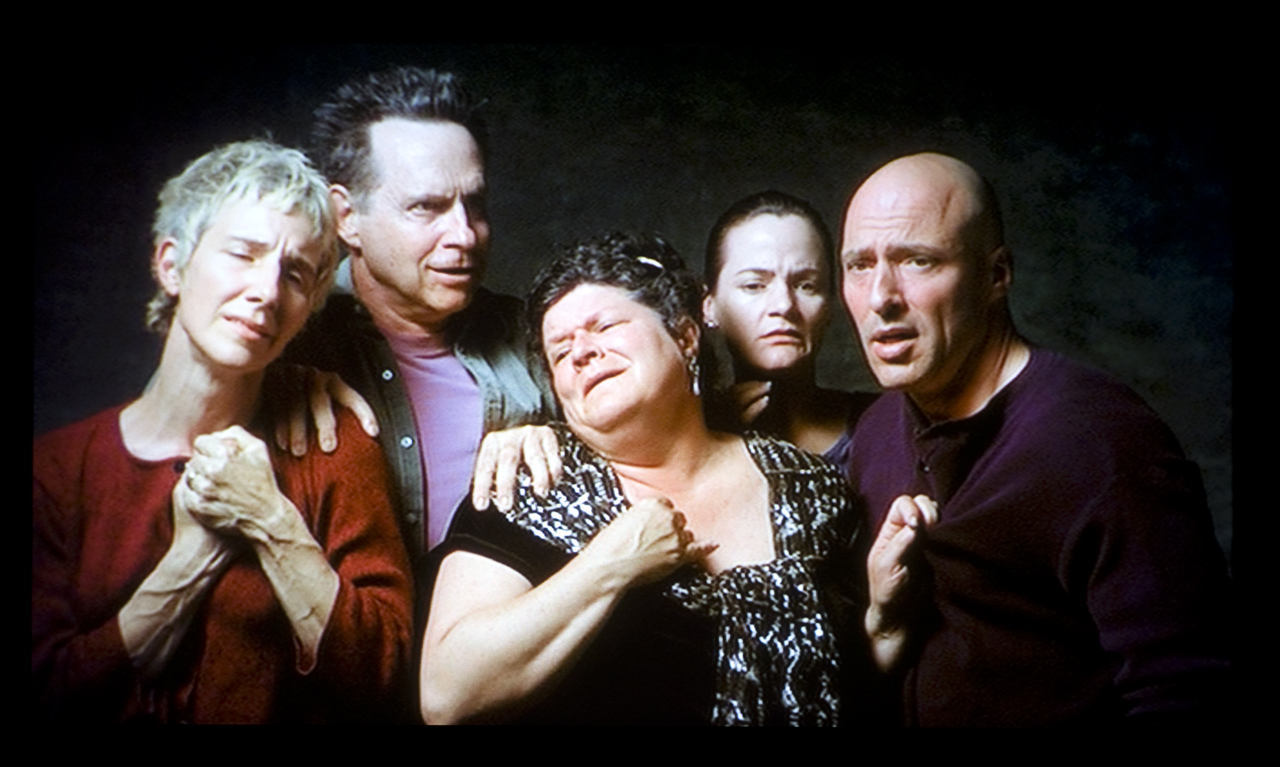
This video artwork by Bill Viola is silent and lasts about 15 minutes. It shows five people standing together. Their faces and body language change slowly as they react to something the viewer cannot see. The people seem to experience different emotions, including joy, fear, sadness, anger, and compassion.
Viola used a high-speed camera to make the action move very slowly. About one minute of video is stretched into 15 minutes. This allows viewers to notice small changes in expression that would normally be missed. The emotions of the actors appear more detailed and easier to study.
Even though it is a video, the artwork was inspired by older paintings. Viola looked at works by artists such as Hieronymus Bosch, Andrea Mantegna, and Dieric Bouts. He used ideas from their paintings, including strong lighting and emotional expressions. These features help make the human figures seem dramatic and powerful.
I am interested in what the old masters didn’t paint, those steps in between.
Bill Viola
Unlike a painting, which captures a single moment, video can show changes over time. Viola filmed The Quintet of Remembrance in one continuous shot without editing. The slow-motion video allows viewers to follow the gradual shift from one emotion to another and notice small changes in expression.