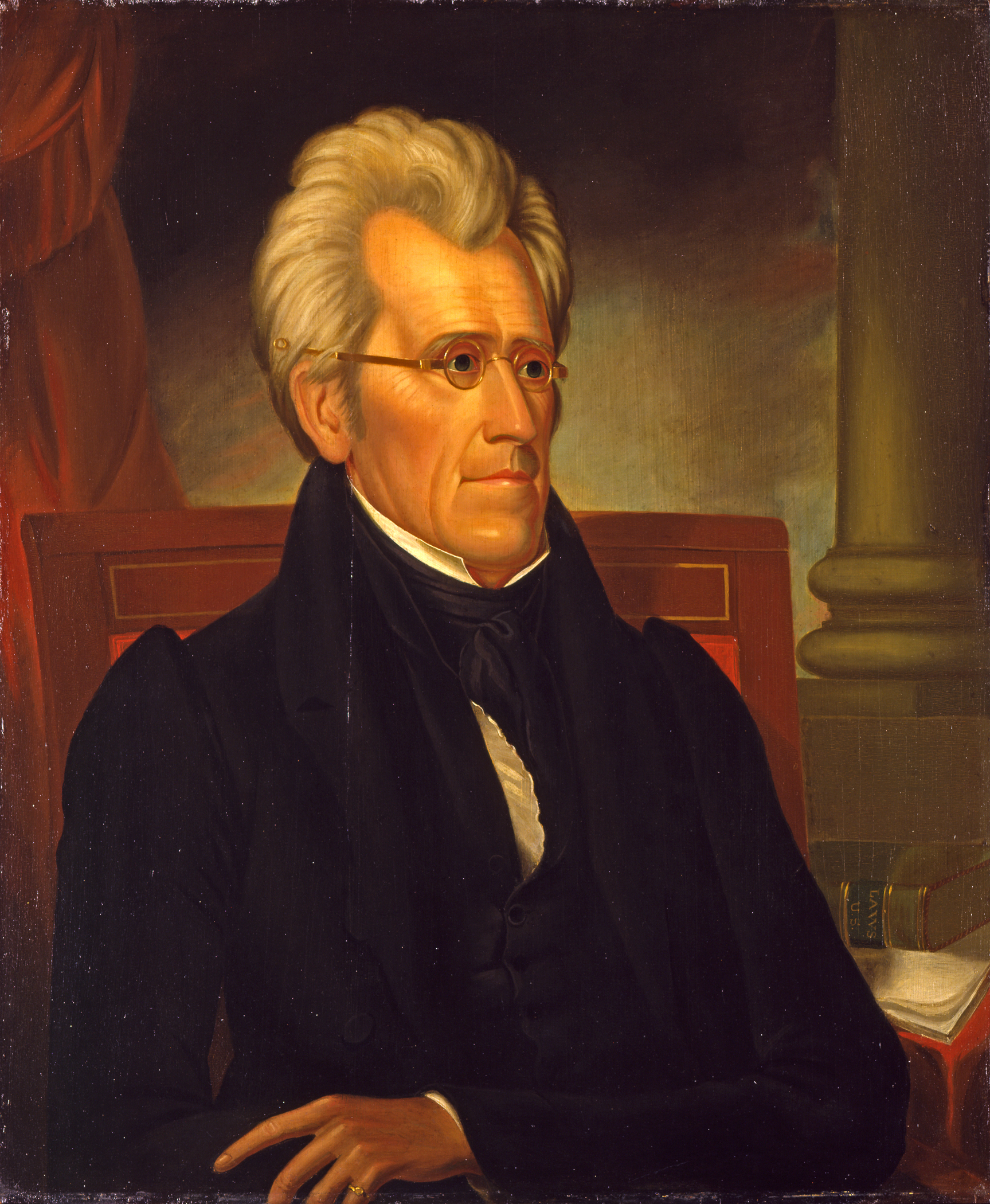
This portrait of Andrew Jackson was created for a political purpose. The artist, Ralph Earl, worked as Jackson’s “court painter” during his time in the White House from 1829 to1837. He painted many versions of Jackson—seated, standing, full-length, and from the waist up. These paintings were often bought by Jackson’s supporters to show their loyalty.
In this painting Jackson is shown as calm but strong, with thick, swept-back hair like a lion’s mane. The book and papers shown on the table highlight his role as a leader and decision-maker. The column and drapery in the background add a sense of power and importance. Columns and drapery are important features in classical art. Columns represent strength and order, while drapery conveys a sense of elegance and wealth.
Andrew Jackson earned the nickname “Old Hickory” because people saw him as extremely tough and strong, like hickory wood. Soldiers in his army said he was as stubborn and resilient as a hickory tree, especially during battles like the War of 1812.
tags: communication, identity, place, power, work, US History, symbolism