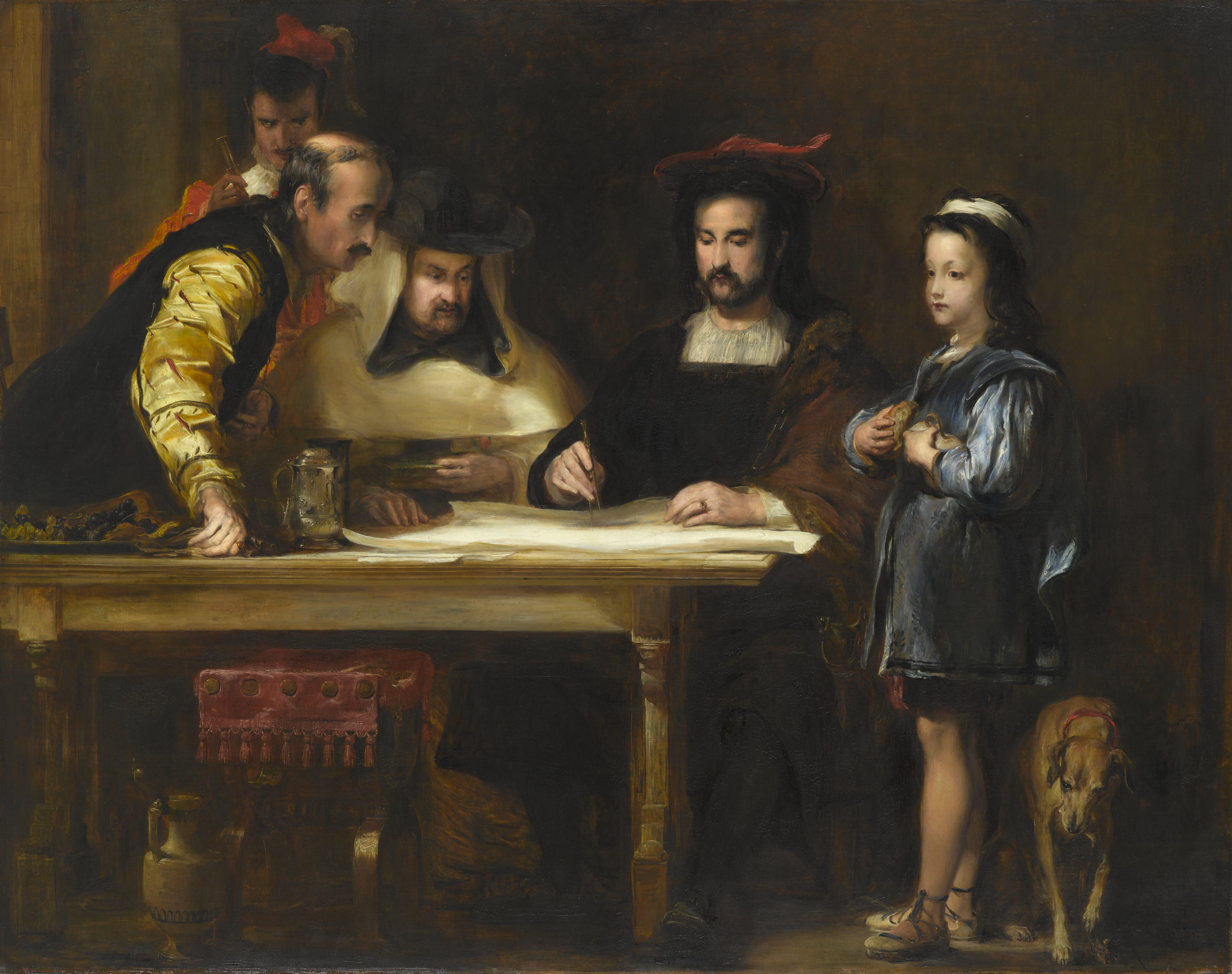
This is an imagined portrait of Christopher Columbus in 1491. He died more than 300 years before this oil painting was created. It depicts Columbus planning his voyage to open new trade routes to East Asia and India. The portrait commemorates his stay at La Rábida Monastery. The monastery is where Columbus found out that the king and queen of Spain were going to fund his voyage.
Columbus’s 1492 voyage landed him in the Bahamas, which he claimed for Spain. He continued his voyages around North America, paving the way for European countries to colonize and exploit Indigenous peoples and their natural resources. European colonizers became extremely wealthy and powerful while the people they exploited were devastated by disease and war. The routes Columbus opened led to the slave trade between Europe, Africa, and the Americas.
Sir David Wilkie is best known for his genre paintings. He often painted historical scenes, scenes from his travels, and people of great wealth and power. He was appointed painter to the King of England in 1830. Wilkie created this painting at a time when many people saw Columbus’s actions as heroic. The legacy of Columbus as an explorer who “discovered” the New World has been challenged in modern times. His legacy has been revised to include the devastating effects of European colonization on Indigenous peoples.