The invention of glassblowing technology in the first century BCE gave artisans more freedom to create different types of glass vessels. The core-formed glass technique involved coating a solid core in liquified glass to shape it. Another commonly used technique was cast glass, which used a mold to shape liquified glass. Glassblowing technology resulted in new forms and shapes of products like glass lamps.
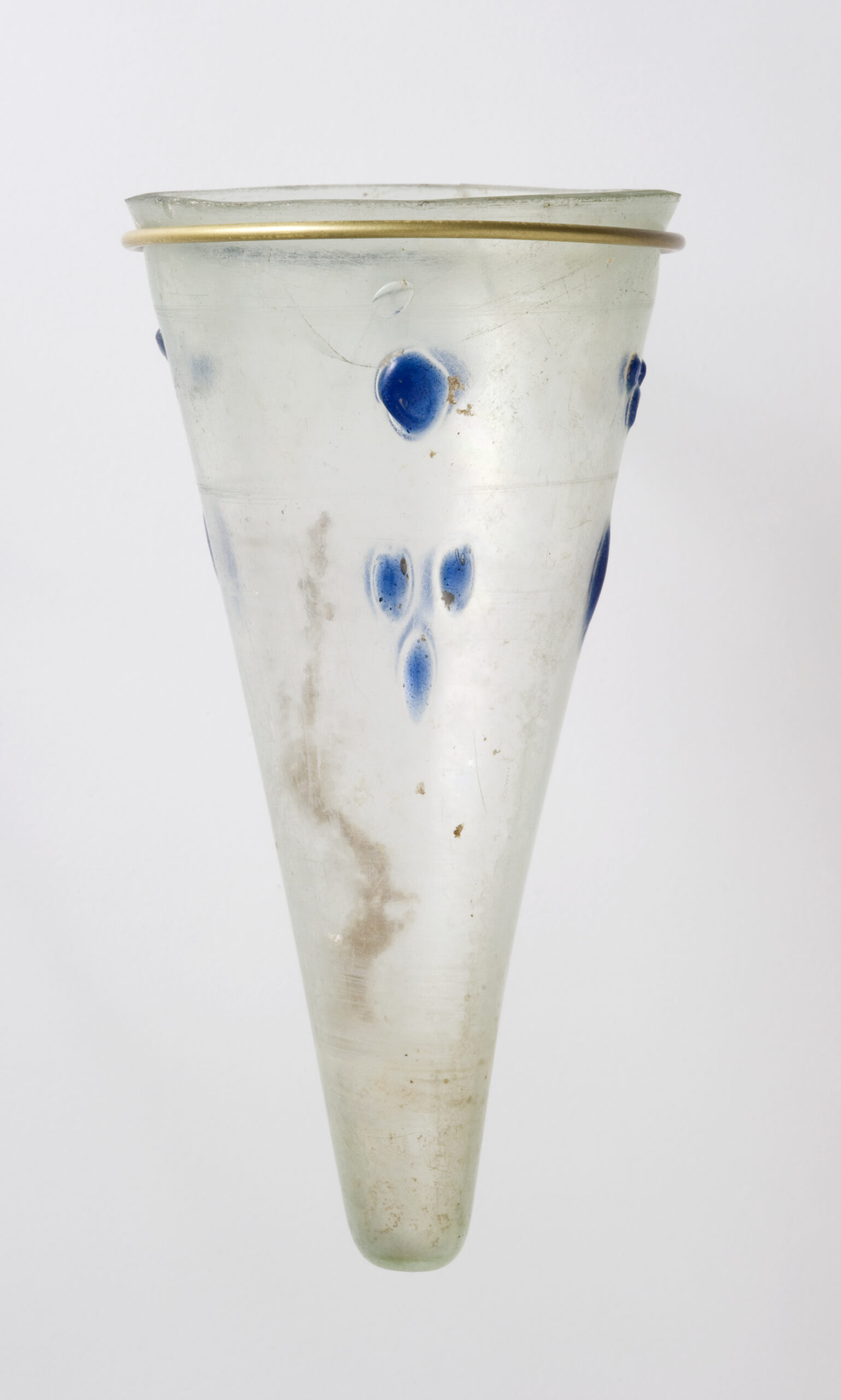
Glass lamps were most likely invented in the eastern Mediterranean. Two of the earliest forms of glass lamps were cone shaped (like this one) and flat-bottomed, rounded vessels. These types of glass lamps were not widely used until the second half of the fourth century CE. They became the most popular types of lamps during late antiquity. During that time period, glass lamps were used as architectural fittings. These were home accessories that could be attached to a wall or placed on a stand, and they could be easily removed for transport to another room or house. Glass lamps were sometimes grouped together in a fitting called a polycandelon, which is similar to a chandelier. A polycandelon had a bronze hoop with small rings that held multiple glass lamps.
Lamps made from glass burn brighter than those made from terracotta or clay. The oil inside a glass lamp also burns for a longer period of time. Ceramic lamps can only emit light in an upward direction, but the light from clear glass lamps radiates outward from the entire vessel. To light a glass lamp, the user had to first fill it with water. A layer of oil was added on top of the water and then the wick was lit. Since glass lamps were more costly to produce than ceramic lamps, it is likely that only wealthy Romans could afford to buy them.