Virgil Ortiz is a Pueblo artist from the Cochiti Pueblo, New Mexico. He comes from a family of Pueblo potters. Both his mother and grandmother are famous potters. He first gained recognition for his black-and-white ceramics. His current work includes different types of media and is inspired by sci-fi movies and Pueblo history. His ongoing series tells the story of the Pueblo Revolt of 1680. It features a cast of characters that he created. The series includes jars, busts, textiles, and live actors.
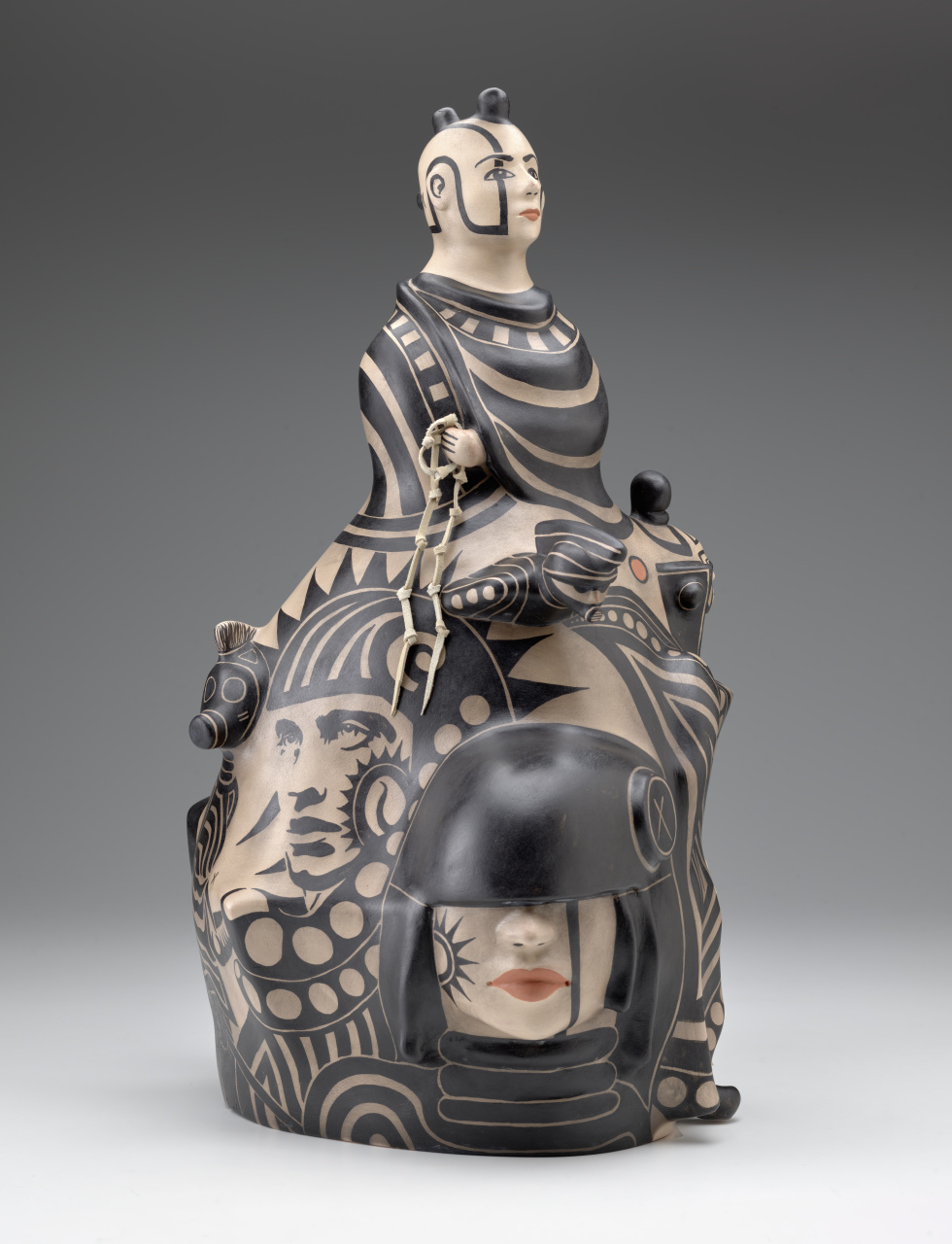
Convergence is a part of Ortiz’s larger body of work titled Revolt 1680/2180. The series reimagines the Pueblo Revolt of 1680. It explores the past and future using themes of justice and resistance. Revolt 1680/2180 is a parallel science fiction narrative set in an apocalyptic world. Ortiz’s storyline transports the viewer back and forth 500 years. Jumping back to the historical events of the Pueblo Revolt of 1680, and then forward through time to the year 2180. His characters go back in time to reverse the oppression of the Pueblo people by the Spanish invasion. Ortiz created 19 groups of characters for the series. The 19 groups represent the 19 remaining Pueblos in New Mexico today.
Convergence depicts eight of the characters from Revolt 1680/2180. At the top of the sculpture is Po’pay, the Pueblo leader who organized the revolt. The faces below him are his army of futuristic warriors.
My mission is to ensure that Cochiti clay vessels and figures are preserved, and the traditional methods and materials are not forgotten but carried forward. I look at the next generation and know there is a connection that needs to be made to keep our culture alive. I see my art as a way to educate the world about the First American Revolution: the Pueblo Revolt of 1680. The heart and soul of all my art is embedded within Cochiti Pueblo – our designs, our history, our clay, our families, and our culture.
Virgil Ortiz
As a child Ortiz learned traditional Pueblo pottery techniques that he still uses today. He collects the materials he uses for his ceramics from local sites, including the clay and plants he uses to color his clay slip. The processing of the raw clay takes a year. The clay he collects one year is used to make artworks the following year. The natural variations in the materials he uses affects the colors of the finished works.