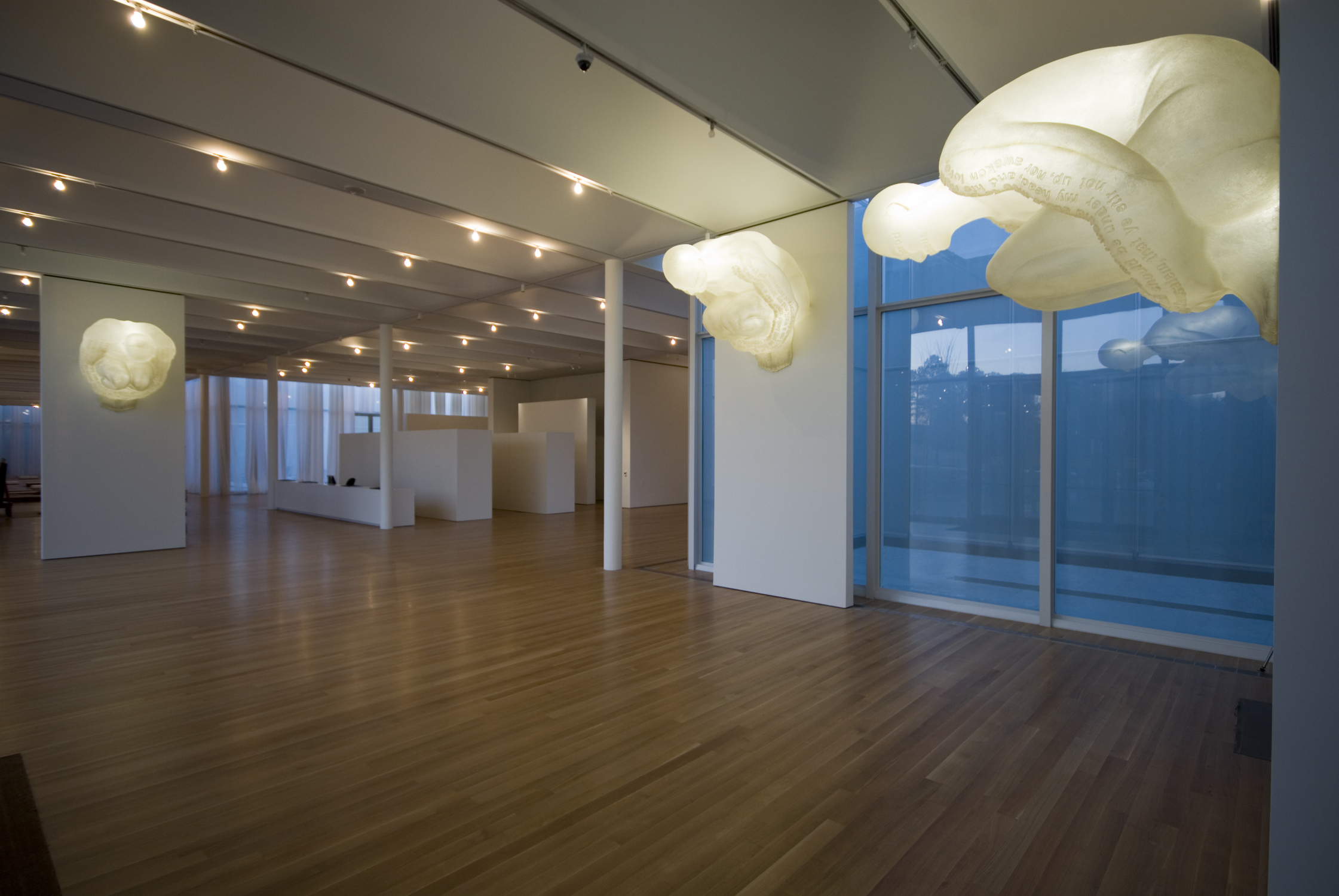
Jaume Plensa’s Doors of Jerusalem features three illuminated human figures covered in embossed text that looks like tattoos. The text comes from the Song of Solomon, also called the Song of Songs, a book of poetic writings from the Bible. These poems are often understood in both spiritual and romantic ways, adding layers of meaning to the artwork.
The eyes and mouths of the sculpted resin figures are hidden under the names of the gates in the Old City of Jerusalem. The names are New, Herod, Damascus, Golden (which includes the Gate of Repentance and the Gate of Mercy), Lions, Jaffa, Zion, and Dung. By placing the names over the faces, the artist connects the human body to the city of Jerusalem and its history.
Plensa explains that the Song of Songs tells of a woman searching endlessly for her beloved, crossing a wall again and again. She imagines love as a door within that wall—something that can be opened to reach another person. The idea of searching and longing is central to the meaning of the sculpture.
The artist also suggests that the wall can represent the human body, while the doors stand for the soul. In this way the artwork explores how people experience love, desire, and connection. Plensa describes these feelings as being held within the “prison of the heart,” where dreams and emotions exist together.
I think sculpture is the only medium through which you can express that which is invisible, that which can’t be touched but which is always about us.
Jaume Plensa
Plensa is known for his large-scale public artworks that focus on the human body, identity, and communication. Many of his sculptures show calm faces or seated figures with closed eyes, creating a quiet, reflective mood. He frequently uses letters and texts from different languages, sometimes forming entire figures from alphabets, to show how language shapes who we are.
tags: meaning, perspective, subjectivity, light