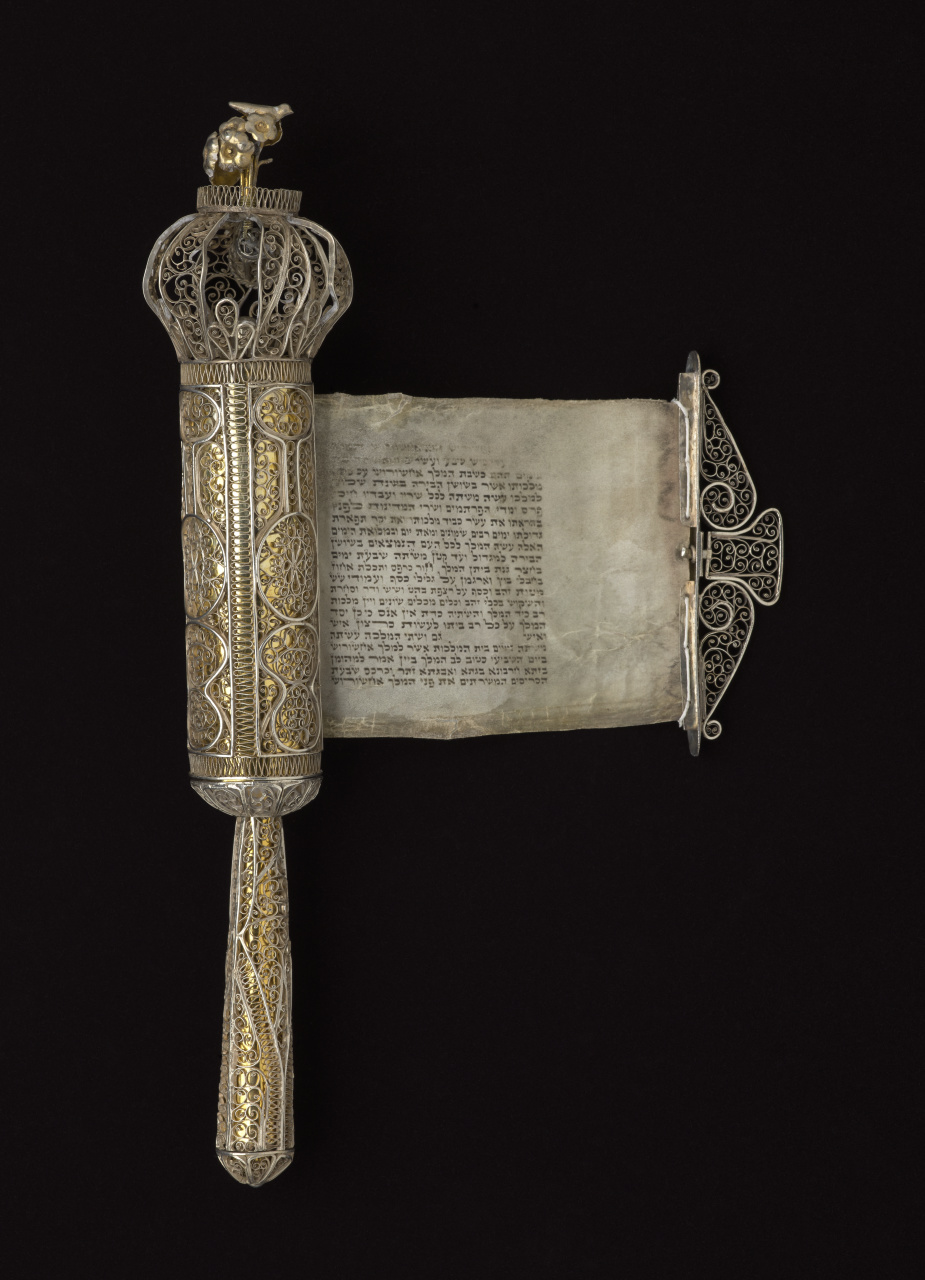
This scroll case is gilded. Gilding is a decorative art technique. An artist applies a thin coat of gold over another material, traditionally metal. This gives the piece the appearance of gold for a lower cost. It also is decorated with filigree. Filigree is a form of metalwork. An artist uses tiny beads or twisted threads of metal to create patterns on a bigger piece. The intricate detail resembles lace. The flowers on top of the case resemble myrtle flowers. These flowers are a reference to Hadassah, one of the names of Queen Esther. The name Hadassah comes from hadas, the Hebrew word for myrtle.
Purim celebrates how Queen Esther rescued the Jews of ancient Persia from the evil plans of Haman. Haman was the king’s advisor. He wanted to kill all of the Jews in ancient Persia. With help from her cousin Mordecai, Esther stopped Haman’s plans. Her intellect, bravery, and grace is celebrated by the painter Jan Lievens in The Feast of Esther. Purim is celebrated in the synagogue by the reading of the Book of Esther. Many communities have a decorated case like this one, in which they store their Esther scroll.
Purim is a lively holiday, filled with laughter and celebrations. The reading of the Book of Esther is often told through a Purim spiel or Purim play. This play is a European Jewish tradition dating back to the mid 1500s. Members of the community dress up in costume and use satire, music, and dance to recreate the story of Esther. The crowd gets involved in the play, booing the name of villains like Haman and cheering the name of heroes like Esther.
tags: patrón, función, comunicación, significado, ritual, supervivencia, ceremonia