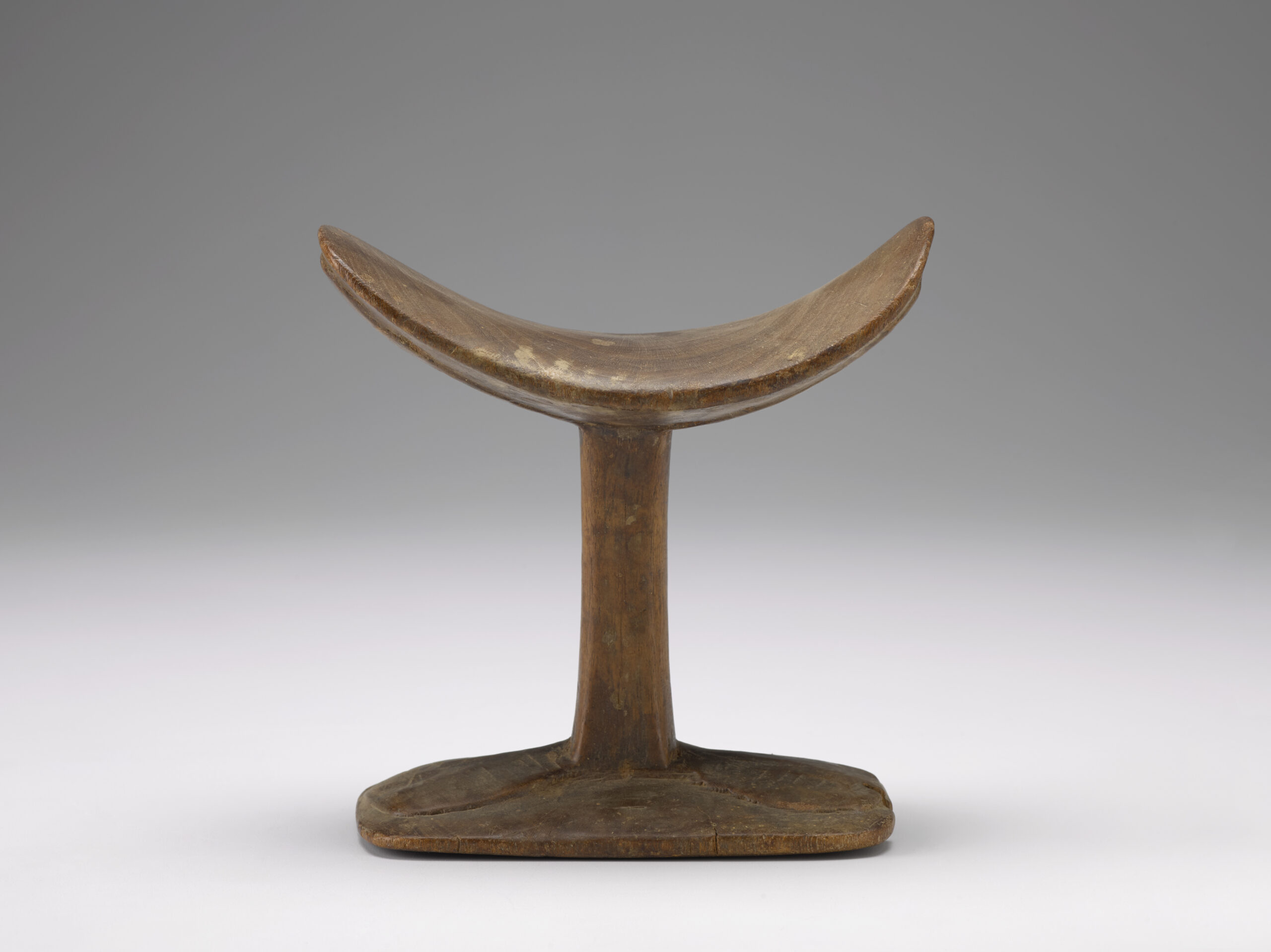
Wooden headrests like this one were used as pillows in Pharaonic Egypt. The headrest supported a person’s head while they slept. The flat base of the headrest was wider than the upper portion. This shape helped it to remain stable. The top portion often had a curved piece that cradled the user’s head. Headrests were generally made from wood, stone, ceramic materials, or ivory. Ancient Egyptians believed that headrests offered magical protection at night. Headrests were often decorated with carved designs that protected the user. One of the most common engravings found on Egyptian headrests was Bes, a deity (god or goddess). Bes was believed to protect the home, mothers and children, and sleeping people.
The ancient tradition of sleeping on a headrest continues today in parts of Africa, where the climate is hot. Wooden headrests help with pest control in areas where insects could infest organic pillow materials. Headrests are also used to protect elaborate hairstyles.
A replica of this headrest is on display in the ancient Egyptian galleries, to highlight the fact that Egypt is an African country. The original headrest is on display in the African arts galleries.