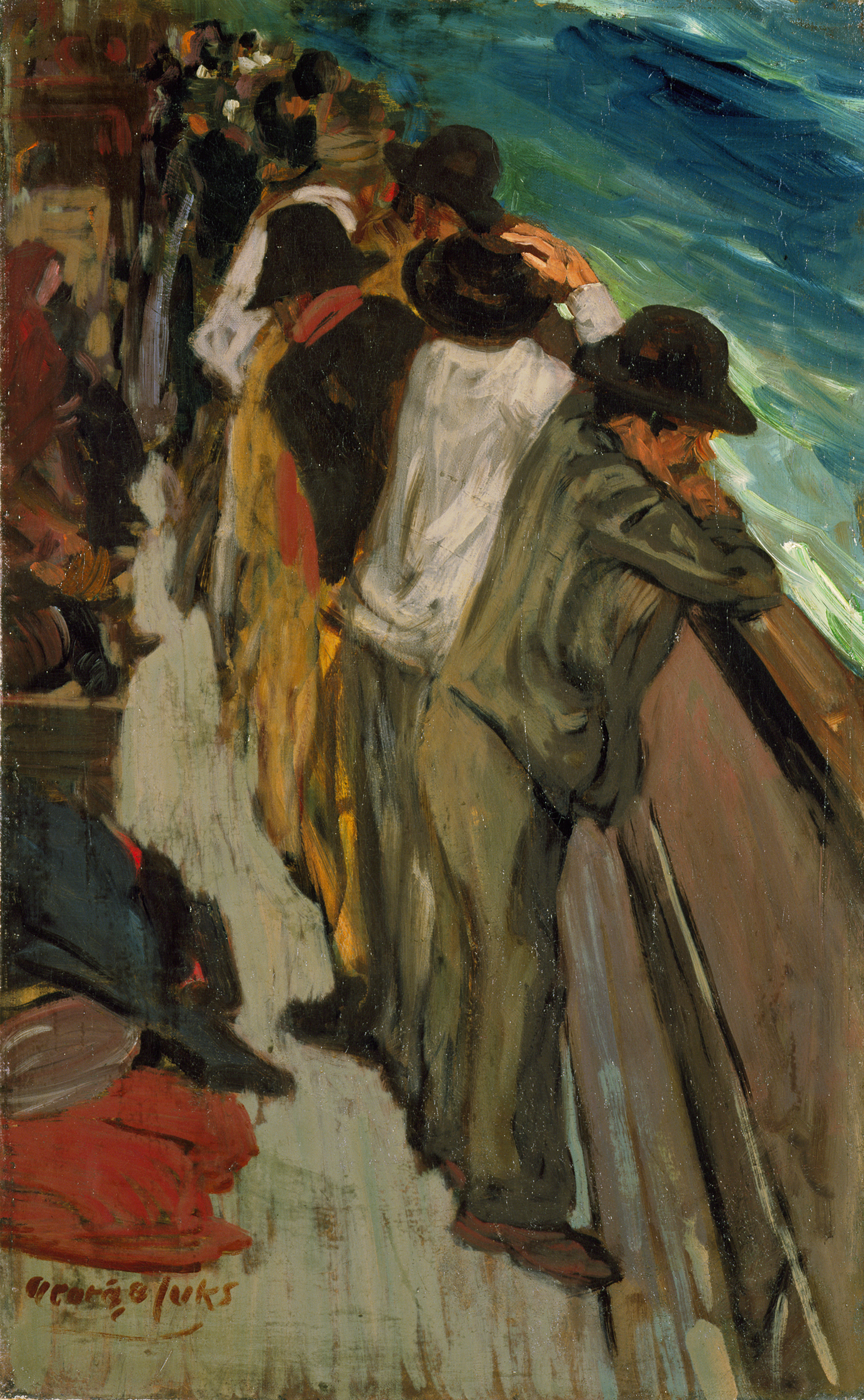
In the Steerage depicts a group of immigrants lined up against the rail of a ship, arriving in the United States after a long journey overseas in steerage class. Steerage was the lowest class of passengers on a steamship. The steerage quarters (rooms or areas of the ship where these passengers slept in groups) were often cramped, uncomfortable, and did not let in any fresh air.
George Benjamin Luks created this painting in 1900, in the middle of a period of mass immigration. From 1892 to 1924, millions of people moved from Europe to the United States in search of a better life. Industrialization led many immigrants to move to the cities and work in factories. Luks was the son of Eastern European immigrants. He often painted scenes of New York City life that featured immigrants and working-class people.
Luks was a prominent member of the Ashcan School. The Ashcan School was not an actual school. It was a group of artists who rebelled against American impressionism and academic painting. Their work began in Philadelphia, at the end of the 19th century. The Ashcan artists are best known for the works they produced after they moved to New York in the early 20th century. These artists considered themselves to be “urban realists.” They are best known for portraying the gritty reality of life in the city. Their work generally features a dark color palette and gestural brushwork.
tags: boat, water, immigration, change, identity, impact, perspective, place, movement