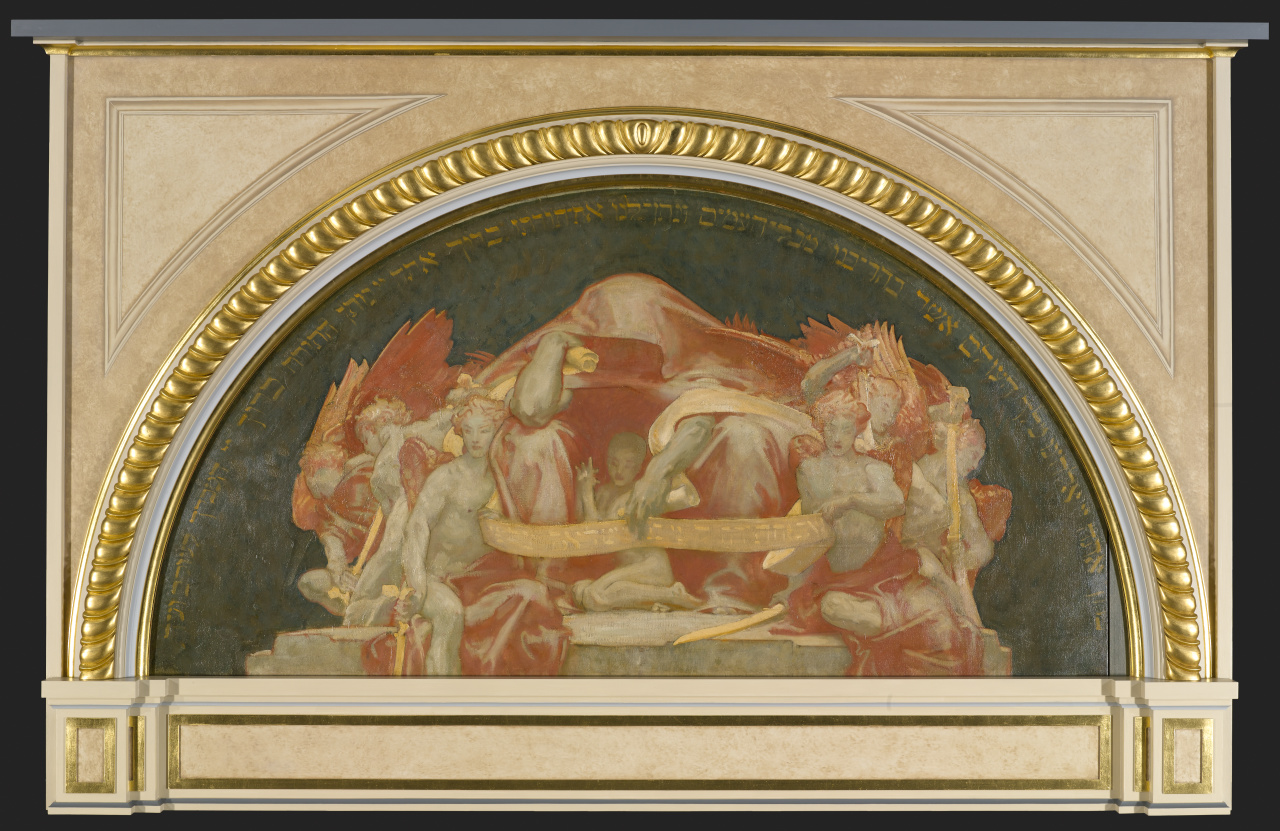
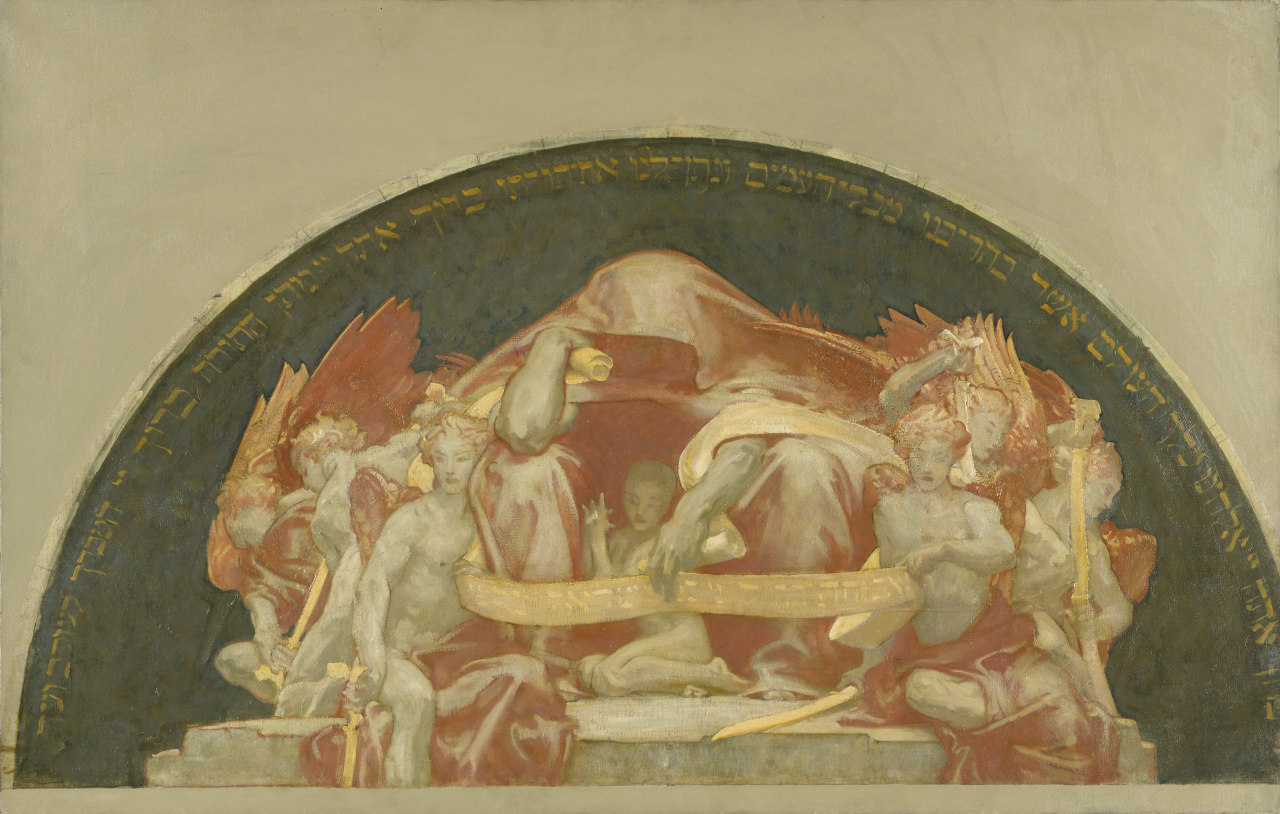
Israel and the Law is an oil sketch study for a wall mural in the entry hall of the Boston Public Library. A study is a preparatory work that helps an artist plan and refine their ideas before creating a finished piece. Artists often create studies as a way to explore different techniques, color combinations, and compositions.
American artist John Singer Sargent is best known as a portrait painter of wealthy Bostonians. He also created murals for public institutions such as Boston’s library and museum. Sargent painted this study to prepare for his Triumph of Religion mural series. The murals depict the evolution of religion from polytheism to the divine revelations of Judaism and Christianity. His library murals represent the history and study of religion rather than the practice of it. Sargent worked on his mural project at the Boston Public Library from 1890 until 1919. He used pencil, charcoal, oil paint, and clay to create many preliminary sketches for his murals.
You can’t do sketches enough. Sketch everything and keep your curiosity fresh.
John Singer Sargent
Israel and the Law depicts a tall figure (representing Jehovah) in an orange-toned cloak, surrounded by angels. The figure is showing an open scroll to a youth who personifies, or represents, Israel. The text on the scroll is written in Hebrew. The Hebrew inscription around the top arch of the painting consists of blessings that are spoken in Jewish ritual before the commandments are recited. This painting is approximately three feet tall and five feet wide. It was originally designed for a wall surface that is shaped like a half moon.
When Israel and the Law was donated to the NCMA, a local craftsperson was commissioned to build a custom frame for it. The frame matches the setting of Sargent’s Triumph of Religion mural at the Boston Public Library. This study is one of two similar works Sargent created. The other is on display at the Royal Academy of Arts in London.