Although born in Cameroon, Samuel Fosso spent most of his childhood in Nigeria among his people, the Igbo. When he was five years old, the Biafran civil war broke out in Nigeria, making the area unsafe for many Igbos. In 1972 Fosso moved to Bangui, the capital of the Central African Republic, to work in his uncle’s shoe factory. He became interested in photography and left the factory to work as a photographer’s apprentice. Fosso began making self-portraits in 1975, at the age of 13, when he opened his own photographic studio.
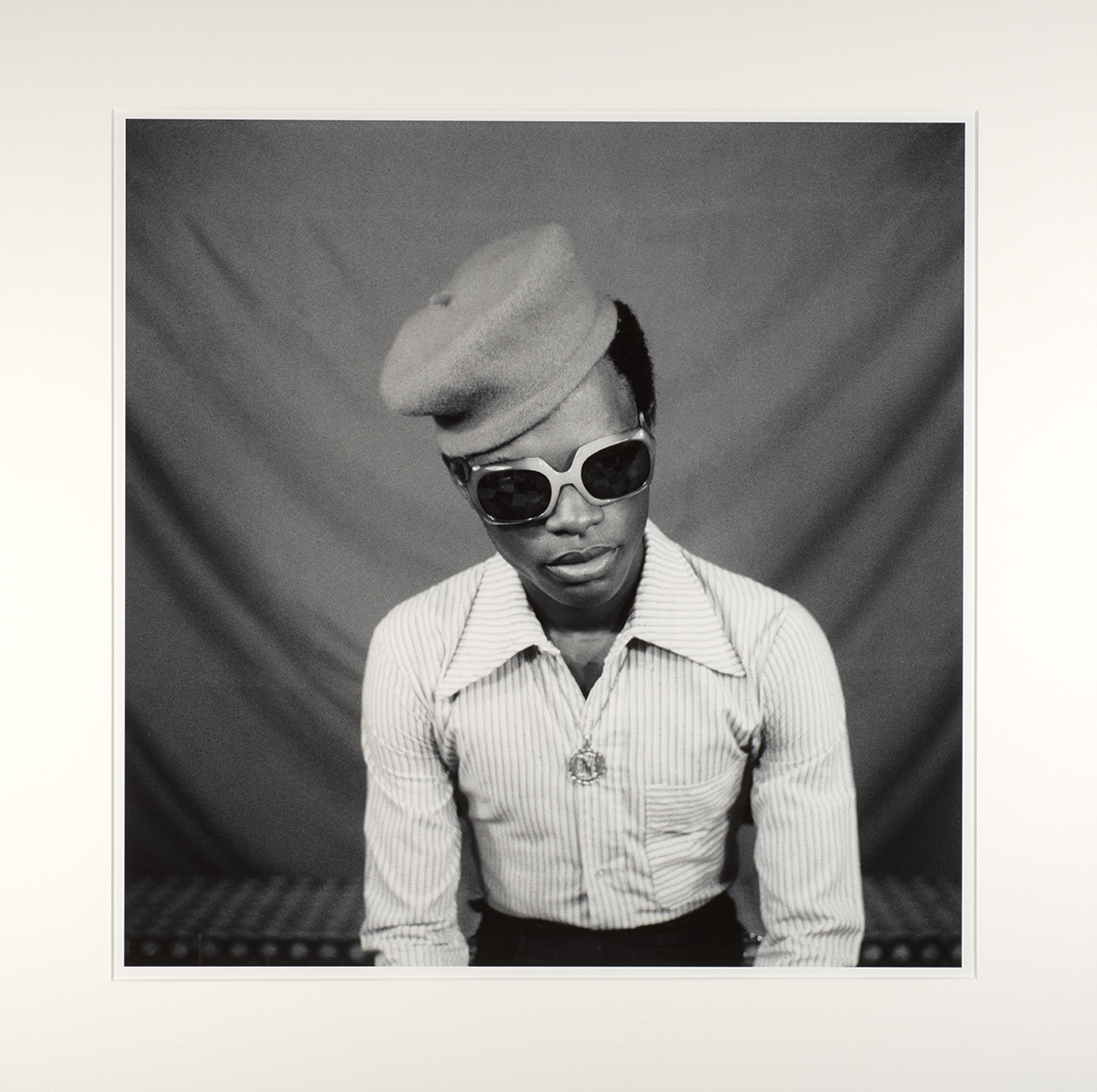
In his private studio self-portraits, the artist created different personas, borrowing iconic images and cultural stereotypes to explore African, personal, and urban youth identities. In this image, Fosso features himself as a subject with a commanding presence, wearing a pair of square sunglasses, a modified pillbox hat, a striped shirt with a wide, butterfly collar, and a necklace with a round pendant. The black-and-white checkered floor of his studio is reflected in his sunglasses, and his eyes are just barely visible behind his glasses. This creates a “double vision” effect that invites a closer look; the artist has included himself and his studio in the photograph, and although he appears to look directly at the viewer, he is actually looking away. Fosso did not gain recognition as one of the most important contemporary African photographers until the 1990s.