Danny Lyon is known for getting close to the people he documents and showing their lives from the inside. He is both a photographer and filmmaker whose work focuses on social change and groups of people that are often overlooked. In the late 1960s, he worked on a project about the Texas prison system.
Throughout the 14-month project, Lyon spent time with the inmates and got to know many of them. His work became a book titled Conversations with the Dead (1971). The book includes photographs, letters written by inmates, and parts of their official prison records. These details help show what life was like inside the prison system at that time.
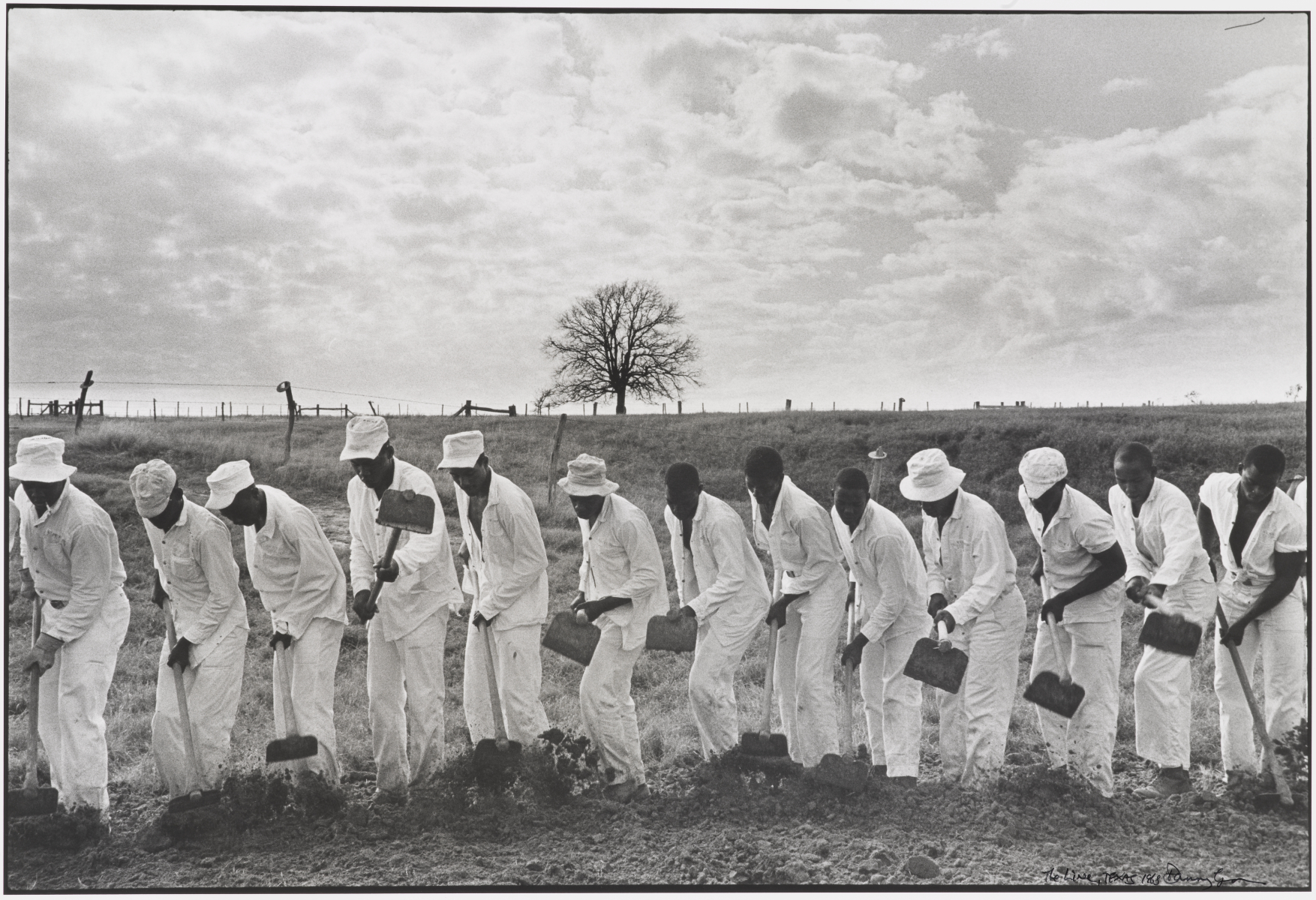
The Line, Texas was featured in Lyon’s book. The photo shows a group of prisoners standing together, and none of the men are identified by name. They appear as a single group, all in the same situation. In other images Lyon refers to the men only by the number of years in their prison sentences. This choice emphasizes how prison life can take away a person’s individual identity.
The pictures do not ask you to help these people, but something much more difficult; to be briefly, intensely aware of their existence, an existence as real and significant as your own.
Danny Lyon
Lyon’s work is often seen as a blend of documentary and fine art photography. He documents real people and real situations, which is a key part of documentary photography. He also pays close attention to composition, mood, and storytelling. These elements give his images the emotional and visual impact often associated with fine art.