François Boucher was a French painter during the 18th century. He is known for his paintings that depict classical themes, decorative allegories, and pastoral scenes. He was a well-known figure in rococo painting. This French style of art and design began in the early 18th century. It is generally associated with the aristocracy, or ruling social class. Rococo painters were known for making their subjects look graceful and elegant.
Venus is the goddess of love in Roman mythology. Classical mythology and themes of love were popular among Boucher’s upper-class French patrons. Mythological motifs were common in academic art. Academic art was produced under the influence of the official European academies of art. These academies controlled most of the art world from the 17th century through the 19th century. The academies were centers for teaching and exhibiting. They often controlled which artists received patronage. Boucher was a favorite painter of King Louis XV and his mistress Madame de Pompadour. Throughout history royal patronage was important to artists. It gave them access to professional and commercial opportunities. King Louis XV appointed Boucher director of the Gobelins Manufactory, a tapestry factory in Paris. He later promoted Boucher to First Painter to the King.
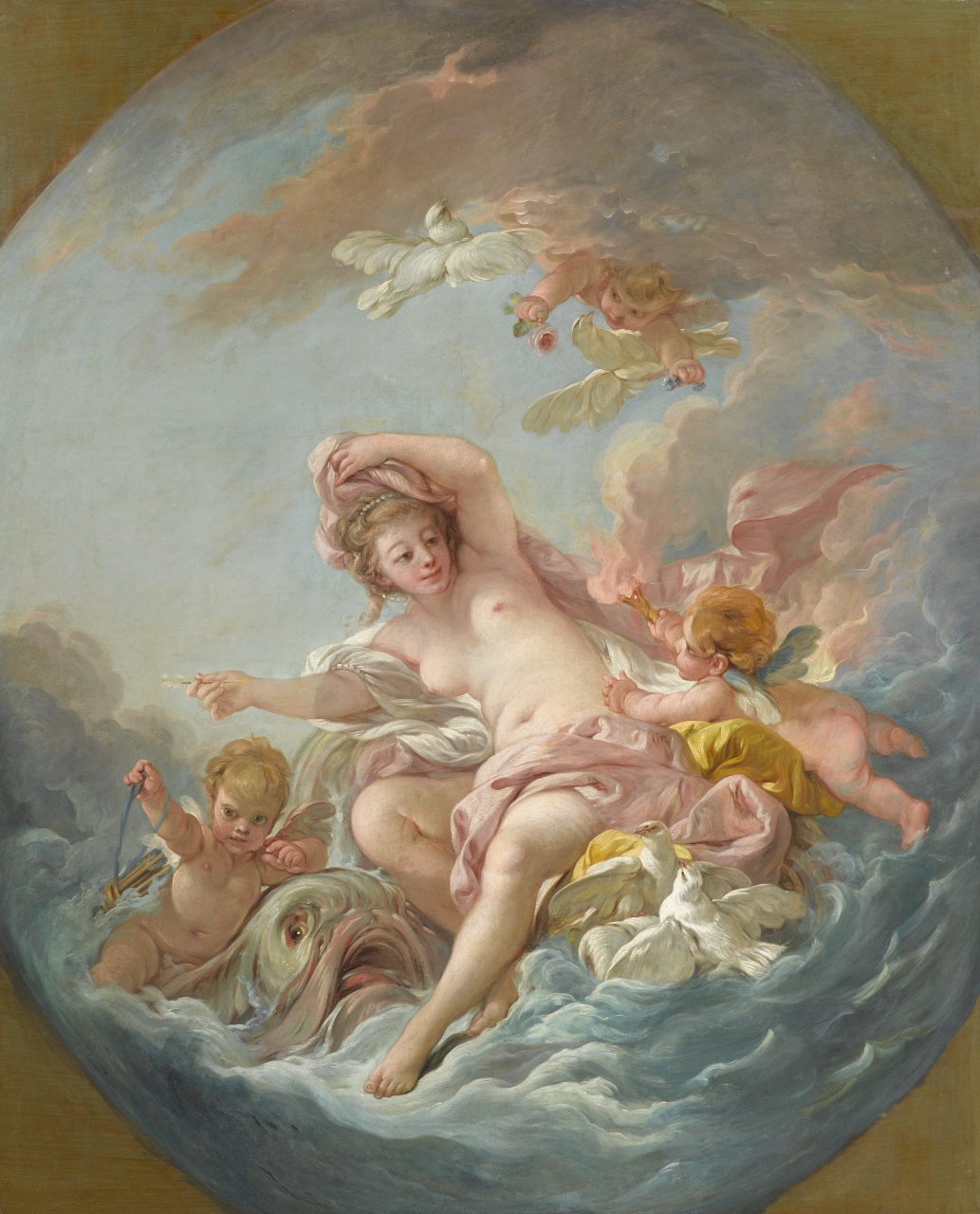
This painting was originally a design for a tapestry at the royal Gobelins Manufactory. The tapestry factory was founded by the Gobelins brothers in the 15th century. In 1662 King Louis XIV took over the property to create a royal factory. Weavers, painters, bronze workers, furniture makers, goldsmiths, and engravers were hired to work at the factory. The goal was to create a royal factory of furniture and to cover the walls of Versailles with tapestries. Establishing royal factories allowed Louis XIV to stimulate the economy and provide furnishings for his residences. The Gobelins Manufactory was known for its high-quality tapestries. It is said that Louis XIV had more than 2,600 tapestries in his collection.
The color red has been associated with love throughout history. Our symbols for love are universally colored red. We use red hearts for Valentine’s Day. In the language of flowers, red roses represent love and passion. When we blush we turn red due to the extra blood flow in our face and skin. Blushing can be a reaction to a strong emotion, physical exertion, and attraction. In this painting the Roman goddess of love is depicted as a young woman who appears to be blushing.