Work of Art

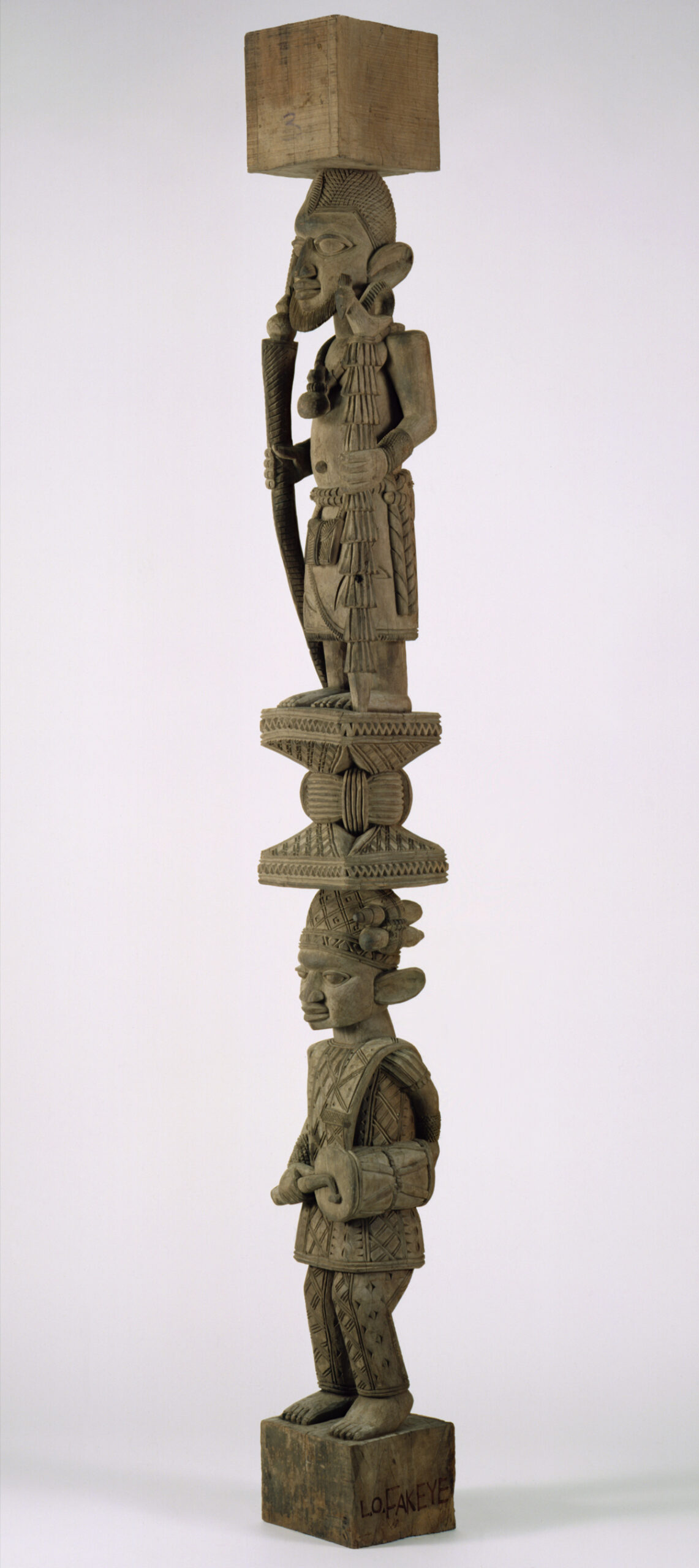
Puesto de la veranda con el sacerdote adivinador (Babalawo) y el tamborilero

Creado
1984
Nacionalidad
Nigeriano
Nacimiento/Muerte
1928-2009
Dimensiones
101 3/4 x 9 1/2 x 9 1/2 pulgadas (258,4 x 24,1 x 24,1 centímetros)
Crédito

Comprado con fondos de la Sociedad de Arte del Estado de Carolina del Norte (legado de Robert F. Phifer)

Número de objeto
2001.9.3
Cultura
Clasificación
Madera
Departamento
Africano

Key Ideas

  • Una veranda es una galería o porche al aire libre (con techo) que se adosa al exterior de un edificio. Este poste de veranda tallado a mano habría servido de columna para sostener el techo de un porch en un centro cultural de Ibadan, Nigeria. Es uno de los tres postes de veranda que el artista creó para el centro cultural.
  • Este poste de madera tallada para la veranda está formado por dos figuras humanas separadas por una forma geométrica estampada. Las figuras representan a un sacerdote adivinador (babalawo) y un tamborilero. El sacerdote adivinador (figura superior) lleva una falda envolvente, un elaborado peinado y un bastón en cada mano. El tamborilero (figura inferior) lleva un traje con motivos de rombos y puntos, con un sombrero y un tambor. La firma del artista está grabada en la base del poste.
  • La adivinación es un ritual que se realiza para interpretar los acontecimientos presentes y predecir lo que sucederá en el futuro. Se practica en muchas comunidades africanas para ayudar a resolver problemas, curar enfermedades y tomar decisiones importantes en la vida.
  • Fakeye, descendiente de cinco generaciones de talladores de madera, se dio a conocer en una tradición en la que los artistas suelen ser anónimos. Se formó y viajó por todo el mundo y creó obras que conectan las tradiciones nigerianas con un arte africano globalizado y contemporáneo.

Más información

Lamidi Olonade Fakeye came from a long line of Yorùbá wood carvers. After a three-year apprenticeship with a master sculptor in Nigeria, he studied and taught in Europe and the United States. As a student in France, he experimented with stone carving but eventually decided to focus on his personal interpretation of the techniques and styles of traditional Yorùbá wood carving. In 1978 he began a 30-year teaching career at Obafemi Awolowo University in Ile-Ife, Nigeria.

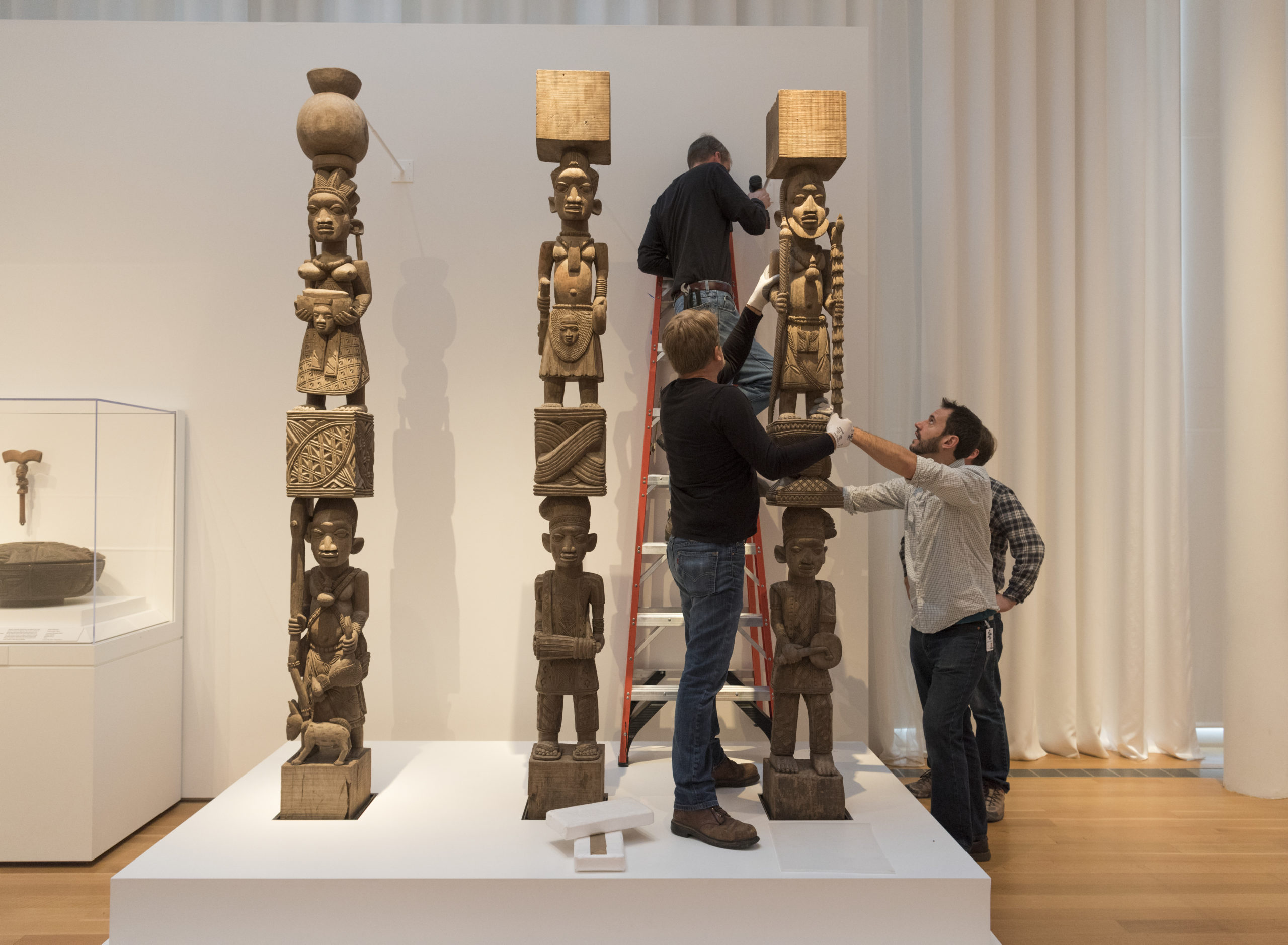
El artista talló estos postes de veranda para un centro cultural en la ciudad de Ibadan (Nigeria), pero el proyecto de construcción fue cancelado y el encargo de una serie de postes fue retirado. En ese momento, Fakeye había completado tres de los ocho postes que había previsto. Los tres postes de la veranda (todos ellos en la colección del NCMA) retratan, por orden: una sacerdotisa de Oshun y sacerdote de Ogun, a sacerdote de Shango y tamborilero de batay un sacerdote adivinador (babalawo) y tamborilero.

tags: función, ritual, comunidad


Read Less Keep Reading

Recursos adicionales

Recursos para los profesores:


Recursos para los estudiantes:

Read Less Keep Reading

Lamidi Olonade Fakeye

2001.9.3

A veranda is an open-air gallery or porch (with a roof) that is attached to the outside of a building. This hand-carved veranda post would have served as a column to support the roof of a porch on a cultural center in Ibadan, Nigeria. It is one of three veranda posts the artist created for the cultural center. 
This carved wooden veranda post is made up of two human figures who are separated by a patterned geometric form. The figures represent a divination priest (babalawo) and a drummer. The divination priest (top figure) wears a wrap skirt, has an elaborate coiffure (hairstyle), and holds a staff in each hand. The drummer (bottom figure) wears a diamond-and-dot patterned outfit, complete with a hat and a drum. The artist’s signature is carved into the base of the post.
Divination is a ritual that is performed to interpret present events and predict what will happen in the future. It is practiced by people in many African communities to help solve problems, cure illness, and make important life decisions.
Fakeye, the descendant of five generations of wood carvers, became well known in a tradition in which artists are often anonymous. He trained and traveled throughout the world and created work that connects Nigerian traditions to a globalized, contemporary African art.

Lamidi Olonade Fakeye came from a long line of Yorùbá wood carvers. After a three-year apprenticeship with a master sculptor in Nigeria, he studied and taught in Europe and the United States. As a student in France, he experimented with stone carving but eventually decided to focus on his personal interpretation of the techniques and styles of traditional Yorùbá wood carving. In 1978 he began a 30-year teaching career at Obafemi Awolowo University in Ile-Ife, Nigeria.
The artist carved these veranda posts for a cultural center in the city of Ibadan, Nigeria, but the building project was canceled and the commission for a series of posts was withdrawn. At that time Fakeye had completed three of the eight posts he had envisioned. The three veranda posts (all of which are in the NCMA collection) portray, in order: a priestess of Oshun and priest of Ogun, a priest of Shango and bata drummer, and a divination priest (babalawo) and drummer.
tags: function, ritual, community


Comprado con fondos de la Sociedad de Arte del Estado de Carolina del Norte (legado de Robert F. Phifer)

1984

101 3/4 x 9 1/2 x 9 1/2 pulgadas (258,4 x 24,1 x 24,1 centímetros)

Madera

Africano

Conceptos relacionados

Más información

Share