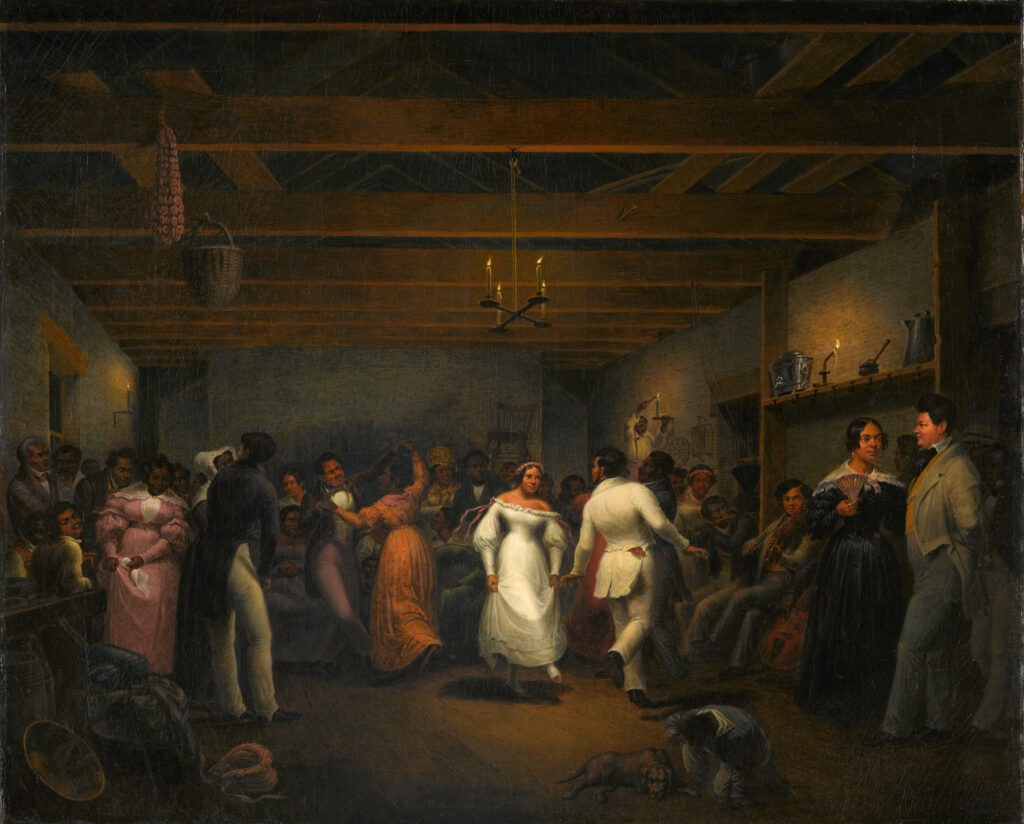
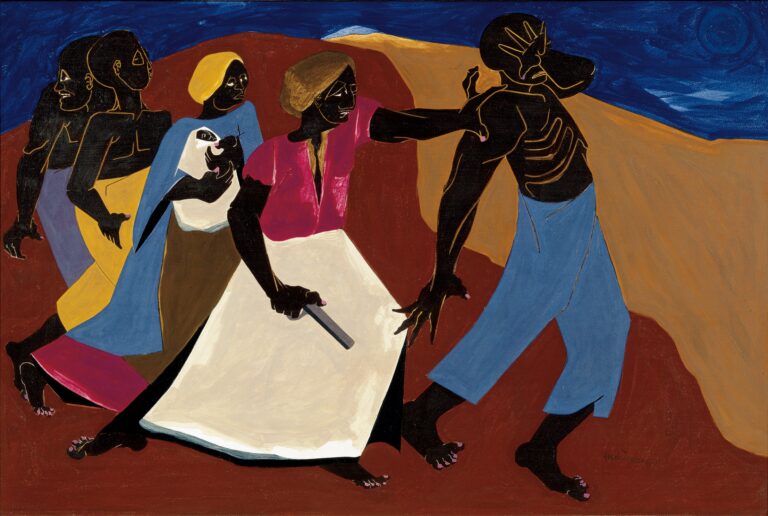
1. Provide each student with a copy of the Image Analysis Chart. Have the class examine Kitchen Ball at White Sulphur Springs, Virginia and Plantation Burial. Encourage students to record their observations on the Image Analysis Charts.
2. Divide the class into pairs. Assign each pair of students to complete one Image Analysis Chart by combining their individual observations to create the best possible Image Analysis Chart. Allowing students to look at their Image Analysis Charts, hold a whole-class discussion focused on the following questions:
- What are the similarities and differences in the paintings?
- What do the paintings tell the viewer about slavery in the United States?
- What do the paintings fail to tell the viewer about slavery in the United States?
- Why did each artist choose to paint this particular image of slavery?
- How did the artist use the composition of the painting to influence the viewer’s feelings?
- How do these images relate to power and identity?
3. Give students some background information about slavery in the United States. Select a short video from the PBS series Africans in America and see the related teacher resource guide for additional information about the program.
4. Provide each student with a sheet of white paper and markers or colored pencils. Assign each student to illustrate a representation of slavery in 19th-century America. Students should be asked to consider symbols, people, and things as well as colors that would influence the composition of their illustration. Allow the students to post their illustrations.
5. Hold a whole-class discussion focused around several students’ brief presentations of what they portrayed in their illustrations and why they emphasized those things. Have students compare/contrast their own representations with Christian Mayr’s painting.
6. If time allows, have students compare their work and the Mayr painting to Forward, Jacob Lawrence’s image of Harriet Tubman. Consider the ways power and identity play a role in all of the images.
Written by Zoe Voigt, Humanities Teacher
• The teacher will use the Image Analysis Charts, illustration, and class discussion to determine students’ understanding of the ideas and culture that influenced white artists in their portrayal of African American slavery.
• The teacher will use the illustration and class discussion to assess students’ ability to analyze how economic, cultural, political, and social factors influenced the institution of slavery and patterns of migration in the United States.
• The teacher will use the Image Analysis Charts to assess the students’ analysis of the composition and content of visual sources.
• The teacher may use an art rubric to assess the students’ illustrations.