Learn More

Work of Art

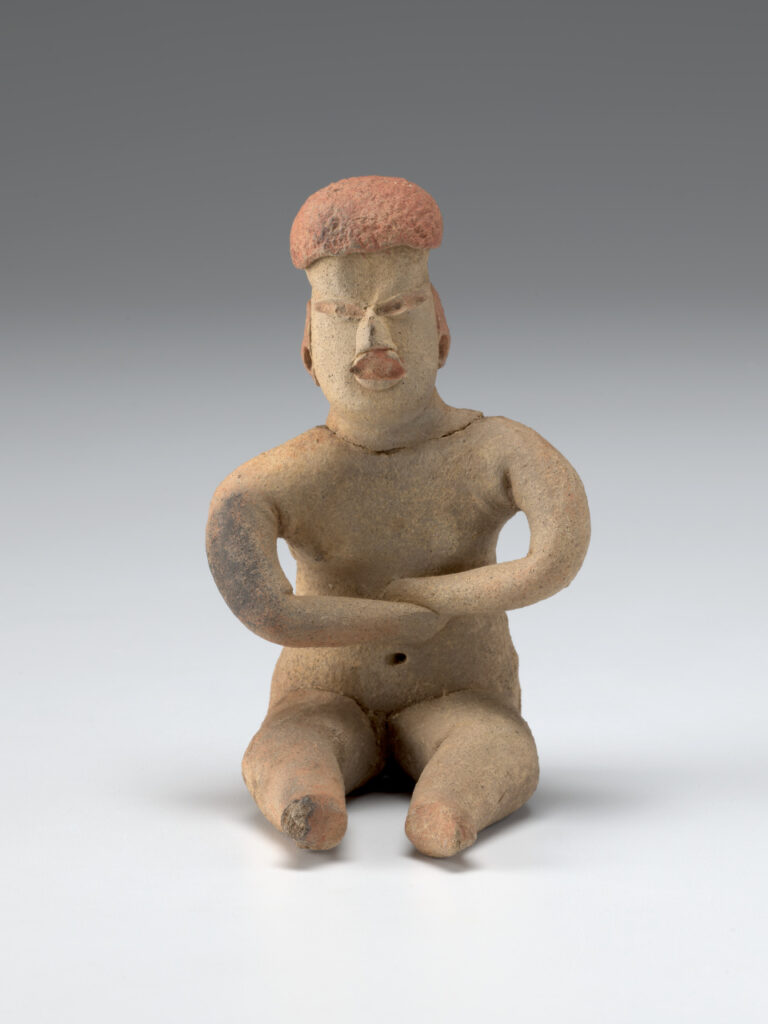
Seated Figure

Work of Art

No results found.

A hammered gold metal mask resembling a human face with blue-green eyes, prominent nose and lips, round earpieces, and traces of red pigment on the surface.
Work of Art

Funerary Mask

Work of Art

No results found.

Share

Dates of Use: Before 3000 BCE–rarely used today

Source: Natural inorganic mineral

Chemical Name: Mercuric sulfide

Formula: HgS (plus natural mineral impurities such as pyrite,  opal,  quartz, and  dolomite )


  • Cinnabar is a natural inorganic mineral mined from the earth. 
  • It was an uncommonly bright and opaque red pigment for its time. 
  • Cinnabar is somewhat rare and was highly valued in many ancient cultures. These included Chinese, Egyptian, Mesopotamian, and ancient Roman cultures. It was also valued by the Olmecs, Maya, and other early civilizations in ancient America.
  • Cinnabar strongly resists fading, like all inorganic mineral pigments. Iit is somewhat chemically unstable, and it can turn black under certain conditions.

Cinnabar in Ancient America

Ancient Americans used cinnabar on important sculptures and murals. The Maya (circa 250 to 900 CE) considered cinnabar to contain ch’ulel (soul force). This made it a sacred substance. The Aztecs (circa 1300 to1521) bathed new artworks in red pigment to give them soul force.


A photo of an Olmec style ceramic seated figure
An Olmec style ceramic seated figure, the hair is painted with cinnabar.


Cinnabar was also used for important ceremonies and burials of individuals with high social status. Many cultures have used red pigments in their burial traditions. These pigments were used in graves, on bodies, and on burial masks. Sometimes human blood was even mixed with cinnabar to create a special paint. This red paint was applied directly to the body of the deceased.
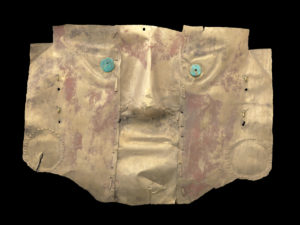
 

A gold metal mask of a human-like face, with blue-green eyes and streaks of red paint on the cheeks and forehead.
A funerary mask with traces of cinnabar.


The use of cinnabar for centuries in ancient American cultures led to heavy mercury pollution. The pollution can be found in ancient cities like Tikal and Cerén. Archaeologists have uncovered evidence of mercury in Maya skeletal remains. It accumulated when the people were still alive. The amounts were significant enough to negatively impact health. One of Tikal’s last rulers might have suffered from a disease as a result of chronic mercury poisoning.