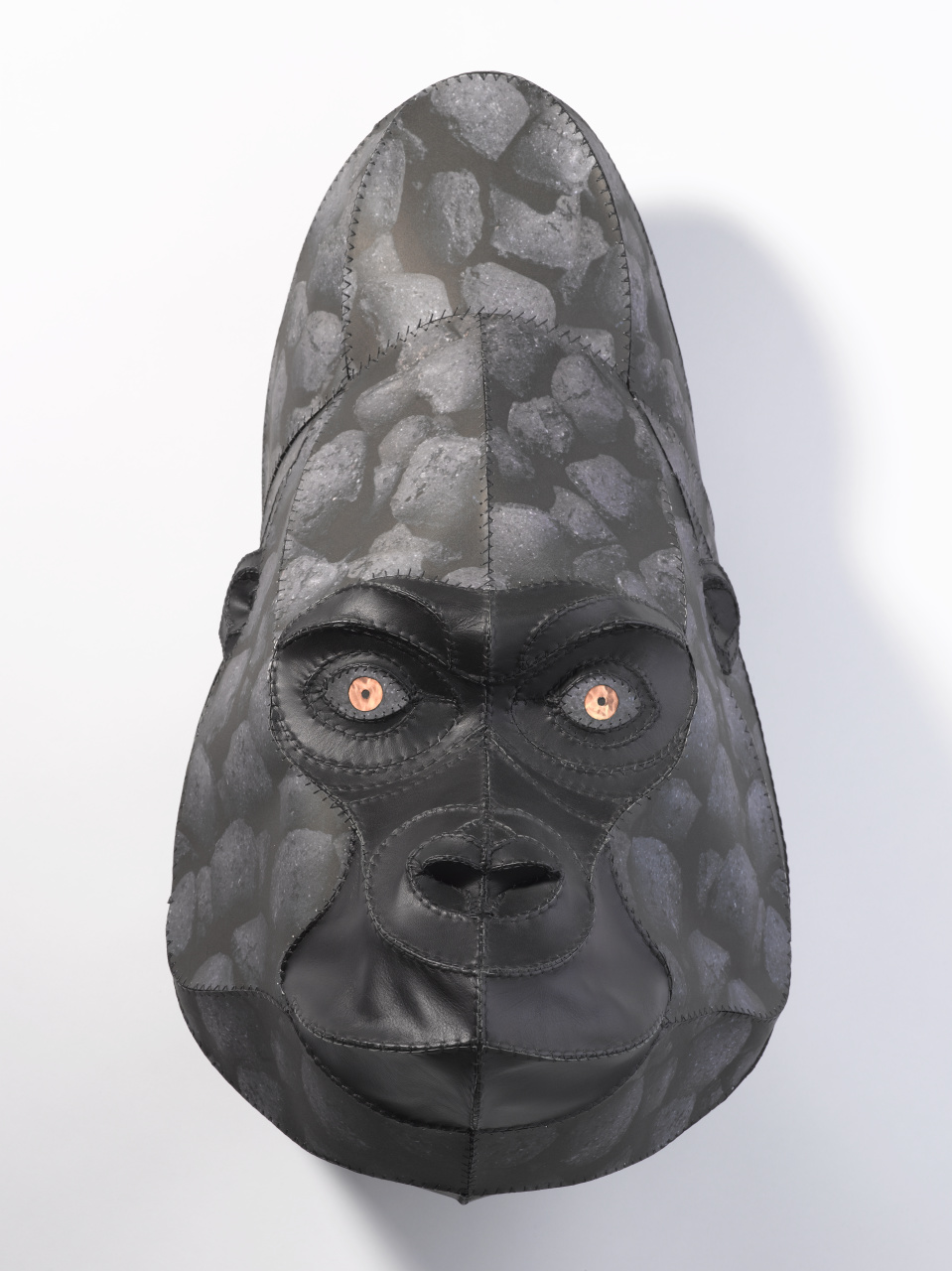
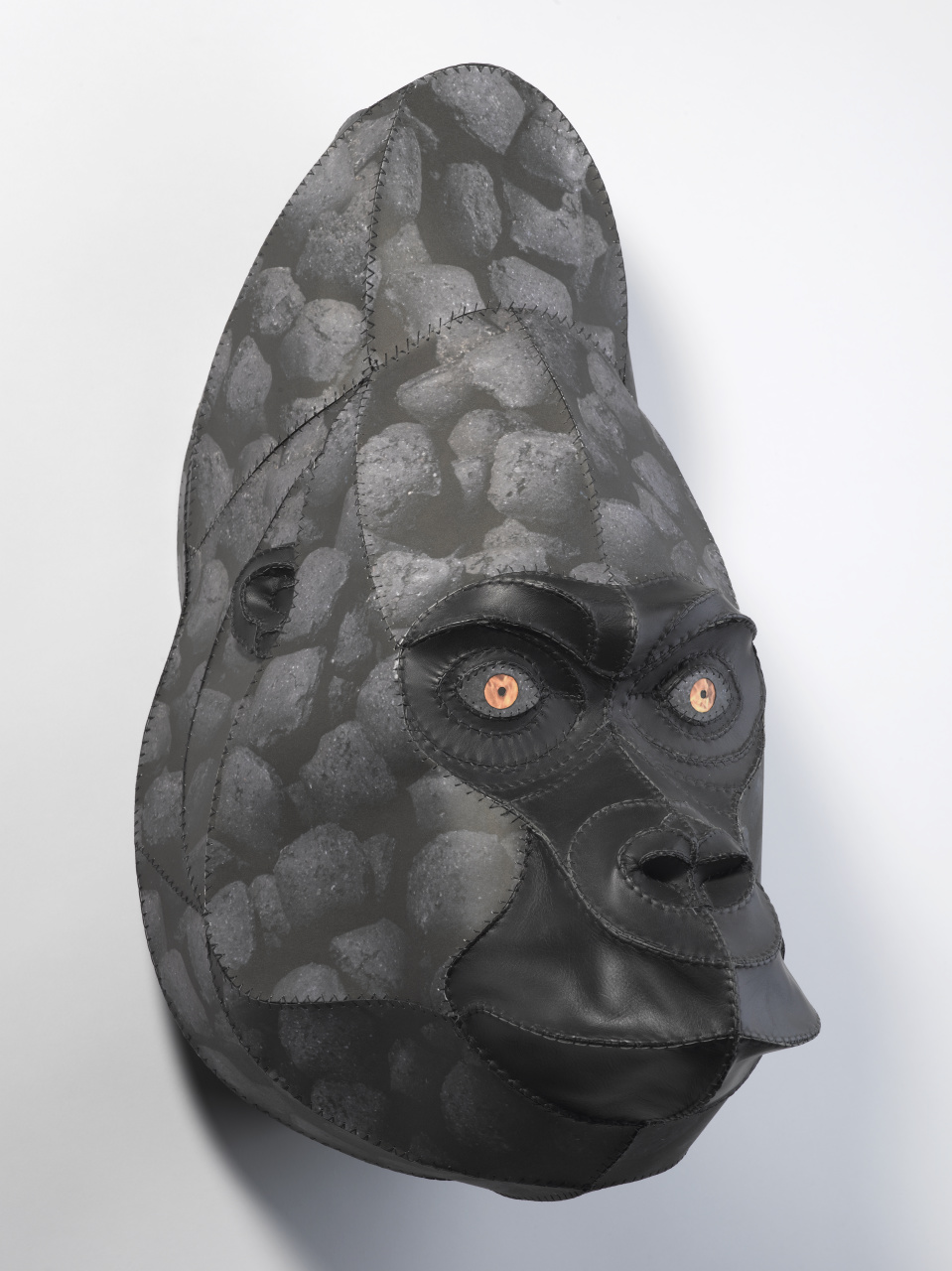
This sculpture was created in response to the deaths of seven gorillas in Virunga National Park. This UNESCO-protected park is located in the Democratic Republic of the Congo. It was the site of a three-way guerilla war in 2007. During the war rebel groups killed groups of the endangered gorillas that lived there. A gorilla named Senkwekwe was in one of those groups. Virunga National Park is often targeted by poachers and illegal charcoal producers.
The outer parts of this sculpture’s head are made of paper covered in inkjet-printed images of charcoal. Virunga National Park is a source of hardwood charcoal, and areas of the park are often clear-cut to make charcoal. This makes the habitat of the gorillas who live there especially vulnerable to illegal charcoal production. The eyes of this sculpture are inkjet-printed images of orange flames. The charcoal and flames are intended to represent the illegal charcoal production in the gorilla habitat.
Anne Lemanski is a multidisciplinary artist who is based in the Blue Ridge Mountains of North Carolina. She is best known for her animal sculptures and collage prints. She studied at the College of Creative Studies in Michigan. In 2015 she was an artist-in-residence at the McColl Center in Charlotte, North Carolina. Her work is inspired by various social, political, and environmental issues.
Everyone brings their own emotions and politics to a piece, and a connection can happen at many different levels.
Anne Lemanski
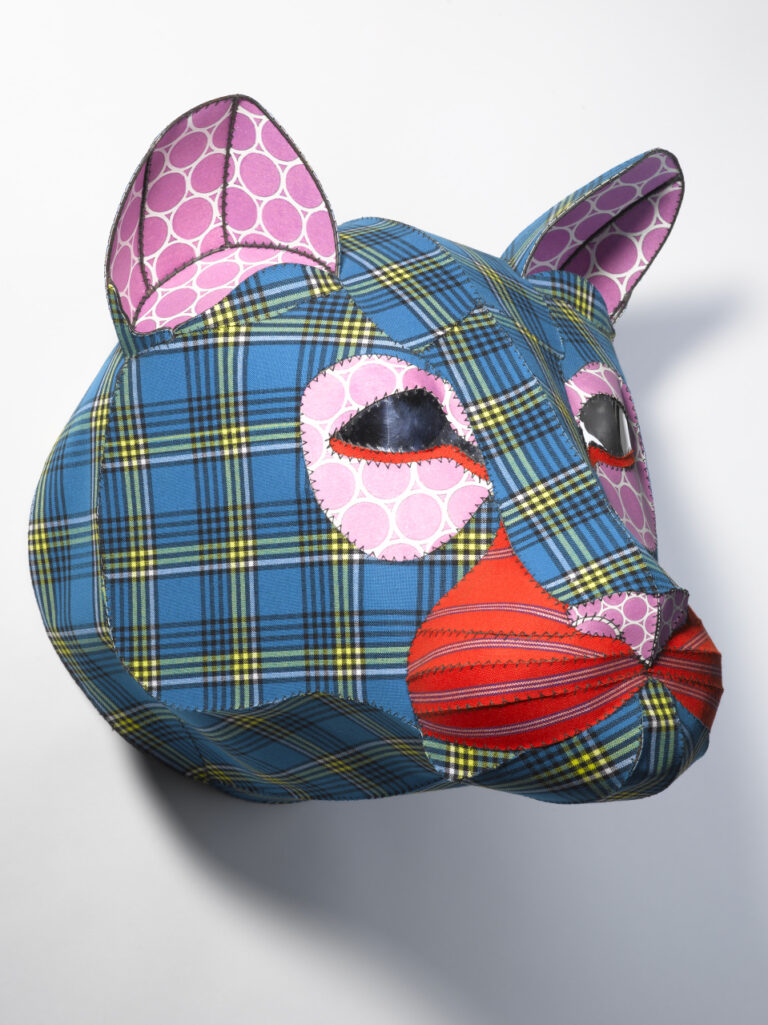
Lemanski makes her sculptures out of copper rods and uses various materials for the “skin.” She begins by shaping the copper rods into the skeleton of the animal or object she is creating. She solders all of her copper-rod skeletons by hand. Next she creates a pattern from the form. Then she chooses a material like paper, plastic, or fabric for the skin. To complete the sculpture, she stitches this material onto the copper form.
Every material responds differently to the contours of the framework; paper differs greatly from plastic, leather or wood veneer. The work I enjoy most is deciding what the skin will be and putting it together. That’s when things really start to take shape, and there is always a surprise in the way the material transforms once it is sewn onto the skeleton.
Anne Lemanski
Tags: NC art, NC artist, North Carolina