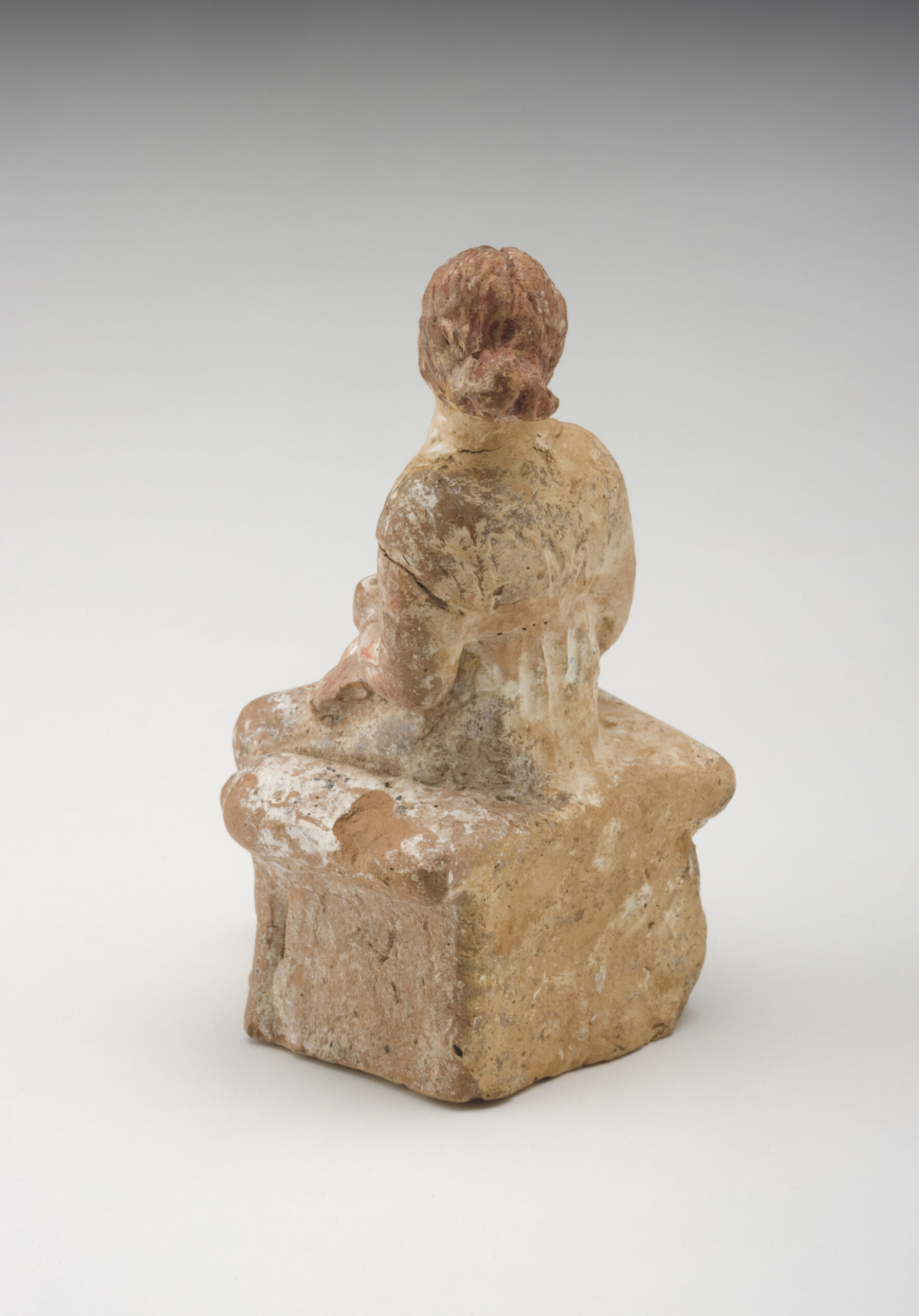
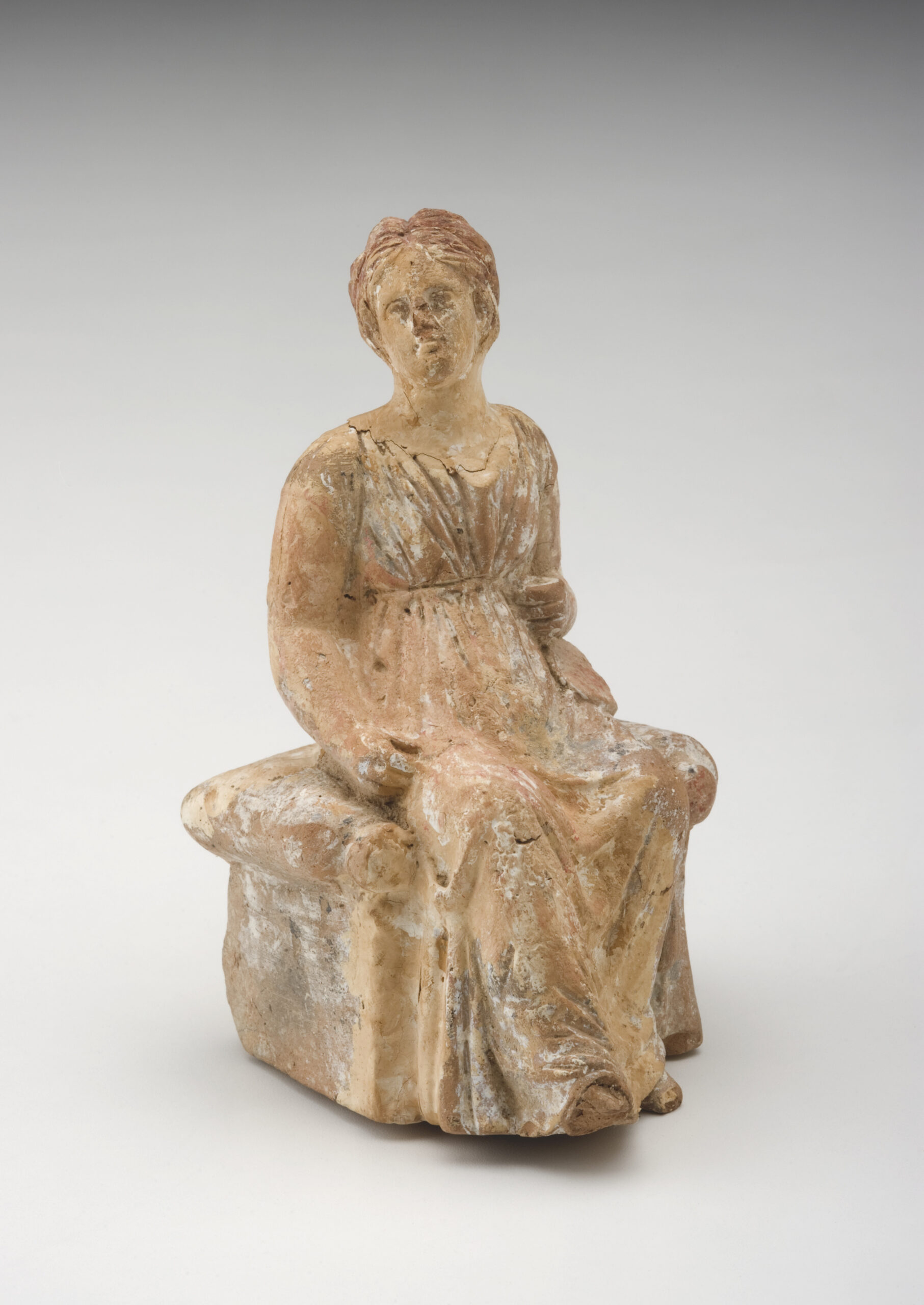
Most Tanagra figurines represent human figures. Some have features that show their status as a divine being. Tanagra figurines served a variety of functions. Some were valued as household possessions. Others served as dedications to gods and goddesses or as companions to the deceased in the afterlife. These figurines are named after Tanagra, Greece, where many of them were found. Tanagra figurines were produced and exported throughout the Mediterranean region.
Well-dressed young women are the main subject of most Tanagra figurines. They are often depicted wearing a chiton (a full-length Greek garment) and a himation. The subject of Woman Seated on Bench is wearing only a chiton. Tanagra figurines were originally covered with a white coating and then painted. The garments were painted bright colors like blue, red, pink, yellow, brown, and violet. The skin was painted pink or reddish. The lips were painted red, and the eyes were painted blue. This figurine has traces of the original white coating and red paint.
Tanagra figurines were made in two-part concave terracotta molds. One side was used for the front and the other side was used for the back. The head and arms were made in separate molds. These parts were attached to the body with slip, or liquified clay, before firing. The use of separate molds made it possible to create figures with slight differences in the positioning of the head and arms. Sometimes handmade accessories like hats and fans were added to the figurines.