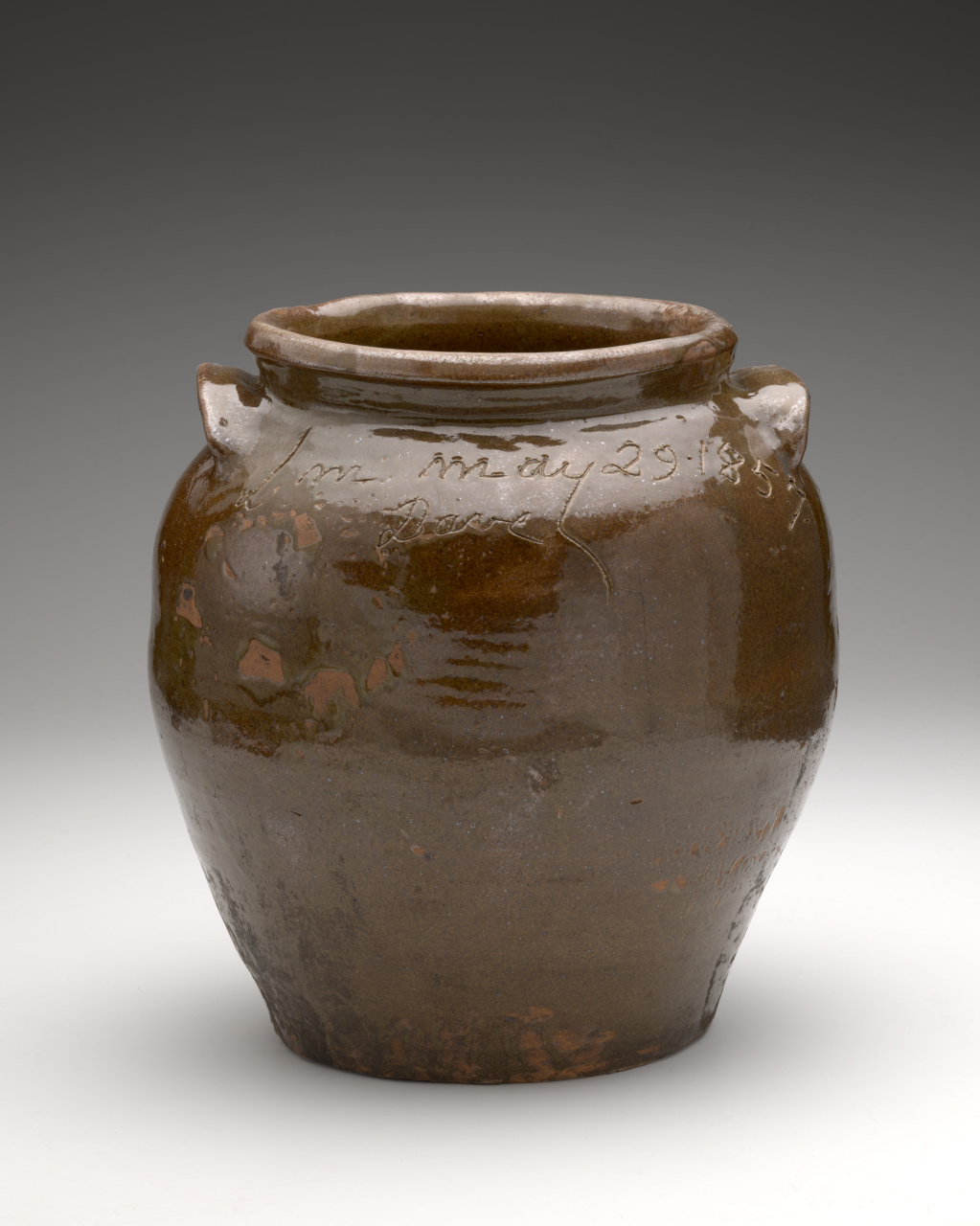
This large ceramic jar was most likely used to store meat or lard (animal fat used for cooking). It is a type of pottery known as alkaline-glazed stoneware. Alkaline glazing is produced by mixing clay (or clay and sand) with wood ashes or lime. These materials give the pottery an earthy brown or yellowish green color. The tradition of making alkaline-glazed stoneware originated in the early 1800s, in the Edgefield region of South Carolina. This rural area is famous for its natural clays.
To create alkaline-glazed stoneware, a potter shapes a clay vessel on a potter’s wheel and then fires it at a high temperature. The extreme heat gives the clay a glasslike quality and fuses the glaze. This makes the pottery waterproof and durable.
The potter and poet known as Dave (David Drake) was one of thousands of enslaved artisans whose work was stolen by merchant enslavers before and during the Civil War. Dave was a skilled potter who made finely crafted ceramic storage jars and jugs. In the mid 1800s, he worked in pottery studios in South Carolina’s Edgefield region. At that time it was illegal there, and in many other states, for enslaved people to read and write. Dave expressed his resistance to the system of slavery by inscribing Bible verses, short poems, and his name on his handmade pottery. He was the earliest-known enslaved potter to inscribe his work. The inscription on Storage Jar includes his name and the date (May 29, 1857) on which he created this vessel.
Dave created thousands of ceramic pottery pieces. Each jar and jug he crafted featured his name or a unique verse. Only 270 of his original pottery pieces still exist.