Ir al contenido principal

Storage Jar (work of art)

Información sobre la obra de arte

Creado
1857
Nacionalidad
Americana
Nacimiento/Muerte
circa 1801-1870s
Dimensiones
Height and circumference:
17 × 49 inches (43.2 × 124.5 centimeters)

Crédito

Comprado con fondos de la Sociedad de Arte del Estado de Carolina del Norte (legado de Robert F. Phifer)

Número de objeto
2023.19.1
Cultura
Americana
Clasificación
Cerámica
Departamento
Americana a 1910

Key Ideas

  • This is an example of alkaline-glazed stoneware. It was made by hand on a potter’s wheel, a machine that potters use to shape clay into round, ceramic objects.
  • This ceramic jar is nearly two feet tall. It was most likely used to store food or cooking ingredients. 
  • The artist known as Dave was an enslaved person and skilled artisan who made pottery and wrote poetry. He lived and worked in the Edgefield region of South Carolina, where the tradition of making alkaline-glazed stoneware began. 
  • Dave is best known for creating large ceramic storage jars and jugs. He was the first enslaved potter to inscribe his work.
  • When Dave created this stoneware vessel, it was illegal for enslaved people to read and write. He rebelled against these laws by writing on his pottery. His work is considered to be a creative act of resistance.

Más información

This large ceramic jar was most likely used to store meat or lard (animal fat used for cooking). It is a type of pottery known as alkaline-glazed stoneware. Alkaline glazing is produced by mixing clay (or clay and sand) with wood ashes or lime. These materials give the pottery an earthy brown or yellowish green color. The tradition of making alkaline-glazed stoneware originated in the early 1800s, in the Edgefield region of South Carolina. This rural area is famous for its natural clays.

To create alkaline-glazed stoneware, a potter shapes a clay vessel on a potter’s wheel and then fires it at a high temperature. The extreme heat gives the clay a glasslike quality and fuses the glaze. This makes the pottery waterproof and durable. 

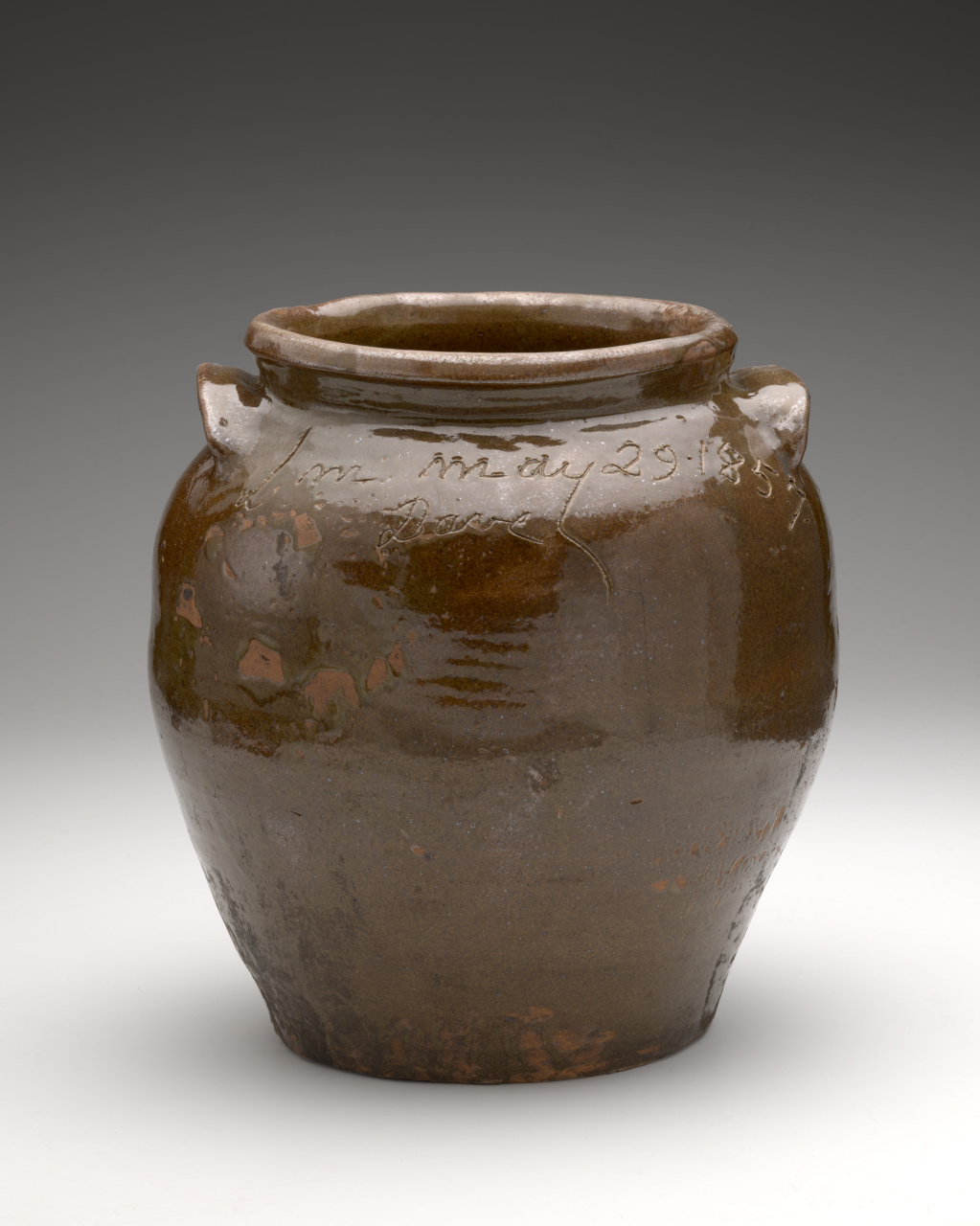
The potter and poet known as Dave (David Drake) was one of thousands of enslaved artisans whose work was stolen by merchant enslavers before and during the Civil War. Dave was a skilled potter who made finely crafted ceramic storage jars and jugs. In the mid 1800s, he worked in pottery studios in South Carolina’s Edgefield region. At that time it was illegal there, and in many other states, for enslaved people to read and write. Dave expressed his resistance to the system of slavery by inscribing Bible verses, short poems, and his name on his handmade pottery. He was the earliest-known enslaved potter to inscribe his work. The inscription on Storage Jar includes his name and the date (May 29, 1857) on which he created this vessel.

Dave created thousands of ceramic pottery pieces. Each jar and jug he crafted featured his name or a unique verse. Only 270 of his original pottery pieces still exist.

Recursos adicionales

Recursos para los profesores


Recursos para los estudiantes

Imágenes

  • A brown ceramic jar with a date and name inscribed at the top

    Storage Jar

    A ceramic jar with a brown, glossy finish and two handles on either side of the opening at the top. The date May 29, 1857 and the artist’s name are carved into the top section of the jar.

Conceptos relacionados