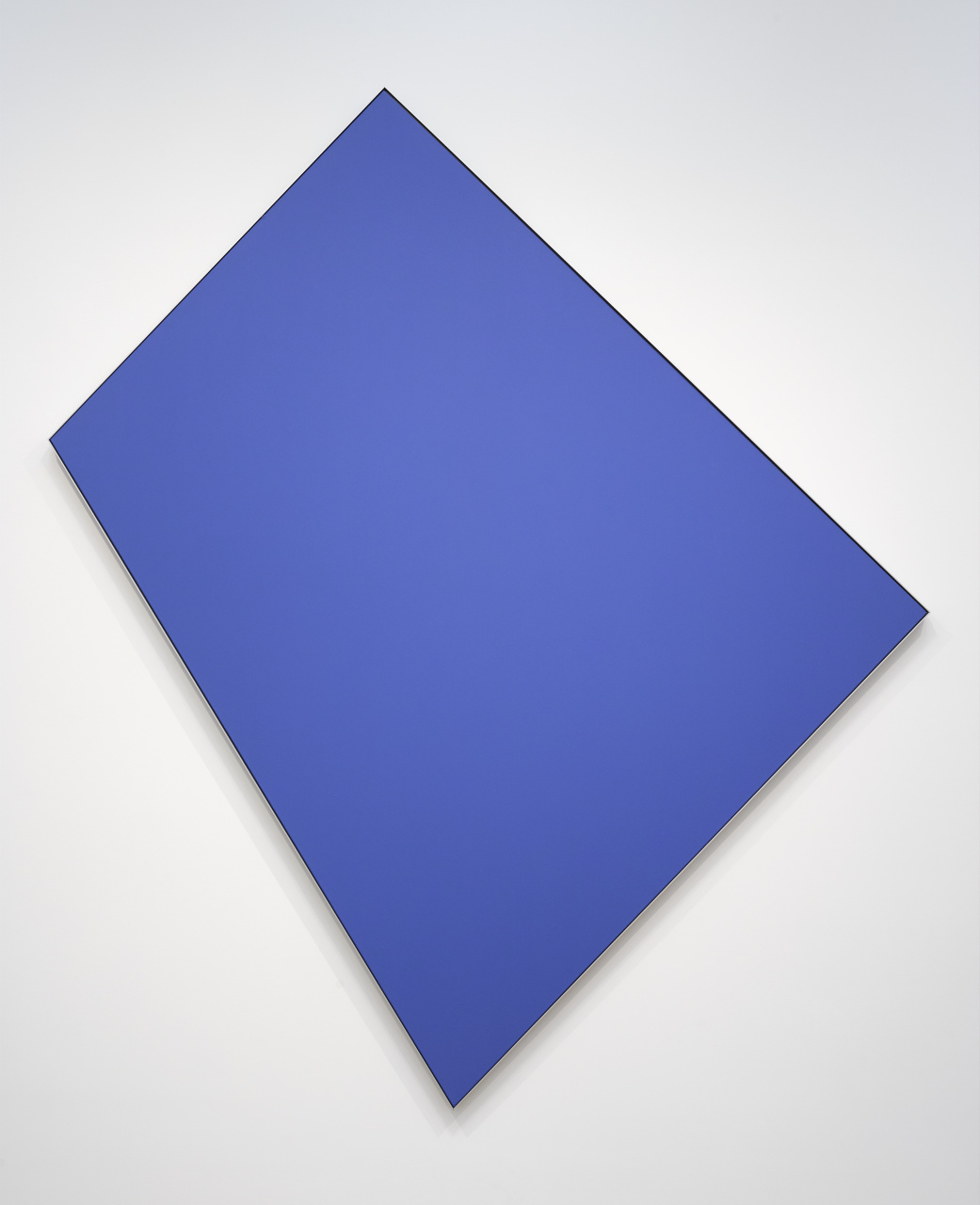
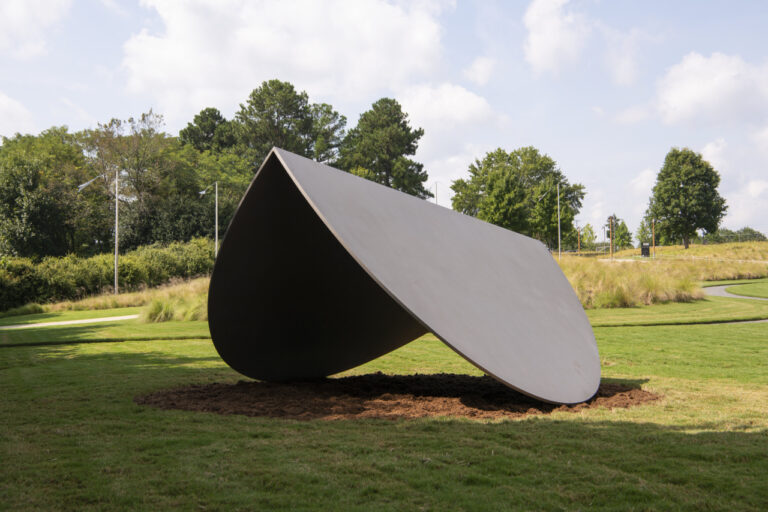
Ellsworth Kelly was an American painter, sculptor, and printmaker. His abstract geometric paintings (which he called “panels”) were often inspired by the shapes he saw in shadows, doors, and windows. His monochromatic panels emphasize the relationships between shape, color, and form.
My forms are geometric but don’t interact in a geometric sense. They’re just forms that exist everywhere, even if you don’t see them.
Ellsworth Kelly
Kelly’s work greatly influenced the development of multiple abstract art movements in the 1950s and 1960s. These include hard-edge painting, color field painting, and minimalism. Hard-edge painting is characterized by large, simplified, usually geometric forms on a flat surface. Color field painting involves the application of a single color to large areas of a work. Minimalism uses simple geometric shapes like squares and rectangles. Elements of all three art movements are evident in Blue Panel.
Kelly attended art school at Pratt Institute in New York City. He left in 1942 to serve in World War II. His battalion served in what is known today as the “Ghost Army.” Kelly used his art skills to teach the soldiers how to make decoy vehicles (including inflatable tanks) and to paint camouflage. They used these creative illusions to hide military equipment and confuse the German soldiers.