Work of Art

Ceremonial Ball Game Yoke

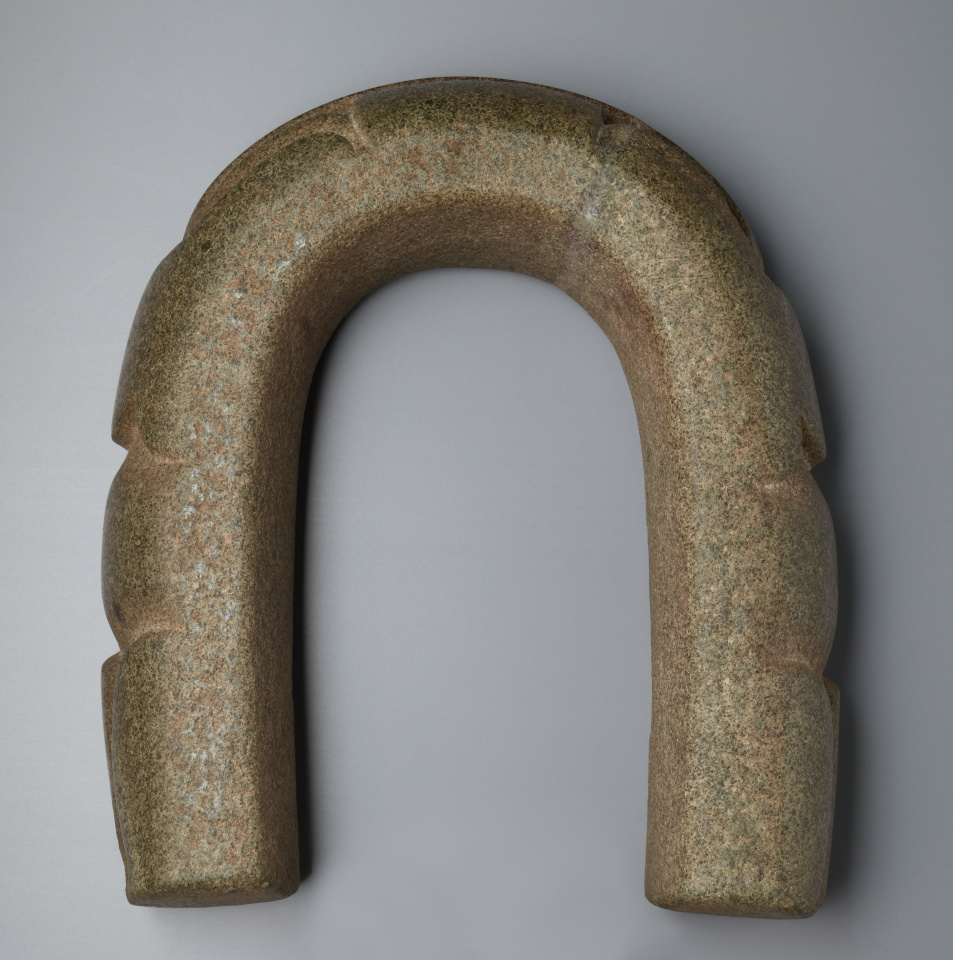
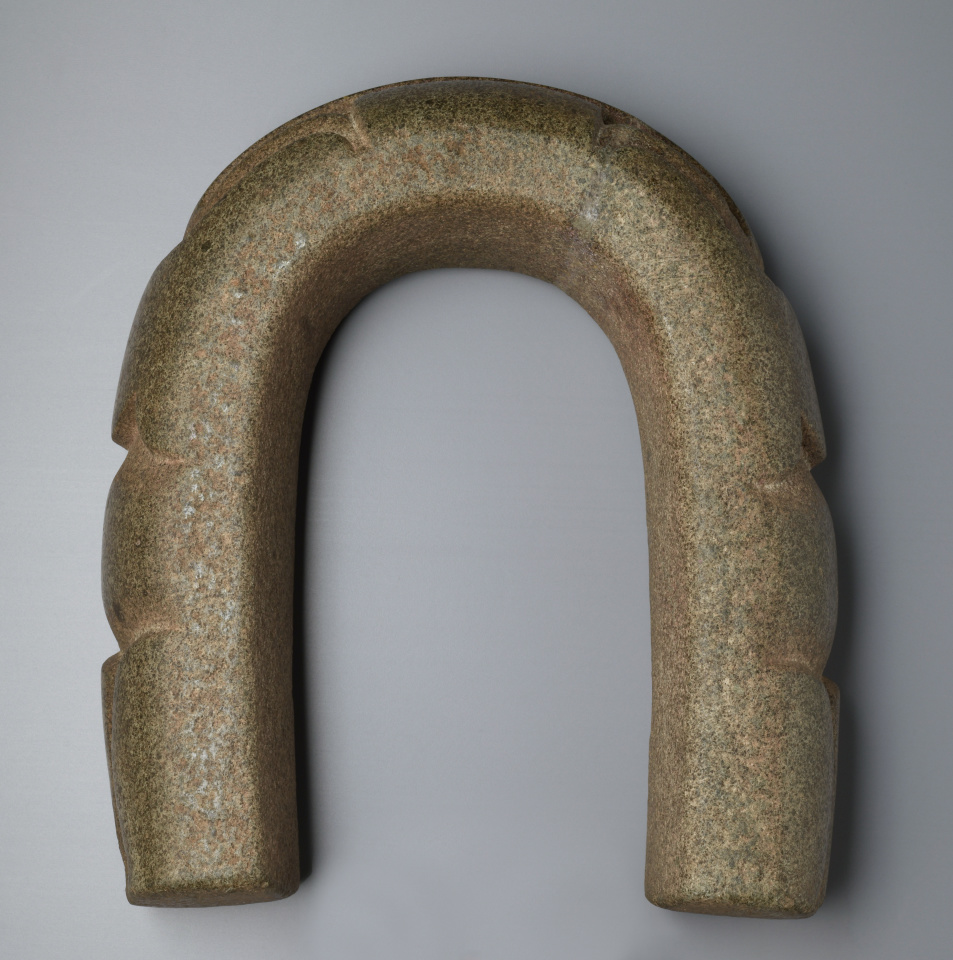
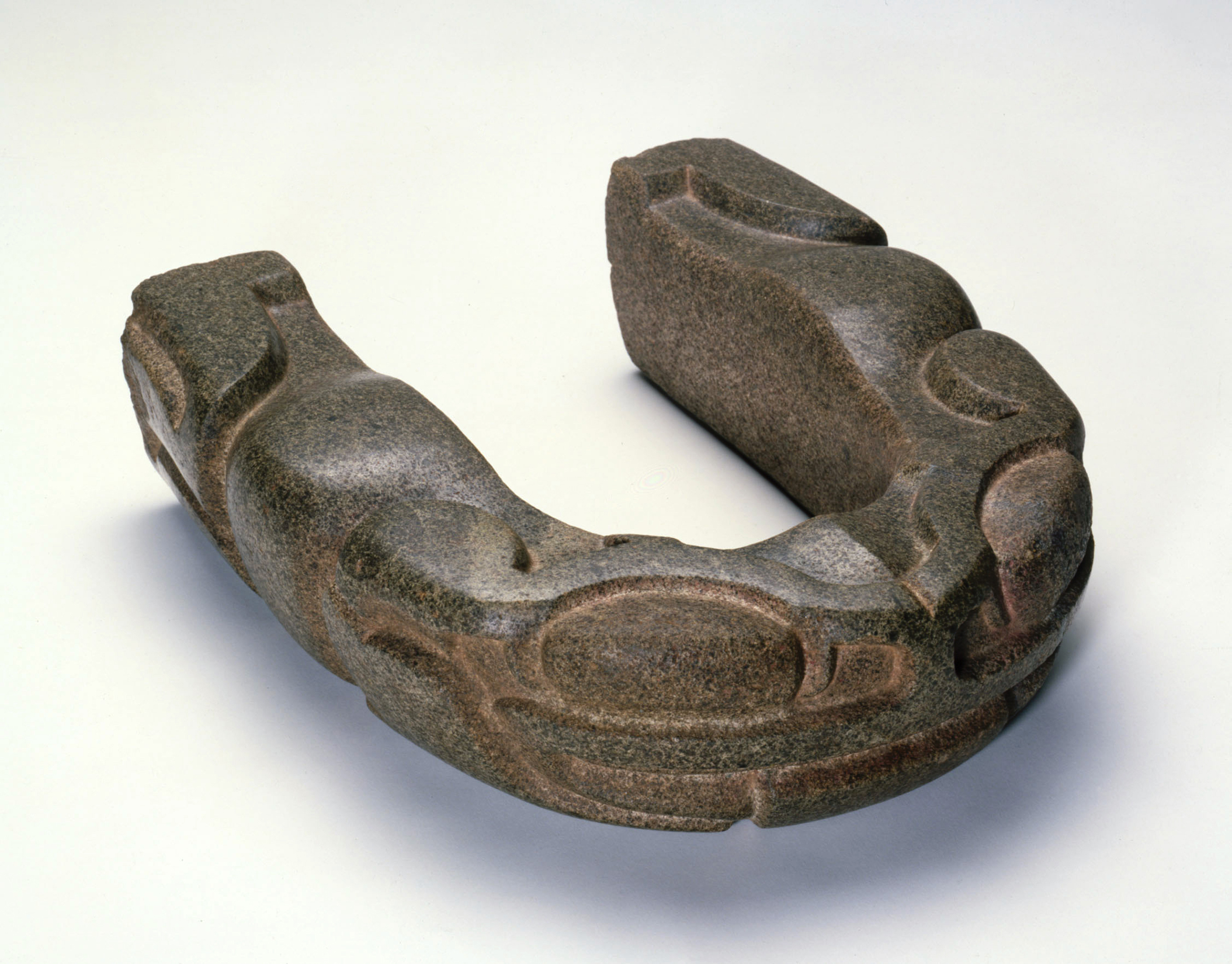
A carved u-shaped stone yoke resembling a frog with large eyes, a broad mouth at the front, and legs carved on the sides.
Created
circa 250–900
Artist
Unknown Veracruz Artist
Dimensions
Height, width, and length: 4 1/2 x 14 1/4 x 16 inches (11.4 x 36.2 x 40.7 centimeters)
Medium
Credit

Gift of Mrs. Ann G. Nisenson

Object Number
G.71.46.1
Classification
Sculpture
Department
Ancient American

Key Ideas

  • One of the earliest known sports that involved the use of a ball was played by the Maya people (circa 550 to 850) and was known as “the ballgame.” 
  • Yokes were made of padded leather or wood and were worn at mid-body to protect the torso and direct the heavy rubber ball during the ballgames. 
  • Carved stone yokes like this one were used for ceremonial purposes, such as emblems or trophies. 
  • The yoke was carved to resemble a frog.

Learn More

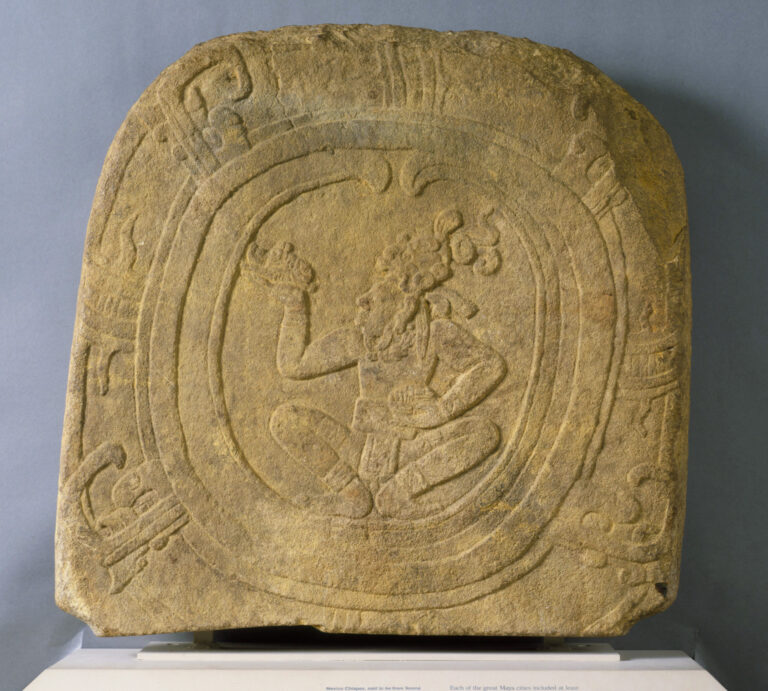
Players of the Ancient Mesoamerican ballgame wore wide, padded, belt-like yokes made of wood, rubber, or leather, to prevent injury from the heavy rubber ball. Compare this ballgame yoke to the ballcourt marker, which depicts a Maya ballgame player wearing a yoke. The ballgame is still played among indigenous peoples in Mexico. The object of the game is to keep the ball in the air by striking it with any part of the body, except for the hands. Heavy stone yokes (this one weighs 45 pounds) were ceremonial items. Yokes found in burial tombs indicate the status of the deceased person. This yoke is carved to look like a frog. Large eyes and a broad mouth (with a tongue sticking out) cover the front, with the front legs tucked behind. The frog’s hind legs are in a crouched position at the back end of the yoke.

tags: force, function, play, ritual, ceremony, animals

Read Less Keep Reading

Additional Resources

Resources for Teachers


Resources for Students

  • Watch a video to discover how a Maya legend inspired a deadly ballgame.
  • Watch a video to understand how the ancient ballgame was played.
  • Watch a video to learn how the ancient ballgame “Ulama” is still being played.
Read Less Keep Reading

Related Concepts

Learn More

A tan, carved stone marker with a central design depicting a squatting man facing left.
Work of Art

Ballcourt Marker

Share