Robert Rauschenberg was an American artist whose work influenced the modern art movements of the 20th century. The modern art movement changed the art world. Artists began using different materials and new methods, such as solvent transfer images, in their artwork. Rauschenberg worked in almost every medium available throughout his career. He is best known for using materials in creative and unusual ways. Rauschenberg combined painting and sculpture to create what he called “Combines.” This type of art is now called assemblage (or “constructed” art). In 1955 Rauschenberg made a Combine titled Bed. The assembled piece is made up of an old pillow, a sheet, and a quilt.
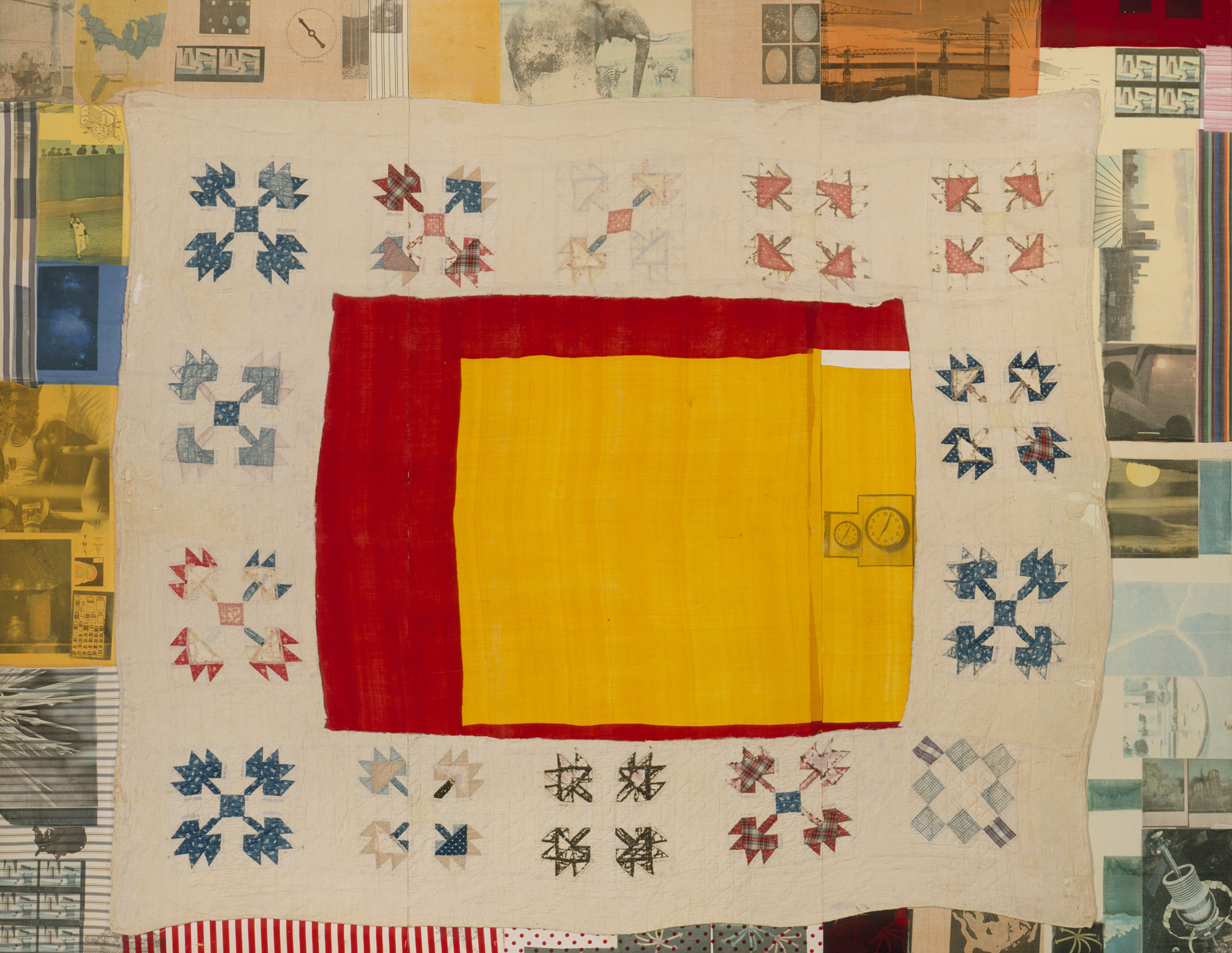
Rauschenberg created Credit Blossom (Spread) in 1978. This mixed-media work includes fabric, a quilt, and images from different media sources. It is part of a series called Spreads. The multiple clock faces and clocklike designs in this work are visual representations of time. The work also includes contrasting elements like technology versus nature, human-made versus factory-made objects, and visual references to the past and the present. It incorporates everyday objects as art materials and blends the medium of painting with the medium of sculpture.
In 1948 and 1949, Rauschenberg attended Black Mountain College in Black Mountain, North Carolina. He returned to further his studies in 1951 and 1952. There he studied with other well-known artists, including Josef Albers and John Cage. During his time at Black Mountain College, Rauschenberg explored using salvaged objects and photography.
Painting relates to both art and life. Neither can be made. I try to act in the gap between the two.
Robert Rauschenberg
tags: textile, change, order, part/whole, subjectivity, pattern, North Carolina