North Carolina artist Bob Trotman began his career as a furniture maker. He later became a sculptor known for his figurative wood sculptures, which represent people from real life. Trotman was born in Winston-Salem and is a self-taught artist and woodworker. In the mid-1970s, he opened a furniture-making studio in rural western North Carolina. He eventually shifted from making useful objects to creating sculptures of human figures. He continues to live and work in western North Carolina.
As a figurative sculptor my concern is the exploration, interpretation, and representation of the human body.
Bob Trotman (from his artist statement)
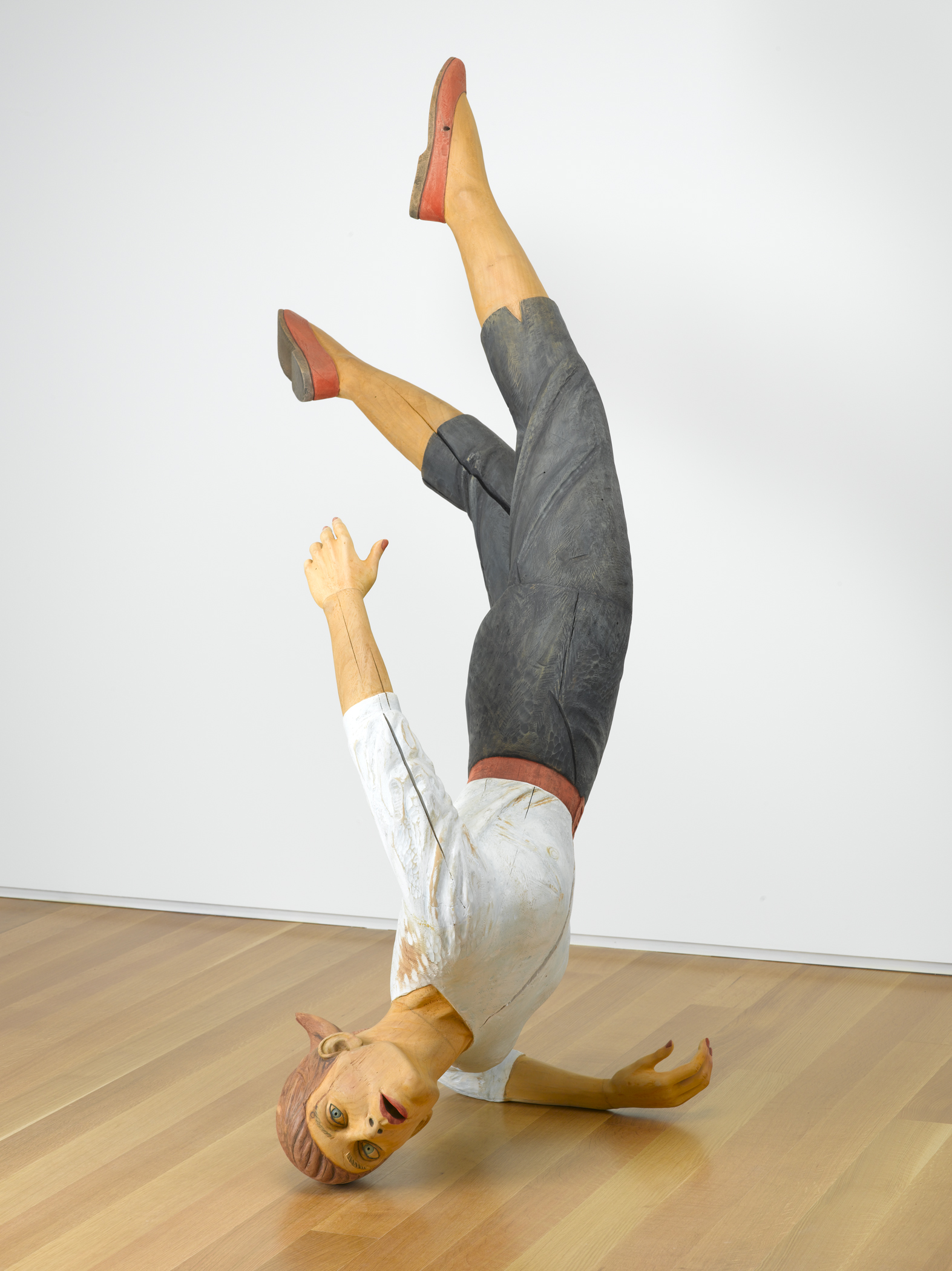
Trotman often creates figures based on middle-class American life in the 1950s. His figures usually wear simple, neat clothing. Their clothing contrasts with unusual poses that can suggest danger, distress, or a loss of control. In Girl, a teenage girl balances upside down on her head. Her legs stretch into the air as if she is about to lose her balance. Her pose creates a sense of movement and tension.
The material that Trotman uses for his sculptures is called basswood. It is a soft type of wood that can crack easily. Long cracks and splits are visible throughout Girl. These natural cracks are an important part of the artist’s style. He uses them to suggest physical and emotional stress. Many of Trotman’s sculptures show people who seem close to a breaking point.
Before he begins carving, Trotman carefully plans his sculptures. He makes sketches and small clay models, called maquettes, to develop his ideas. He also photographs human models in specific poses and uses the photographs as references. He may spend months preparing and carving a sculpture. Trotman often paints his finished sculptures with casein, a milk-based paint.
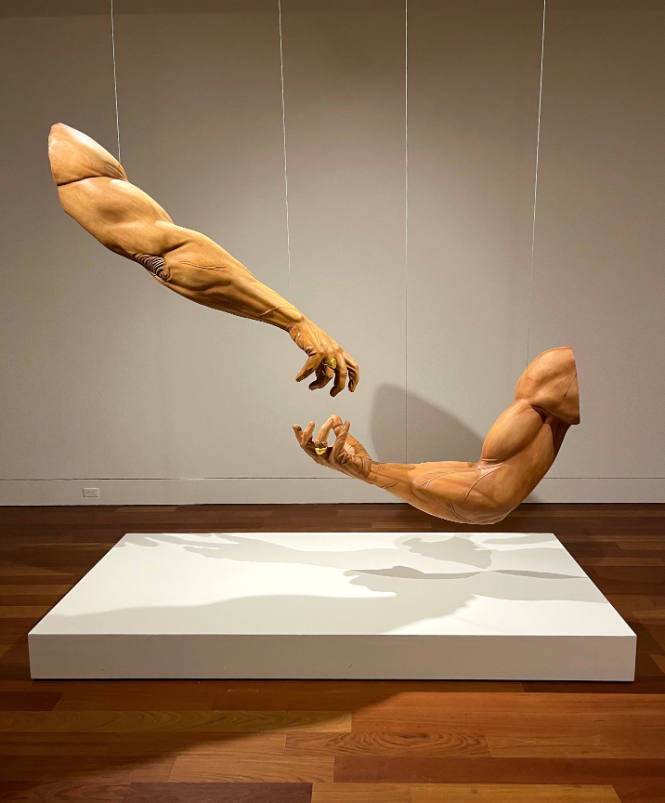
The NCMA collection also includes two other works of art by Trotman, Grab and Vertigo. Both are large-scale sculptures that depict a human figure or parts of human figures. Like Girl, these works show how Trotman uses the human form and the qualities of wood to explore moments of tension and uncertainty.