Ancient oil-burning lamps included a container, fuel, and a wick. Wicks were often made from fibrous material like linen, papyrus, and other plant fibers. The fuel used in ancient lamps depended on the availability of the fuel source. Substances used for fuel included olive oil, sesame oil (in the East), nut oil, fish oil, castor oil, grape-seed oil, and other oils from plants. Olive oil was the main source of fuel in the Mediterranean region.
Oil-burning clay lamps were made by hand molding, wheel throwing (using a pottery wheel), or by being pressed into a mold. The majority of ancient lamps were made from clay. The clay lamp form was either fired or air-dried, and then it was glazed. The main purpose of the glaze was to prevent fuel leakage from the lamp. Glaze was also decorative, and it added a glossy effect to the clay. The introduction of clay molds made it possible to create new lamp shapes and detailed decorations. Clay lamps often featured images of animals and mythological figures, human forms, and everyday objects. Human figures depicted on the lamps had distorted faces or wore masks like the actors in Roman plays.
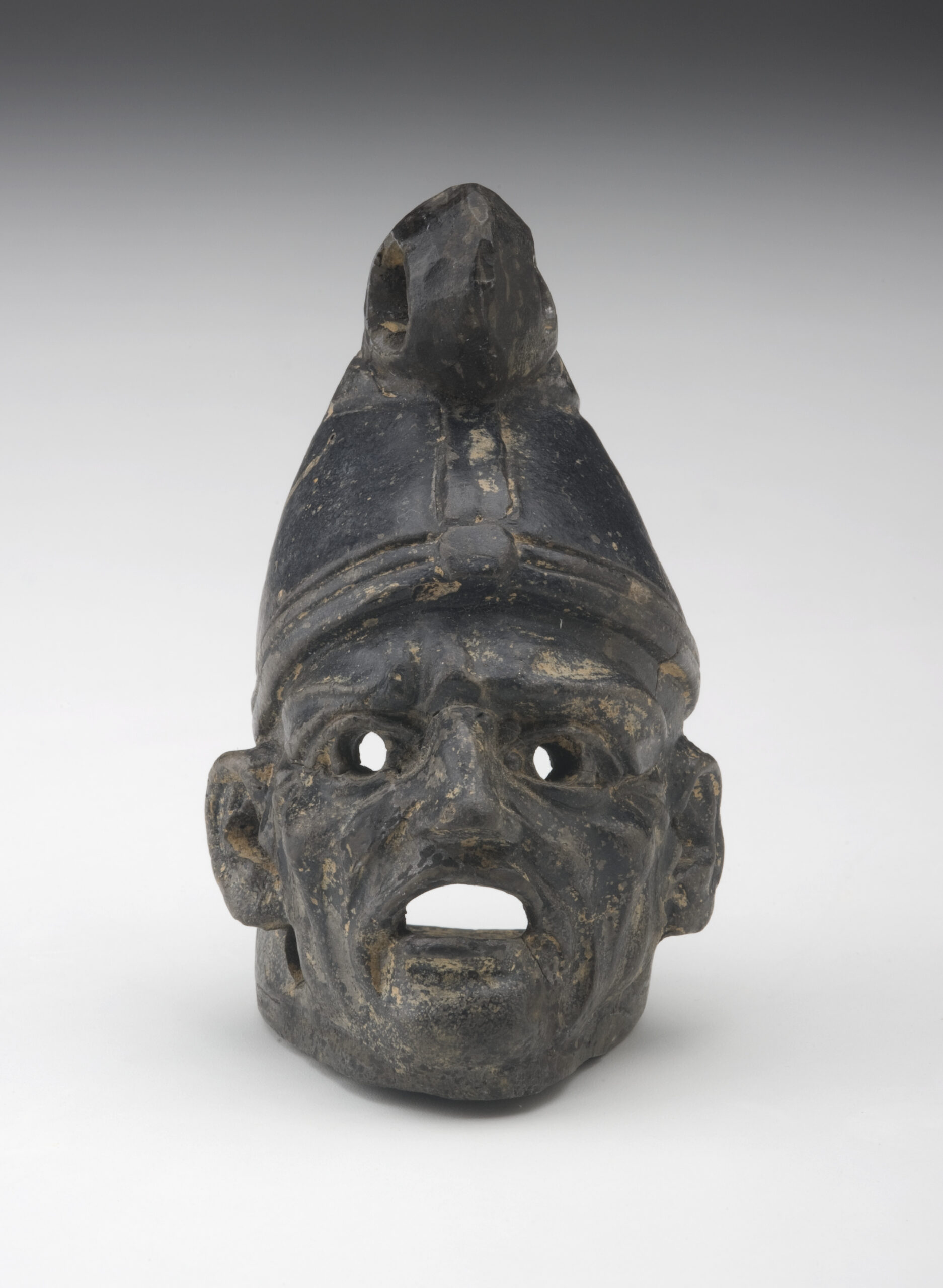
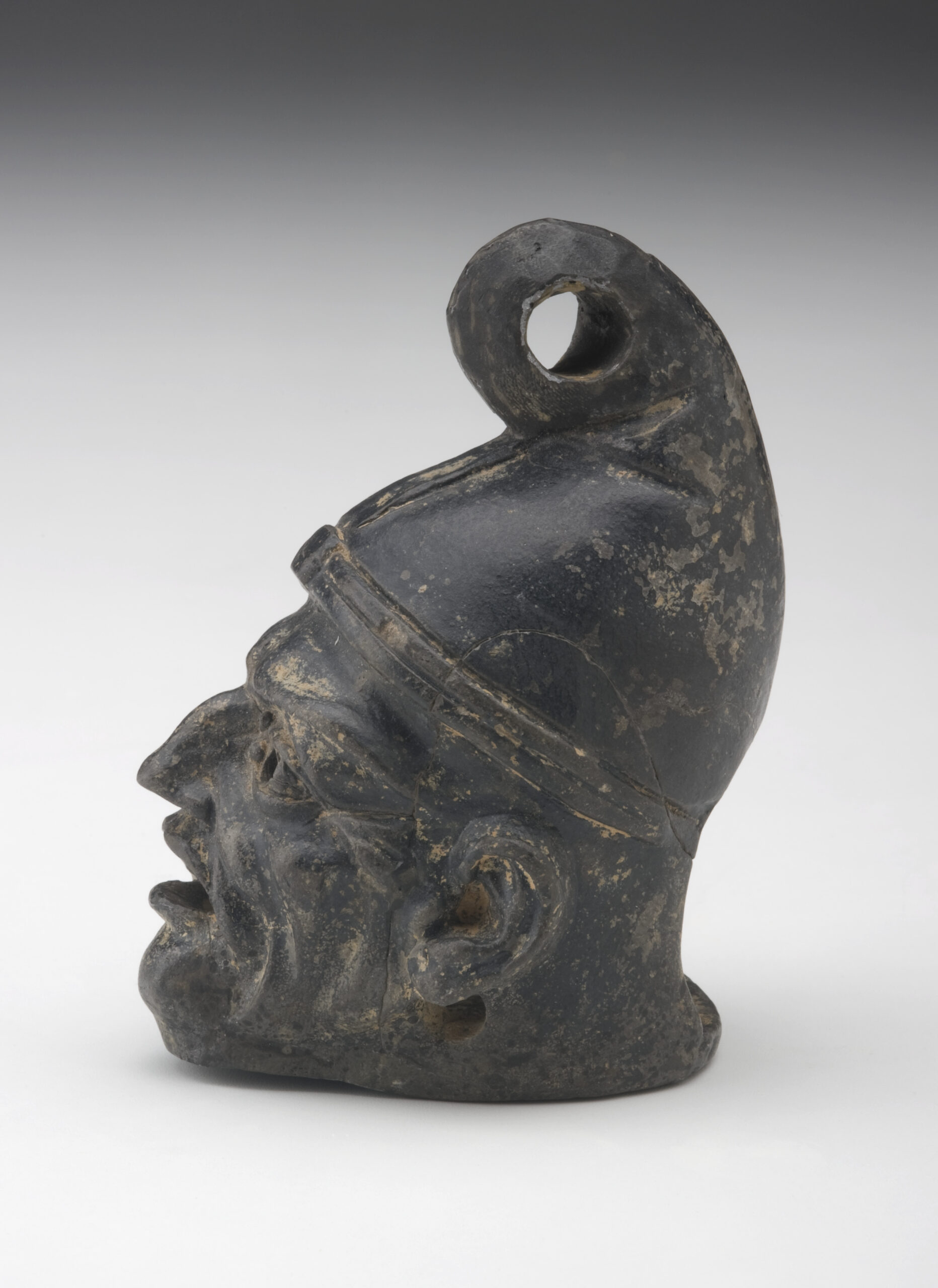
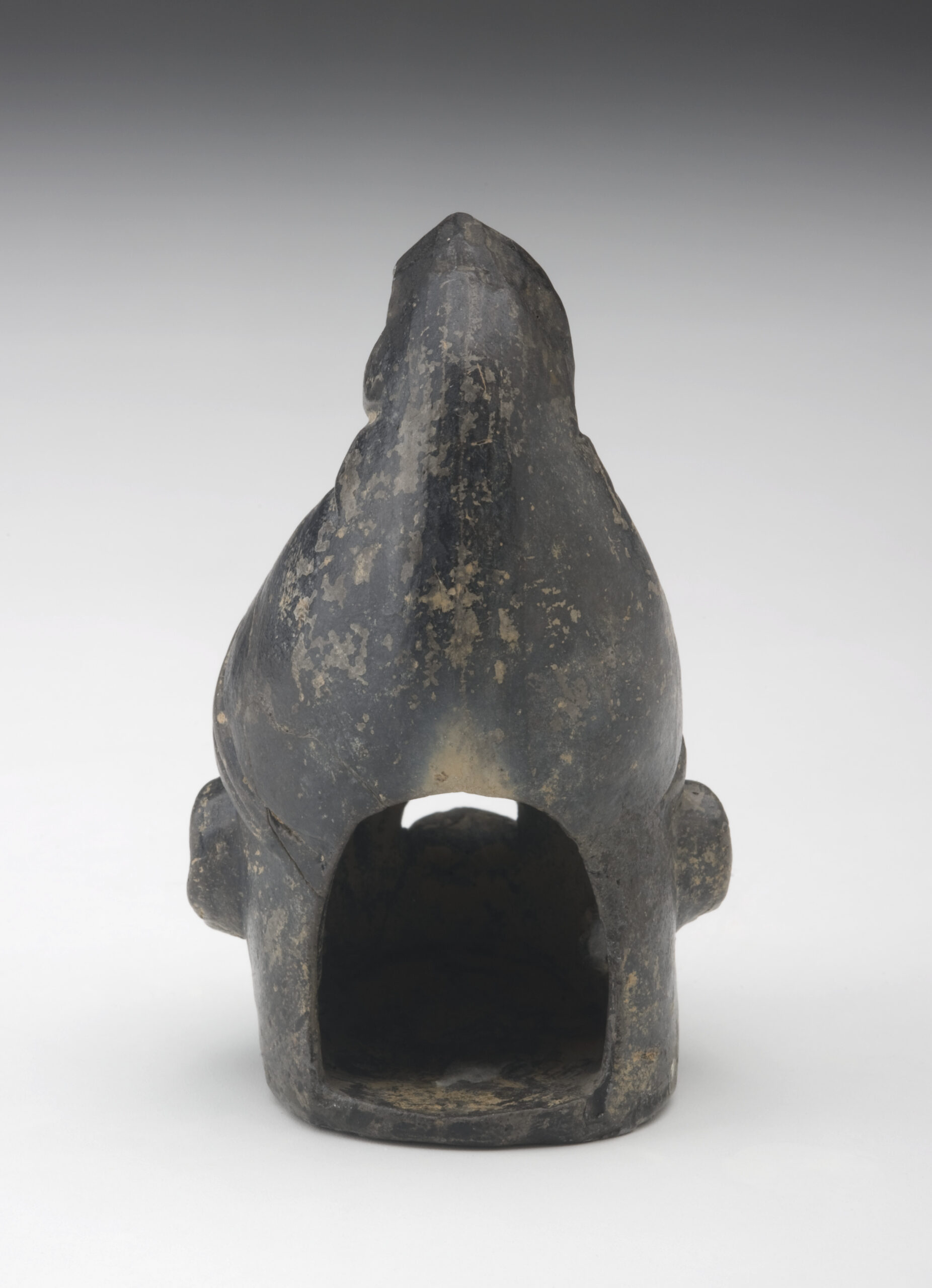
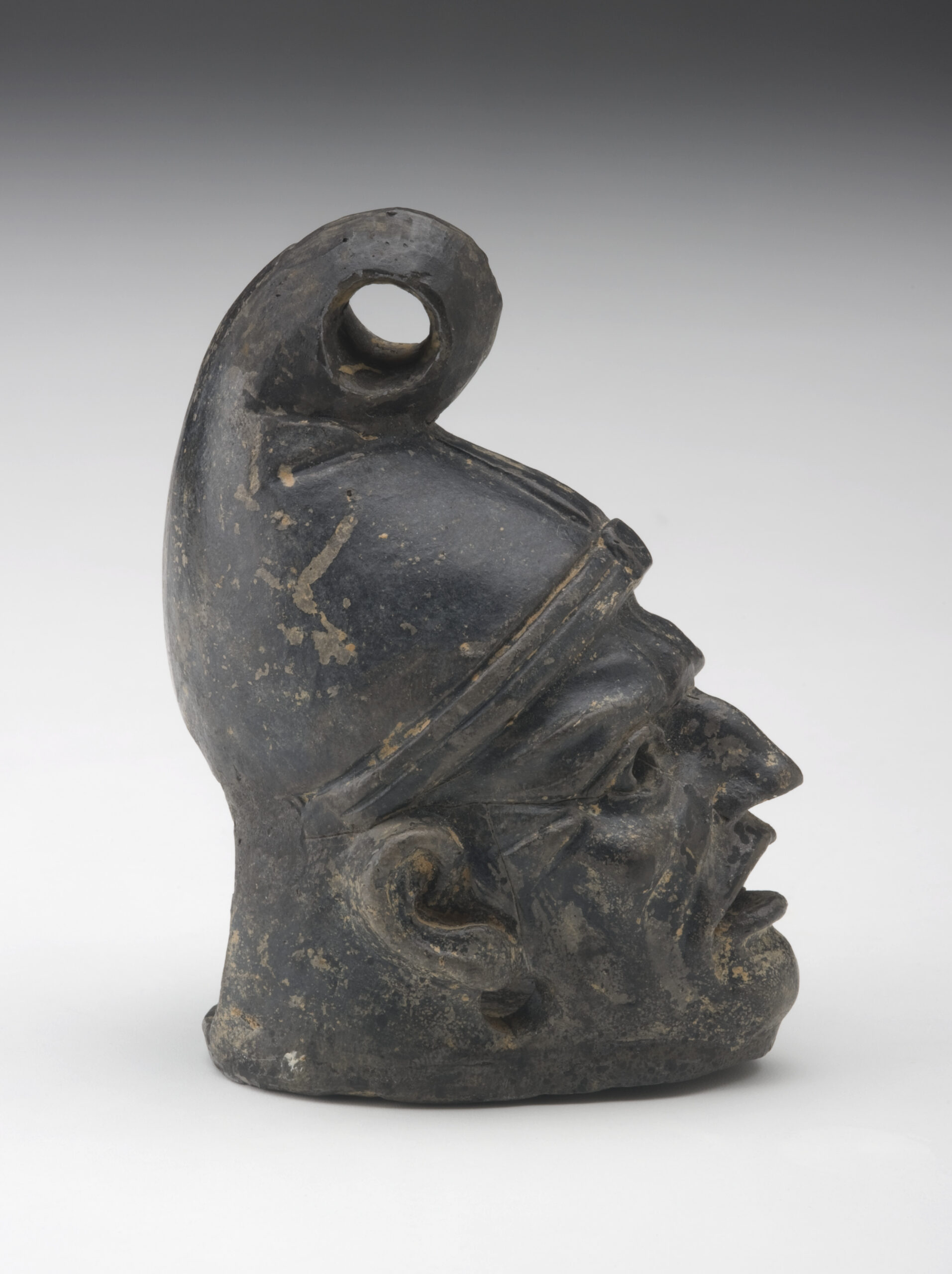
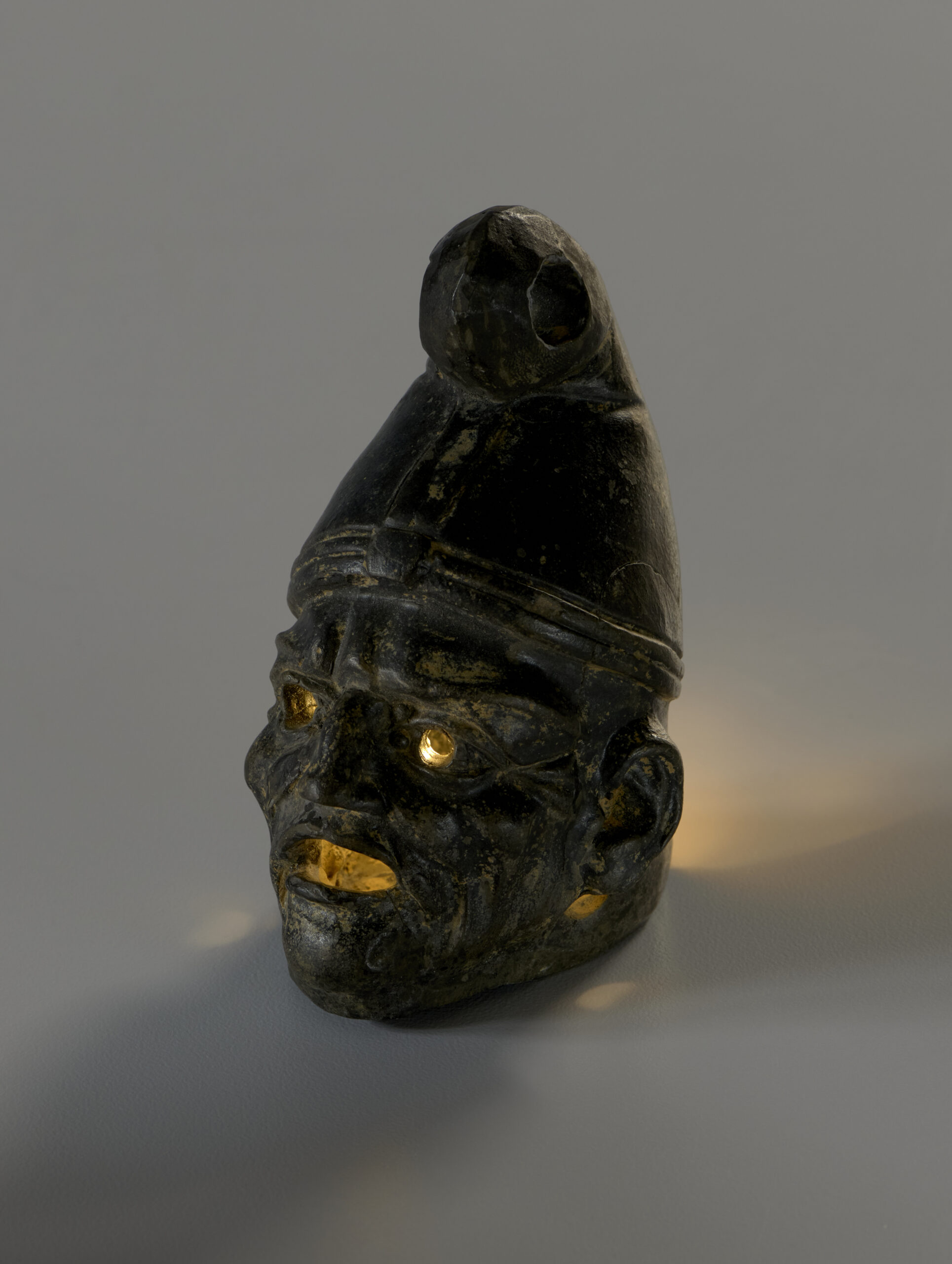
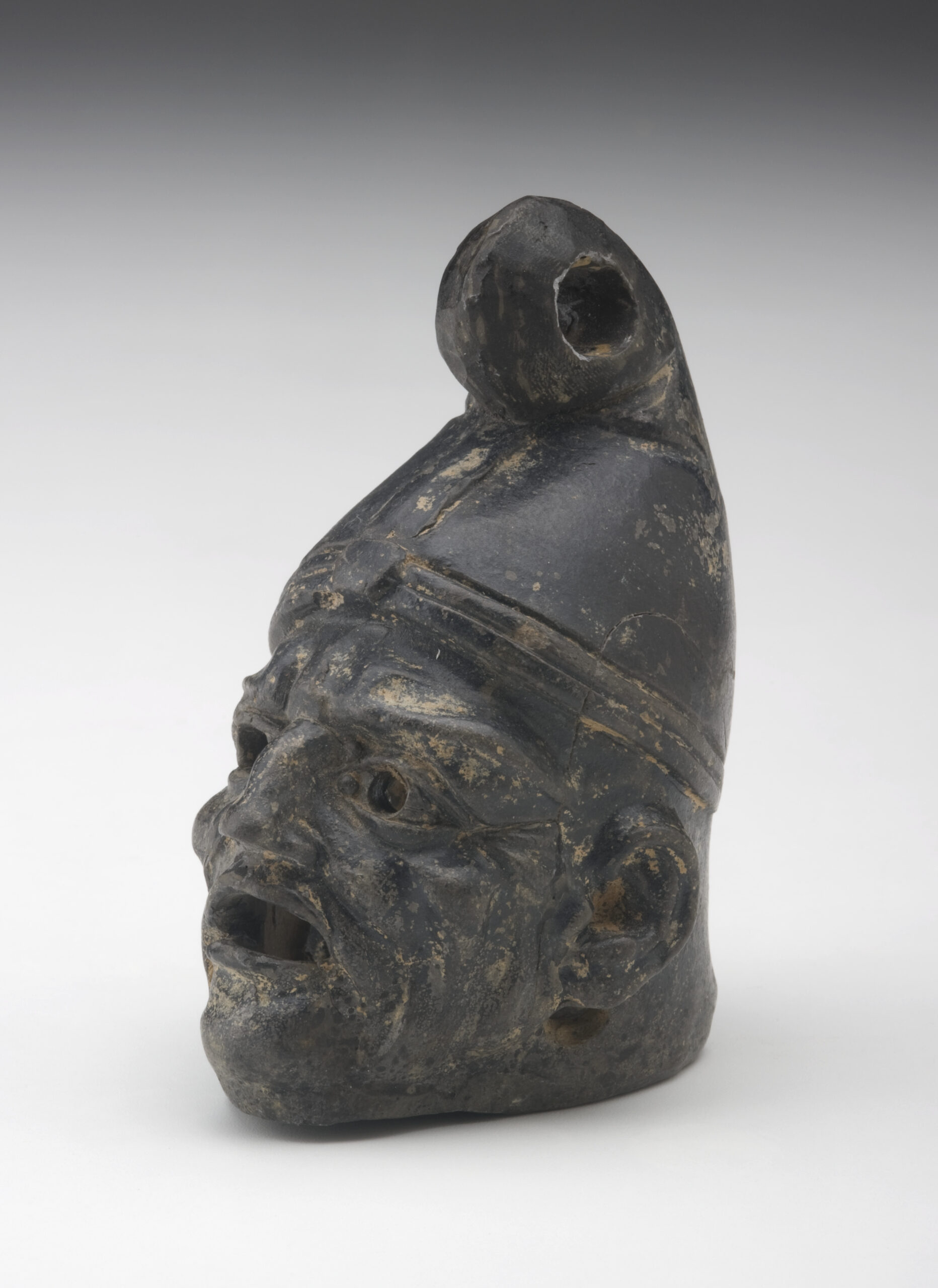
Lamp Holder in the Shape of an Actor’s Head depicts a man wearing a cone-shaped cap. The cap is possibly a phrygian cap, named for the ancient country of Phrygia, in Anatolia. Phrygian caps were soft, cone-shaped caps that were bent at the tip. In ancient Greek art, this type of cap symbolized a foreign person or captive. In later centuries, during the French Revolution, the cap was a symbol of liberty.