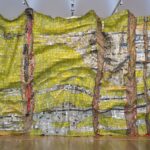
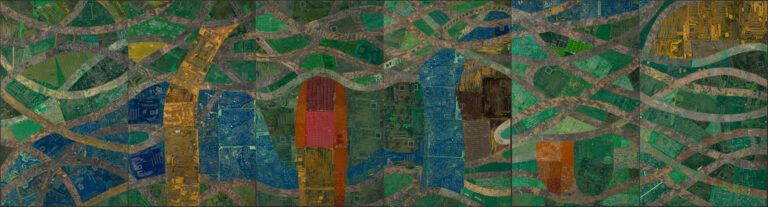
Since 1974 El Anatsui (originally from Ghana) has lived in Nsukka, Nigeria, where he is an art educator at the University of Nigeria-Nsukka. Primarily a sculptor, the artist has been well-known in the African art community for decades, especially for his wood sculptures, many of which were made from discarded wood materials.
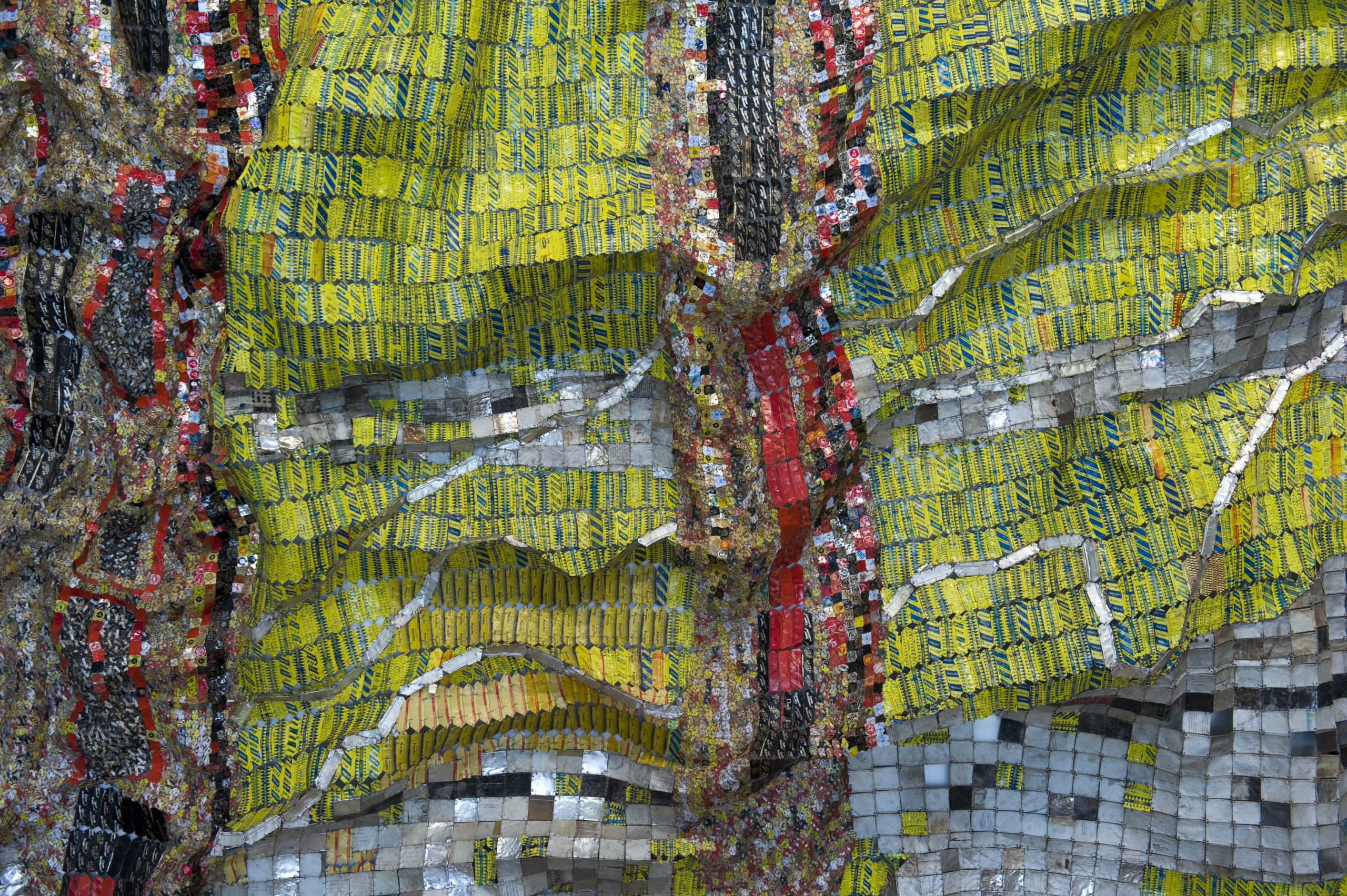
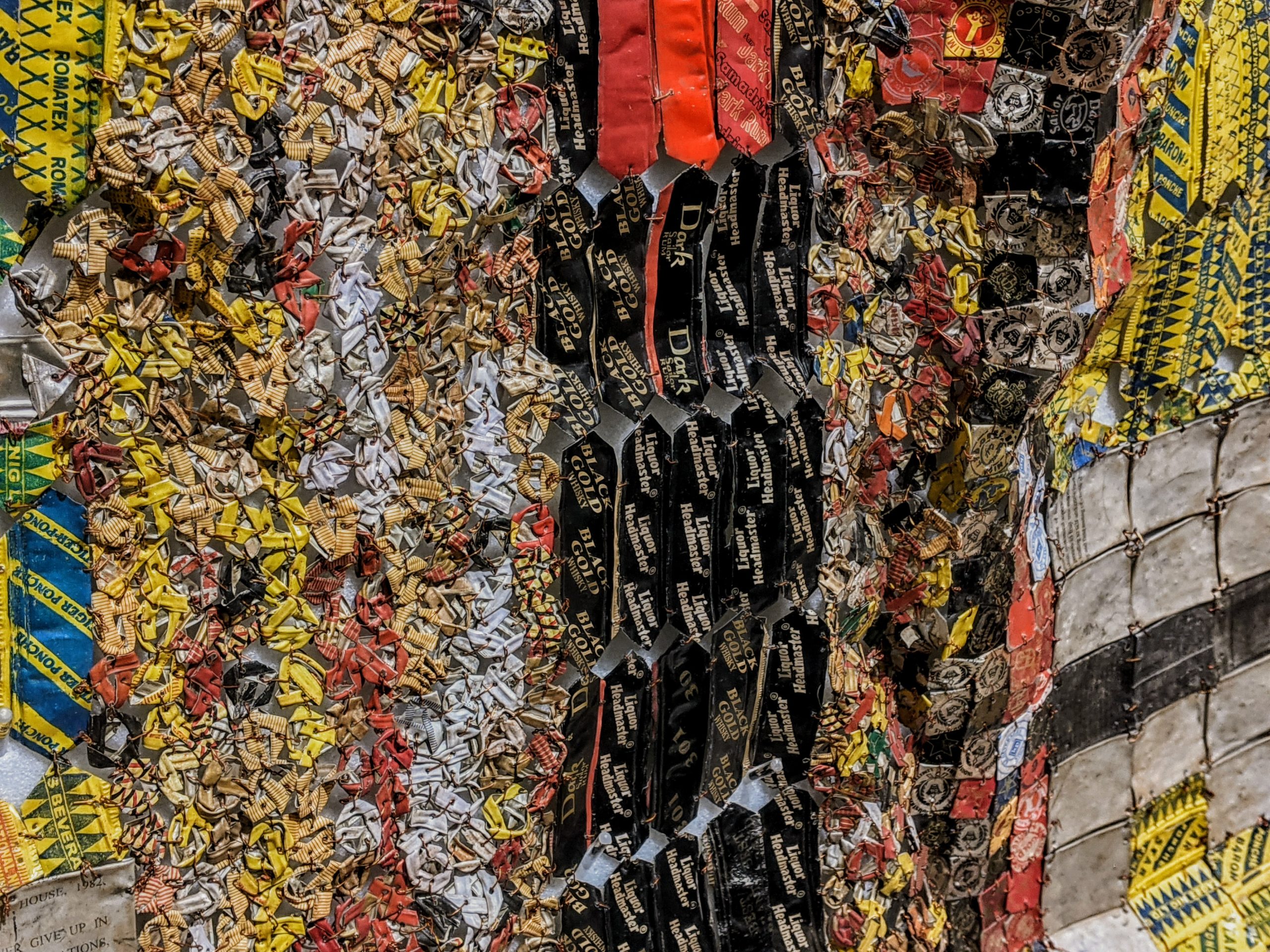
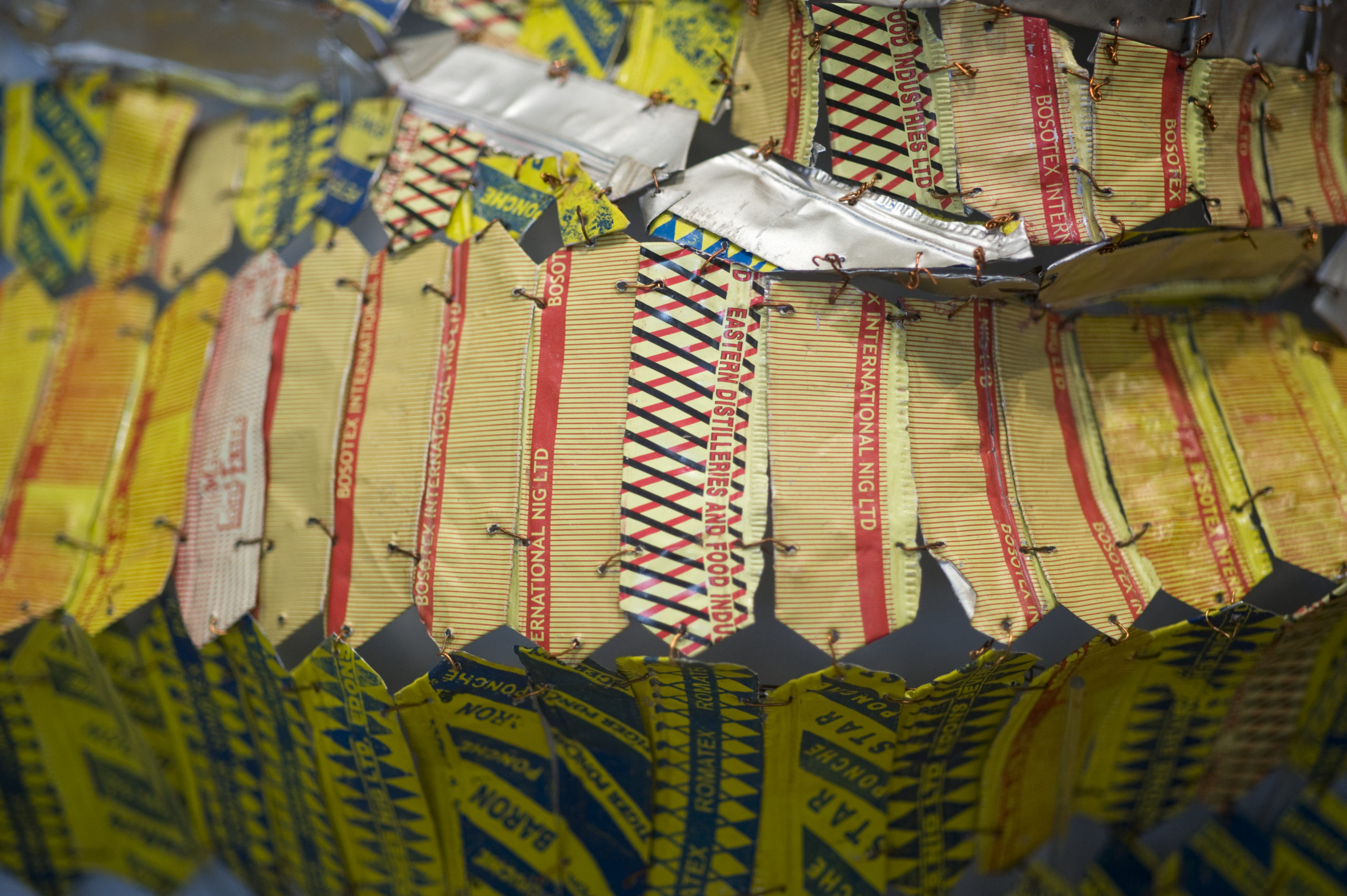
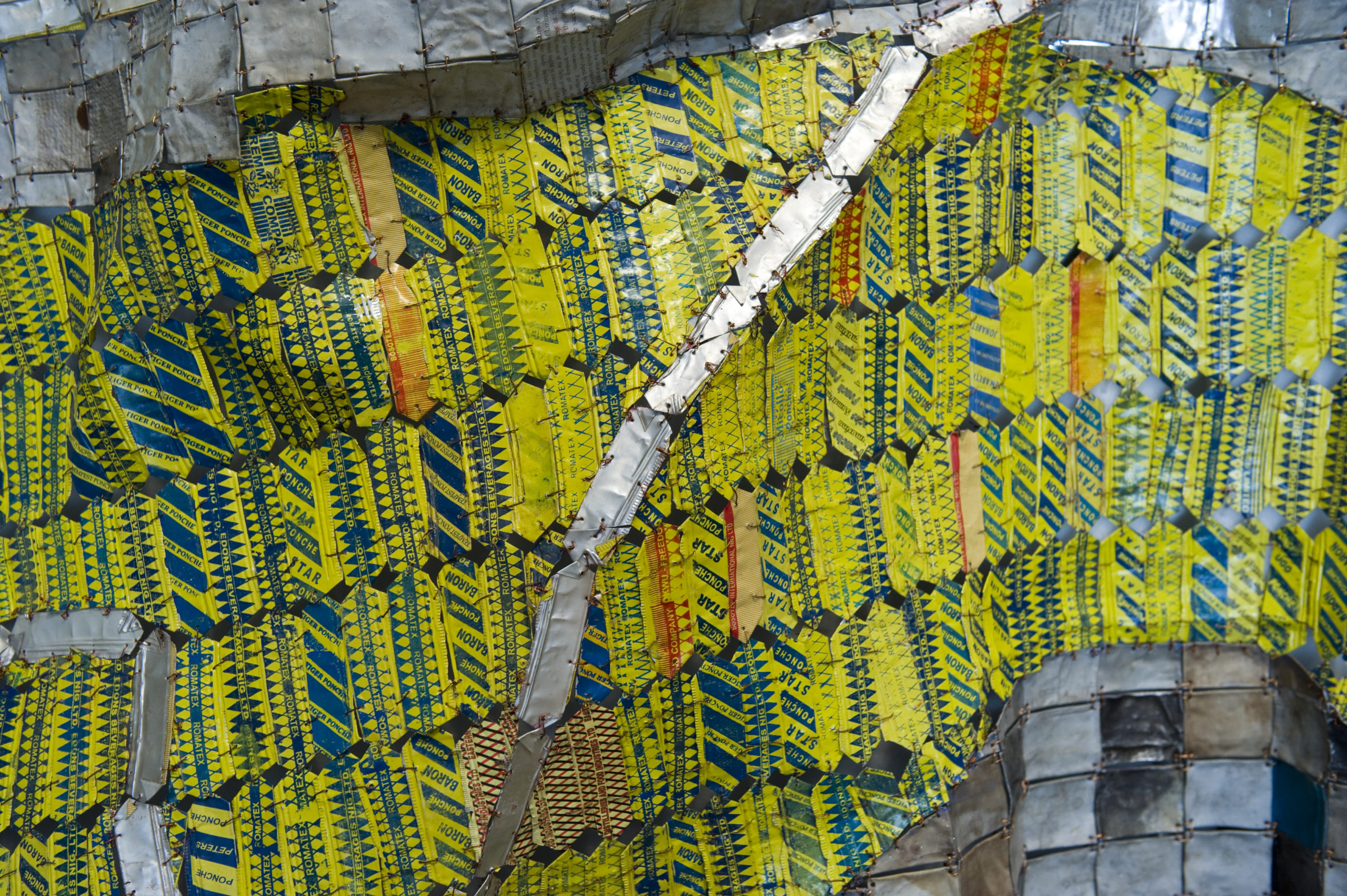
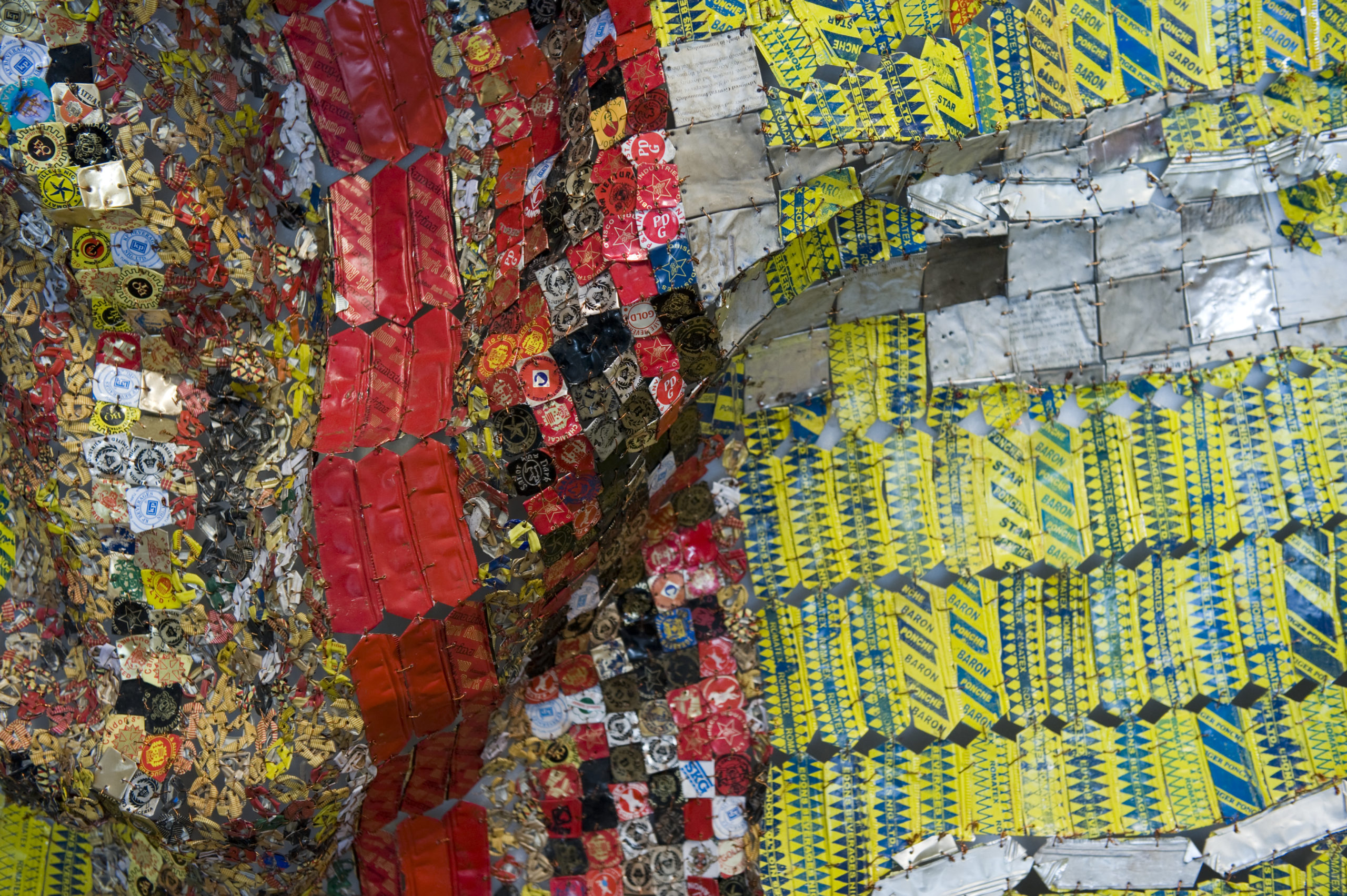
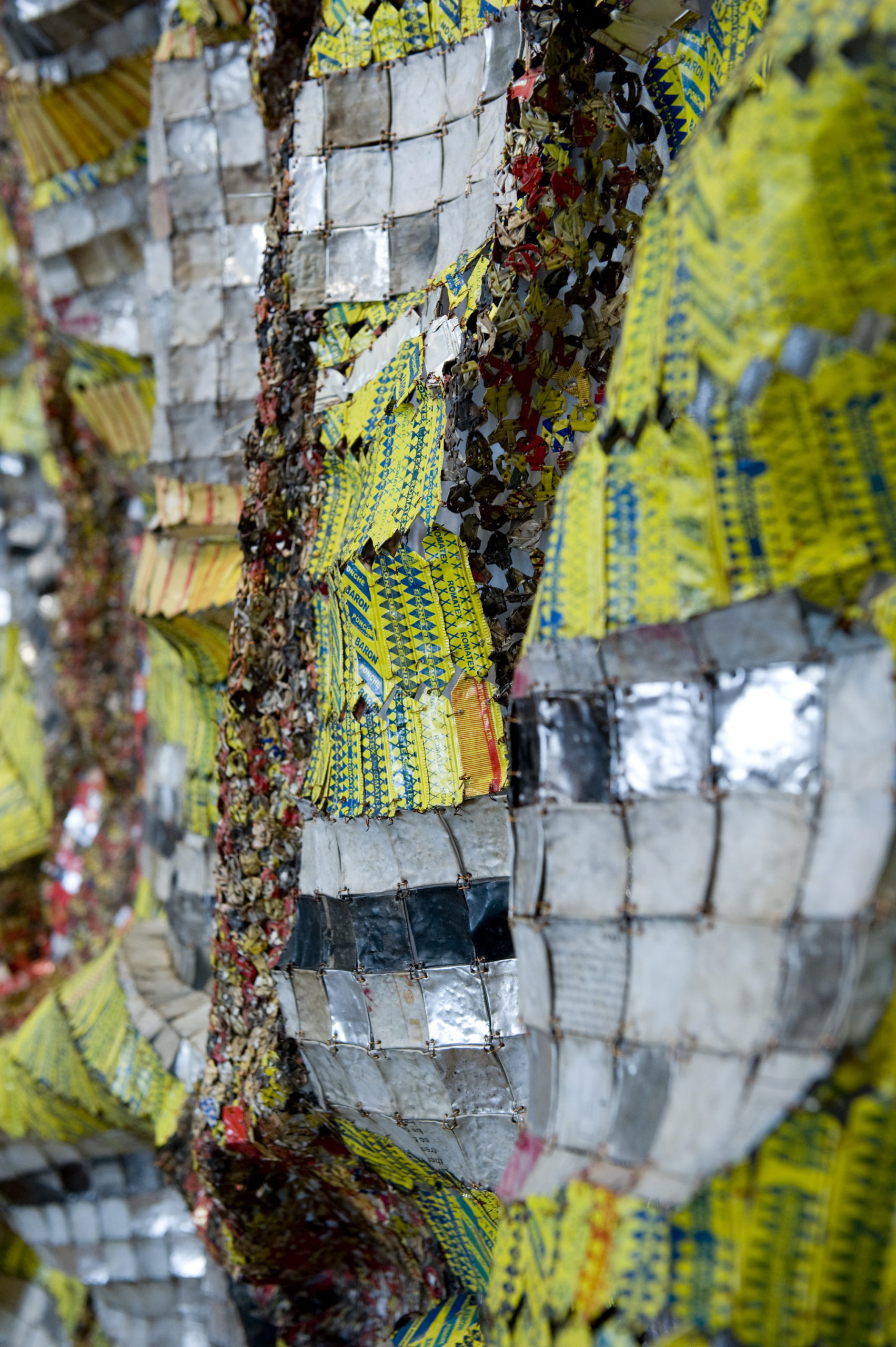
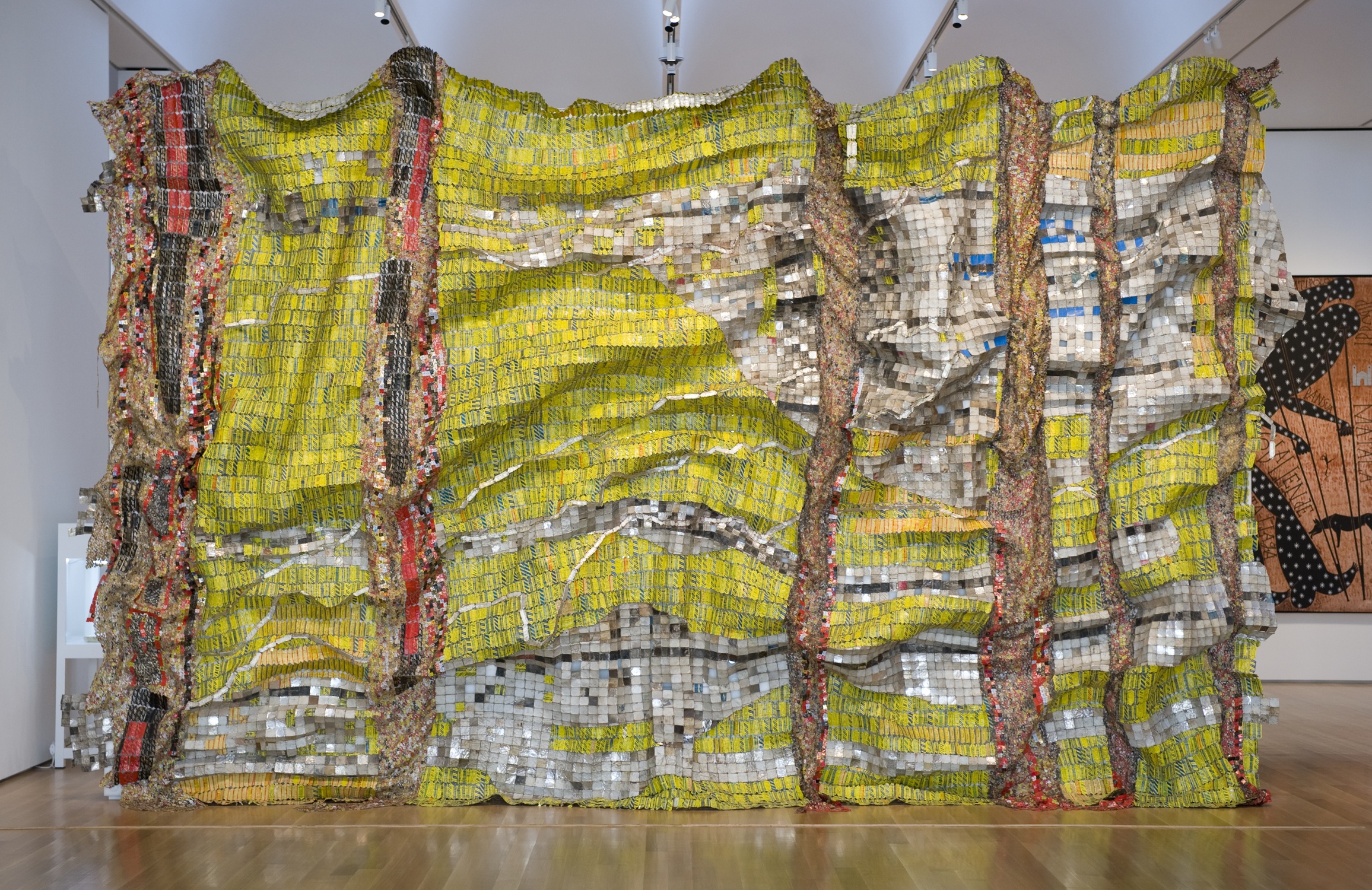
“Recycling and reuse” is a theme that appears throughout his most recent body of work, for which he has received international recognition and acclaim. Clothlike metal sculptures are carefully constructed by hand using discarded bottle caps and liquor packaging and then pieced together to create large, draping sculptures. When hung on the wall, these sculptures appear to be shimmering veils or waving tapestries. The artist’s early works created from these types of materials were inspired by Ghanaian kente cloth; his sculptures evoke the colors and patterns of this traditional form of weaving. His work also calls attention to the social and economic history of West Africa, specifically Ghana, where liquor was once traded for enslaved human beings. Often this same liquor was made from sugar cane in the Caribbean that had been harvested by enslaved African people. The title Lines That Link Humanity suggests the interconnected histories, fates, and circumstances of people and cultures worldwide.
This work is unique among Anatsui’s metal sculptures in that it is site responsive, which means it was commissioned from the artist and designed with its specific setting in mind. Lines That Link Humanity is the result of an extended interaction between the NCMA and the artist.
tags: fabric, textiles, environment, collaboration, movement, part/whole, place