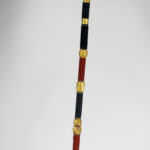
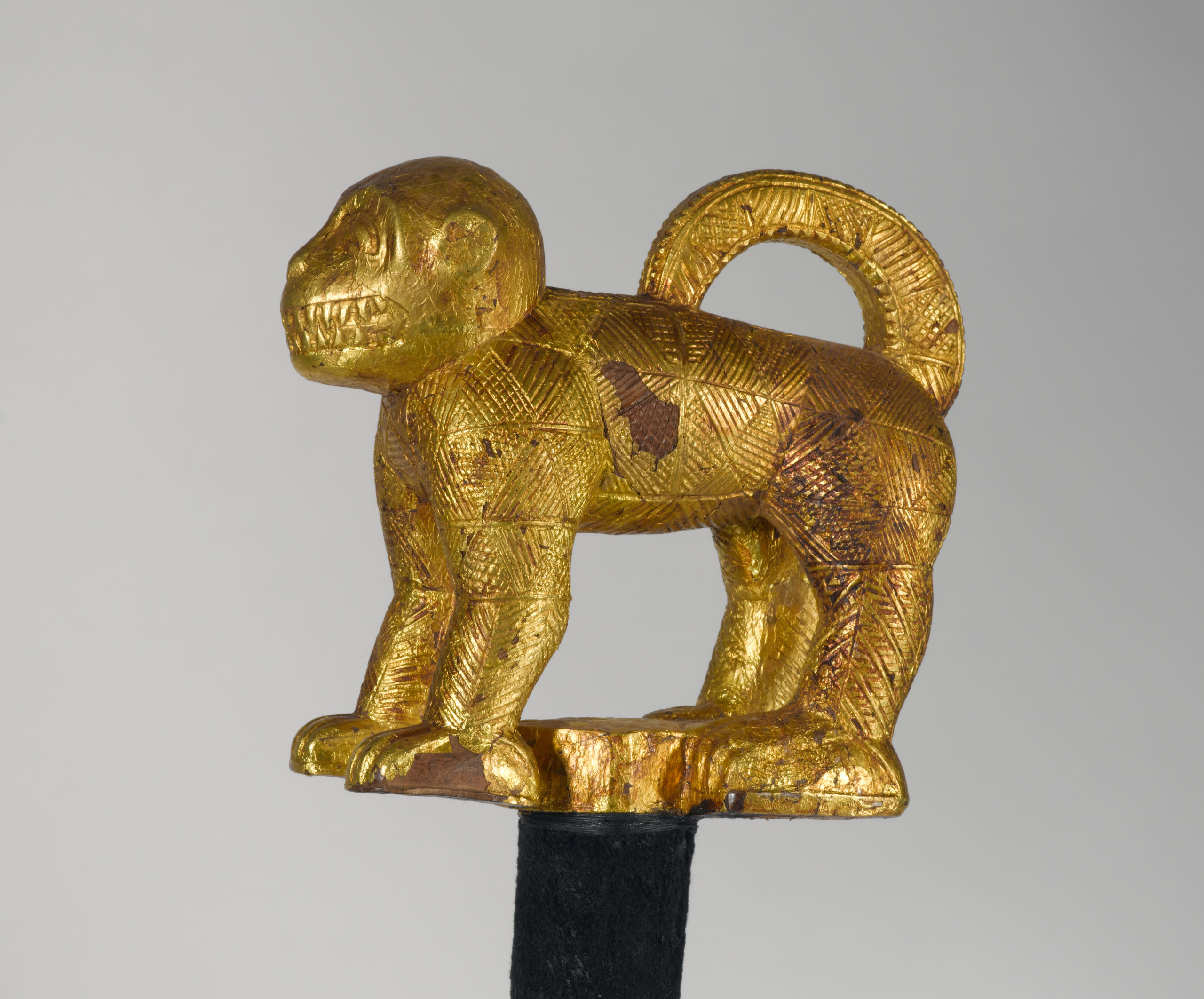
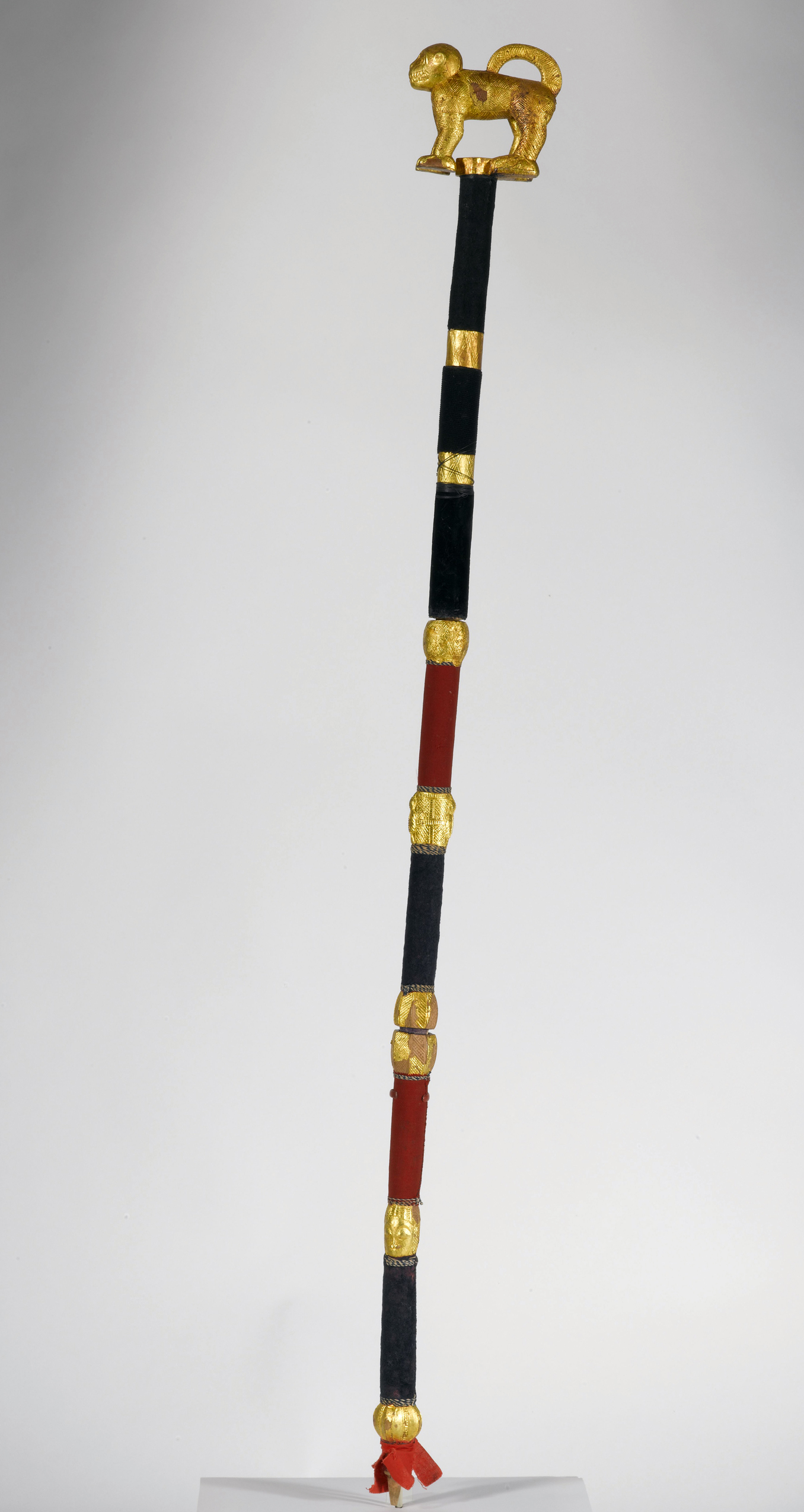
Among the Baule people of West Africa, art is closely connected to leadership and public speaking. A linguist staff is an artfully crafted ceremonial object in Baule culture. It is carried by a chief’s senior spokesperson, known as a linguist. This person speaks on behalf of the chief during meetings and ceremonies. The linguist is respected for clear speaking and for knowing many traditional proverbs. The linguist staff helps show their authority.
The leopard figure, or finial, on this staff was carved from wood and then covered with gold leaf. Gold leaf is a decorative material made from real gold. The gold is hammered into extremely thin sheets that are used for gilding. The leopard figure on this staff is more than a decoration. It represents ideas and proverbs that the chief’s audience would recognize. In West African culture, the leopard stands for strength, intelligence, and hidden power. The leopard finial on the linguist staff reminds listeners of the wisdom and power behind the words they are hearing.
The Baule are a cultural group who live mainly in the central region of Ivory Coast. Their ancestors migrated many years ago from what is now Ghana. Today the Baule are one of the largest communities in the country. They are well known for their skilled artists who create detailed sculptures, masks, and special objects used in ceremonies.
Baule art often mixes long-standing traditions with ideas from other cultures, showing how creativity grows when people share and learn from one another. Through art, storytelling, and community traditions, the Baule people continue to share and protect their history. Their artwork shares similarities with the gold art traditions of the nearby Akan peoples. The Akan have historically used gold decorations on sword ornaments and finials to represent power, royalty, and status. These shared artistic styles show how symbols, ideas, and traditions traveled between neighboring cultures over time.
tags: ceremony, animals, power, communication, identity, ritual, work