
Báculo lingüístico con remate de leopardo (Okyeame Poma) (obra de arte)
Información sobre la obra de arte
Acerca de
Entre el pueblo akan de Costa de Marfil, un hombre al que se observara llevando un bastón como éste sería reconocido como consejero de un jefe. Era el principal emblema del cargo para los asesores y portavoces más cercanos al jefe. El consejero llevaba el bastón al frente de las procesiones oficiales y lo sostenía sentado junto al jefe durante las ceremonias de Estado. Como es habitual, en la parte superior se graba una figura que los miembros cultos de la comunidad reconocerían como símbolo de un proverbio o alguna otra frase de sabiduría. El proverbio "una buena boca se bendice a sí misma" es un ejemplo del valor que los akan otorgan a la capacidad de hablar sabiamente y bien. La figura terminal de este báculo es un leopardo cubierto de oro, identificado por su sonrisa malvada, su cola levantada y sus cuatro patas en el suelo. Aunque probablemente sea una figura demasiado simple para representar un proverbio, sigue recordando a los observadores durante los rituales políticos la fuerza y la astucia que se requiere de un jefe exitoso.
tags: ceremonia, animales, poder, comunicación, identidad, ritual, trabajo
Imágenes
-
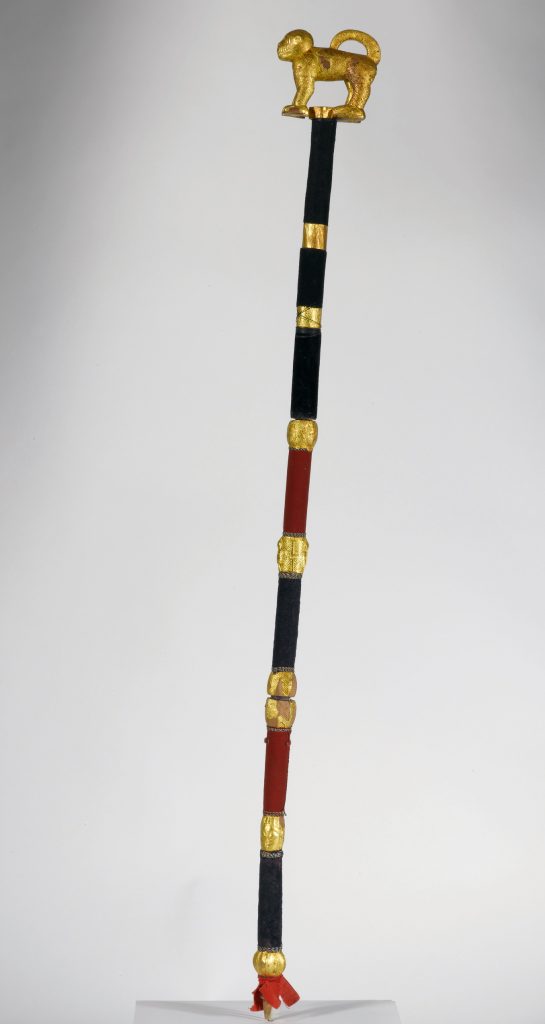
Báculo lingüístico con remate de leopardo (Okyeame Poma)
-
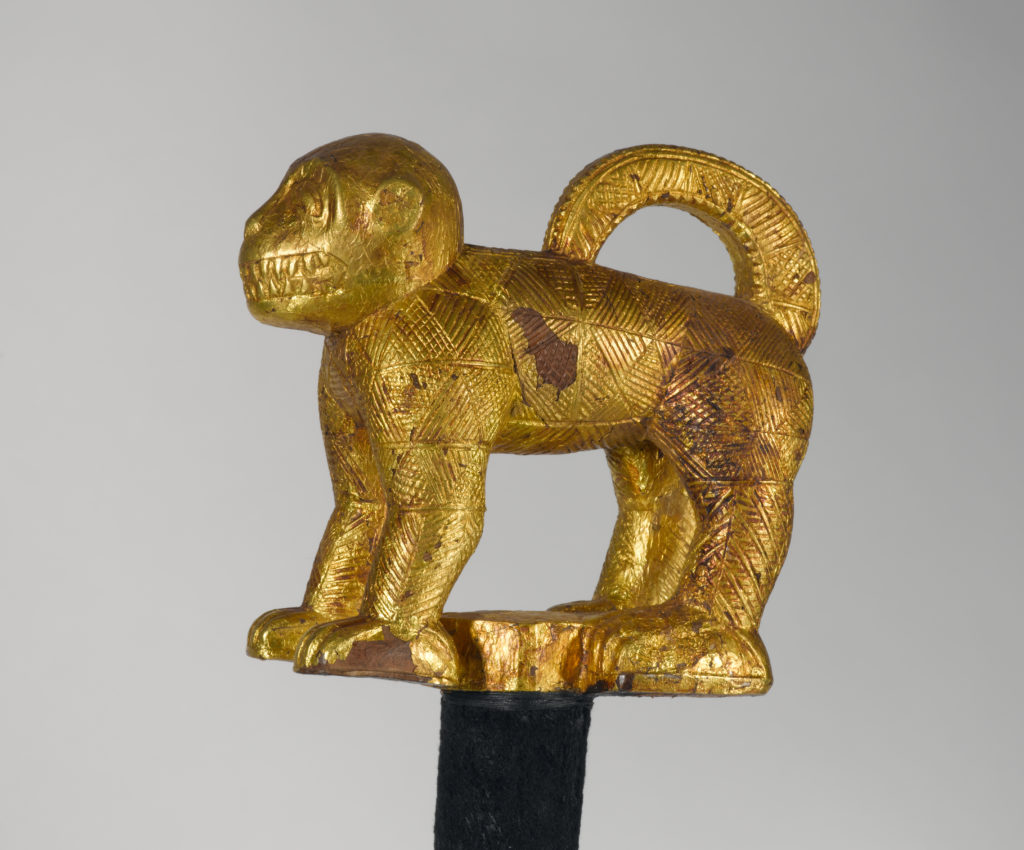
Bastón de los Lingüistas con la Flor de Leopardo (Okyeame Poma)