John Singleton Copley is widely regarded by art historians as the most important portrait painter in colonial America. Even though he was mostly self-taught and did not study in Europe, he created detailed and realistic portraits. His paintings reflect the confidence and wealth of colonial society before the American Revolution.
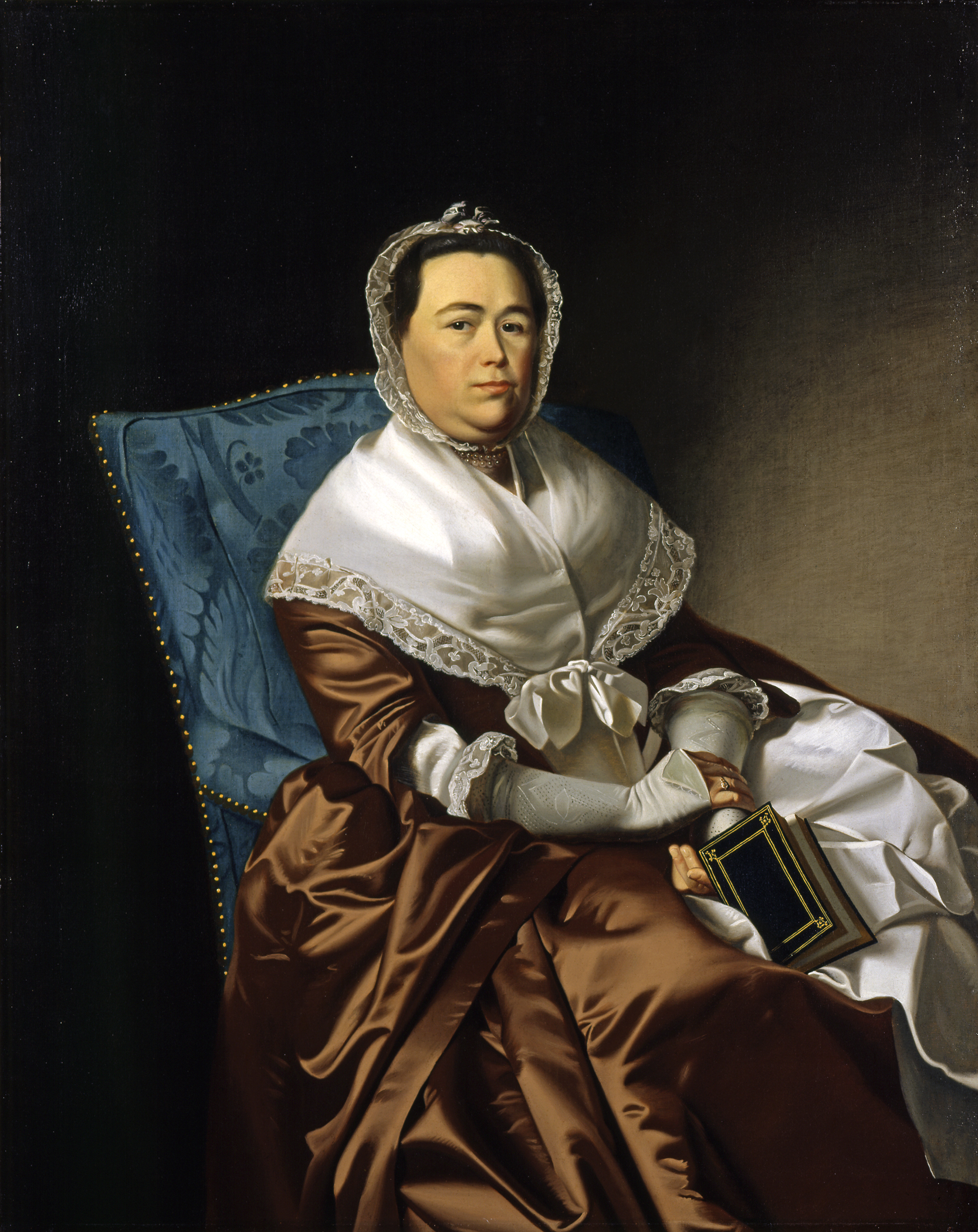
One of Copley’s subjects was Katherine Graves Russell of Charlestown, Massachusetts. She was the daughter and wife of magistrates and the mother of 11 children. Her husband James was a merchant involved in shipping goods to places such as Portugal, St. Kitts, and Suriname. In her portrait she wears fine silk and lace, materials that were imported through global trade. These details show how connected the colonies were to other parts of the world.
Copley’s portrait of Mrs. Russell is an example of colonial realism. This style of art was popular in the Americas between the 1500s and 1700s. It combined European painting techniques with local influences to depict daily life and social status in colonial society. In this style artists painted people in formal poses with careful attention to detail. They used strong, direct lighting to create bright highlights and dark shadows. Copley painted Mrs. Russell against a dark background, using light and shadow to make her face and clothing stand out. She looks directly at the viewer, appearing calm and self-assured.
After he became a successful artist in Boston, Copley moved to England. There he continued painting portraits of wealthy and influential people.
tags: fashion, identity, observation, perspective, place, women