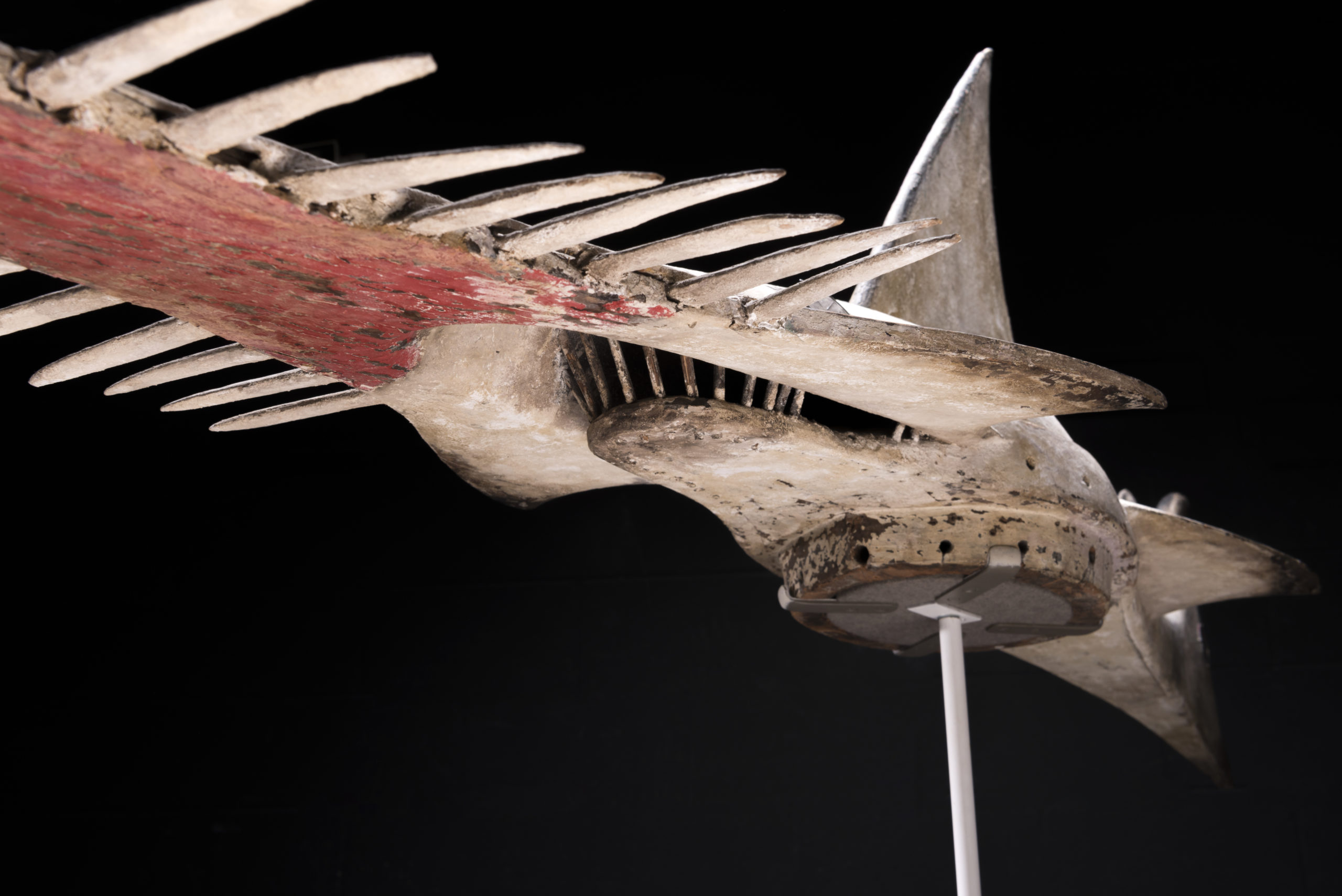
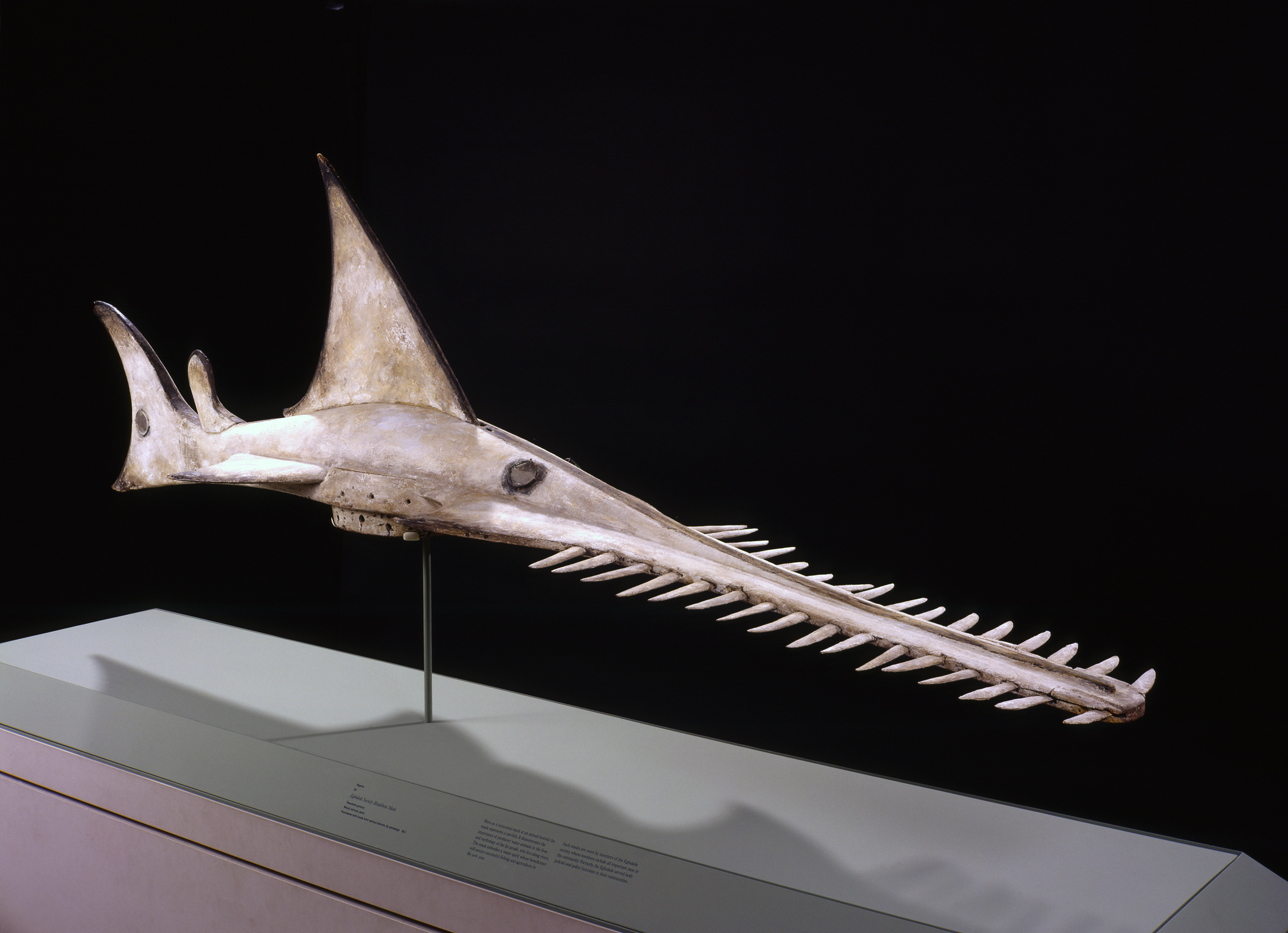
Horizontal water-spirit headdresses in the forms of sawfish, sharks, and other aquatic predators probably originated among the Ijo peoples who are fishermen in the coastal delta region of the Niger River. They held (and continue to hold) annual festivals honoring the water spirits, to ensure good harvests of fish and food crops in the coming year. Neighboring river communities, including the Abua, Ekpeya, and Igbo, adopted this yearly tradition of performing colorful masquerade ceremonies. One eyewitness account of an Ijo community tells of a sawfish headdress worn by a young man who was brought to the village in a canoe. He then danced on land as a sawfish, and masqueraders representing fishermen pretended to “hunt” him.
Makers of water-spirit masks such as this one used carpentry techniques in which the fins, teeth, and other components of the whole were carved separately and then attached. Mirrors (obtained by trade with outsiders) were used for the eyes and to decorate the tail of the sawfish.
tags: wood, function, ceremony, community, celebration