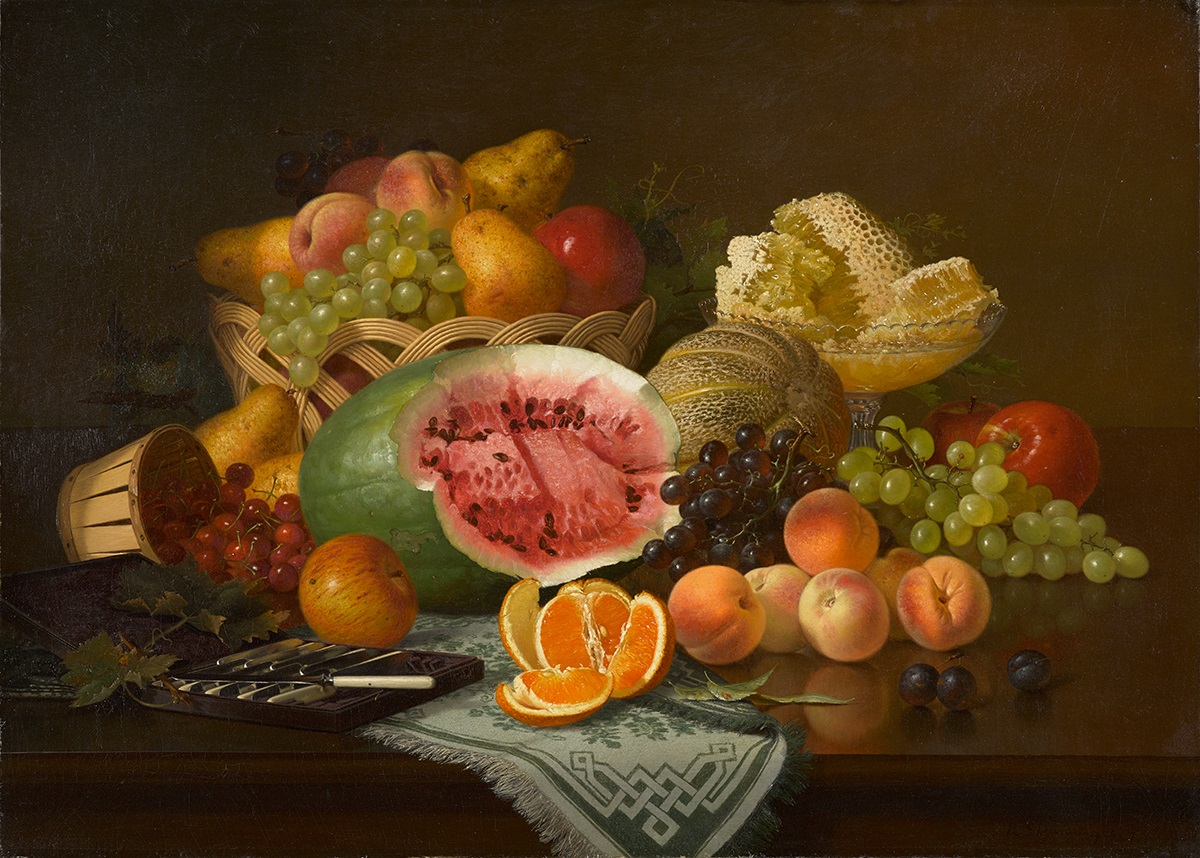
Robert Spear Dunning is best known for his colorful, realistic-looking still life paintings of fruit. Still lifes are works of art that depict nonliving objects from the natural or human-made world. They often depict fruit, flowers, or dead game (wild animals that are hunted). Still lifes sometimes feature containers like vases, baskets, or bowls.
Dunning founded the Fall River Evening Drawing School with his friend John E. Grouard in 1870. This was a special cultural opportunity for the small community of Fall River, Massachusetts. The school made Fall River famous for its ties to still life painting. The period after the Civil War was a time of economic prosperity in Fall River. Many local residents used the still life paintings made by Dunning and his students to display their own wealth.
Luxurious displays of fruit were a popular subject for still lifes in America in the mid-19th century. White patrons often viewed these paintings as celebrations of God favoring them for being American colonizers. Still lifes of fruit represented having “a gracious plenty,” or an adequate amount of food. These types of paintings were displayed in the dining rooms of many middle and upper-class homes.
It has been said that this painting symbolizes the strength of the American empire. However, it is important to note the inequity (lack of fairness and justice) within the supply chains for fruit. The fruits depicted in Still Life of Fruit, Honeycomb and Knives were grown in different geographic regions. This means that they would not have been in season at the same time. Access to these fruits was made possible by the immigrants and recently freed African Americans who harvested them. Advances in transportation and horticulture also made it possible to buy fruit from other regions and countries.