The identity of the artist who painted this panel is unknown, so art historians have named him after a group of his paintings—images of female saints who are portrayed from head to waist, often in front of a large landscape scene.
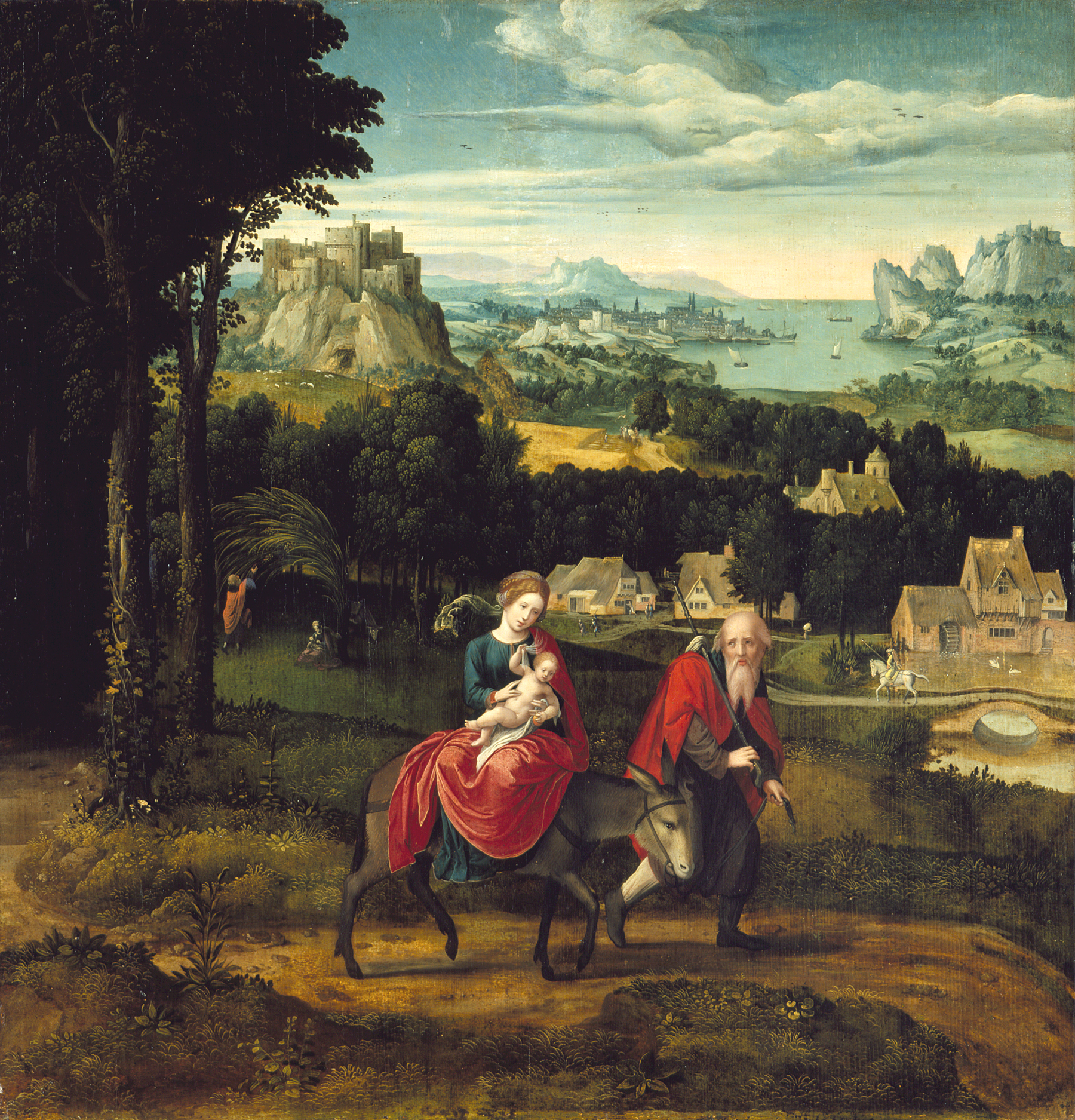
A northern European landscape provides the setting for a story related in the Gospel of Matthew (2:13–18). In the foreground, Joseph, Mary, and Jesus flee to Egypt to escape the angry plot of King Herod. Having heard from wise men of the birth of a Jewish king and fearful that the child would become a threat to his own rule, King Herod ordered the deaths of all children two years old or younger in the small town of Bethlehem and surrounding areas.
There are several scenes depicted in the background of the painting, including the image of a village where soldiers carry out Herod’s terrible command. The artist also depicted two events that were not mentioned in Matthew’s account but were popular stories during the Middle Ages, which were drawn from other writings of the same time period as the Bible. One scene shows the Holy Family resting beneath a date palm, which bends its branches for Joseph to reach its fruit. Another scene depicts soldiers on horseback, shown speaking with a man in a field of wheat that miraculously grew overnight. When the soldiers asked the farmer if he had recently seen a family traveling through the area, the farmer truthfully answered that the family had passed through when his wheat field was freshly planted. The soldiers were discouraged from pursuit, and the family was saved.
tags: narrative, conflict, family, movement, survival, animals, clouds