
Beaded Sheath for an Orisa Oko Staff (work of art)
Artwork Info
Key Ideas
- This object was made by a Yorùbá artist in Nigeria. It is a decorative cover for a staff that honors Okó, the deity, or god, of farming and fertility.
- The colorful glass beads and cloth used on this cover show that the staff was considered sacred and important.
- The swordlike staff was not used as a weapon. It is a special object that represents status and authority.
Learn More
In the late 1800s and early 1900s, Yorùbá rulers (called obas), and other leaders used beaded objects to show power and honor the gods. Glass beads and colorful patterned fabrics were added to this sheath, as decoration and to highlight its importance.
This beaded sheath protected an Òrìsà Okó staff when it was not being used in ceremonies. Blacksmiths made these staffs from old farming tools, reshaping and strengthening the metal. Òrìsà Okó staffs were not meant for fighting but for ceremonial use, to honor the farming god Okó.
The Yorùbá people are one of the three largest ethnic groups of Nigeria. Yorùbá artists are known for creating works that combine cultural traditions with personal style. Their art often expresses religious beliefs, leadership, and community values.
Additional Resources
Resources for Teachers
- Read a blog post about Okó, the Yorùbá deity of farming and fertility.
- Explore lesson plans on Yorùbá art.
Resources for Students
- View an Òrìsà Okó Staff in the NCMA collection.
- View a ceremonial costume at the NCMA that was made by Yorùbá artists.
Images
-
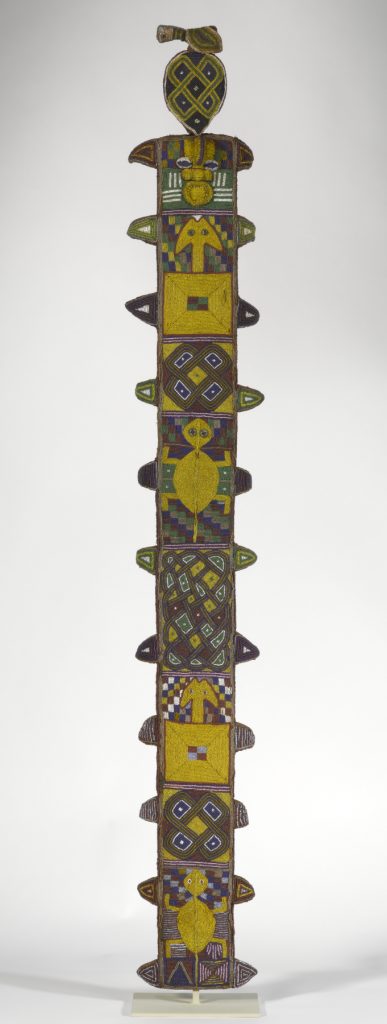
Beaded Sheath for an Orisa Oko Staff
beaded cover for a staff with animal and geometric designs
-
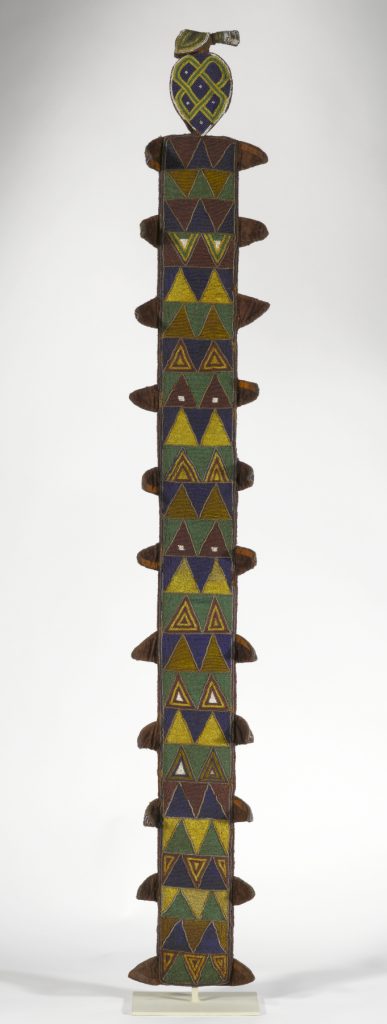
AFRICAN, Beaded Sheath Orisa Oko Staff, 2000_5_2, view B
beaded geometric designs on the sheath of a Yoruban staff