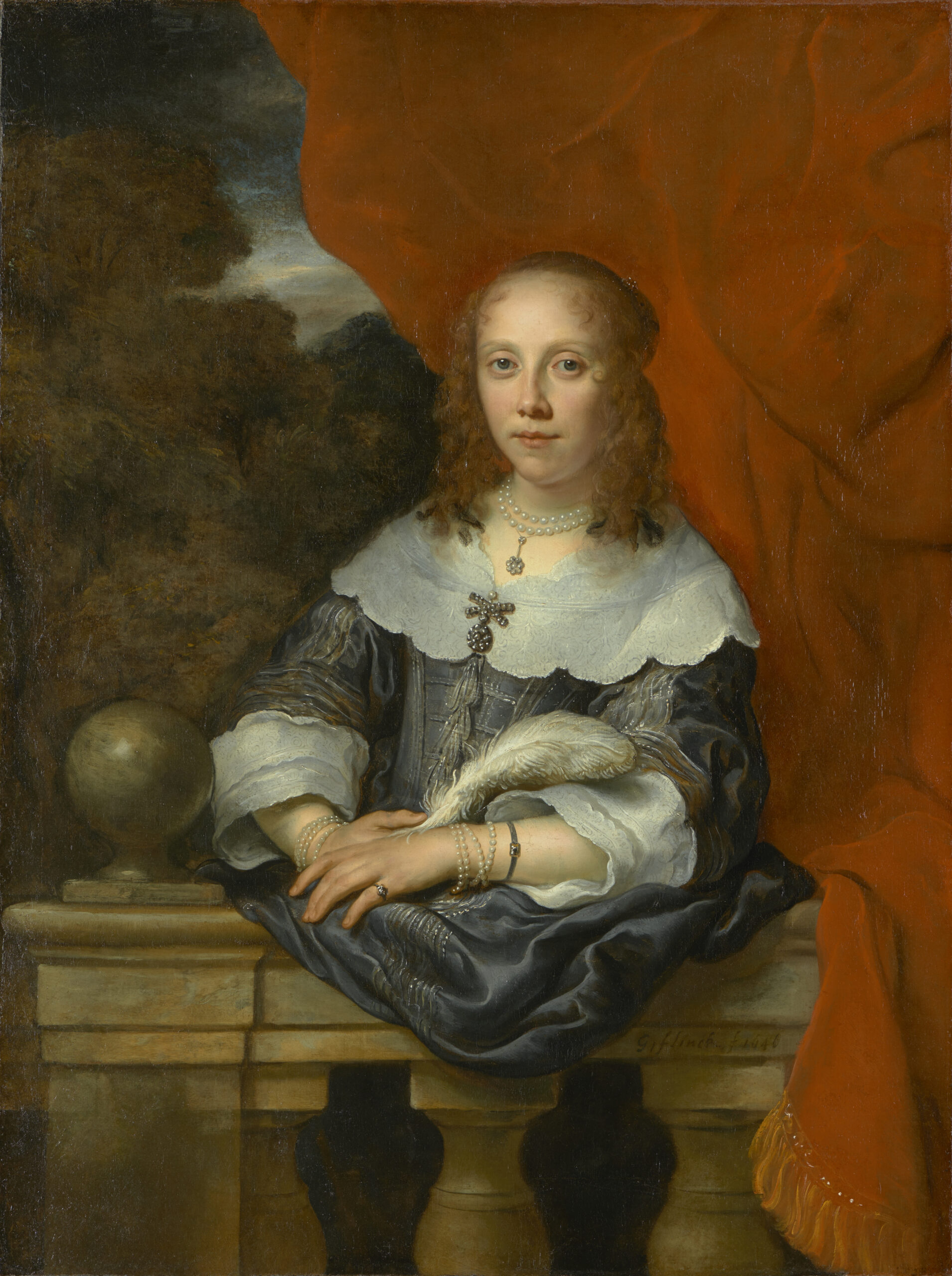
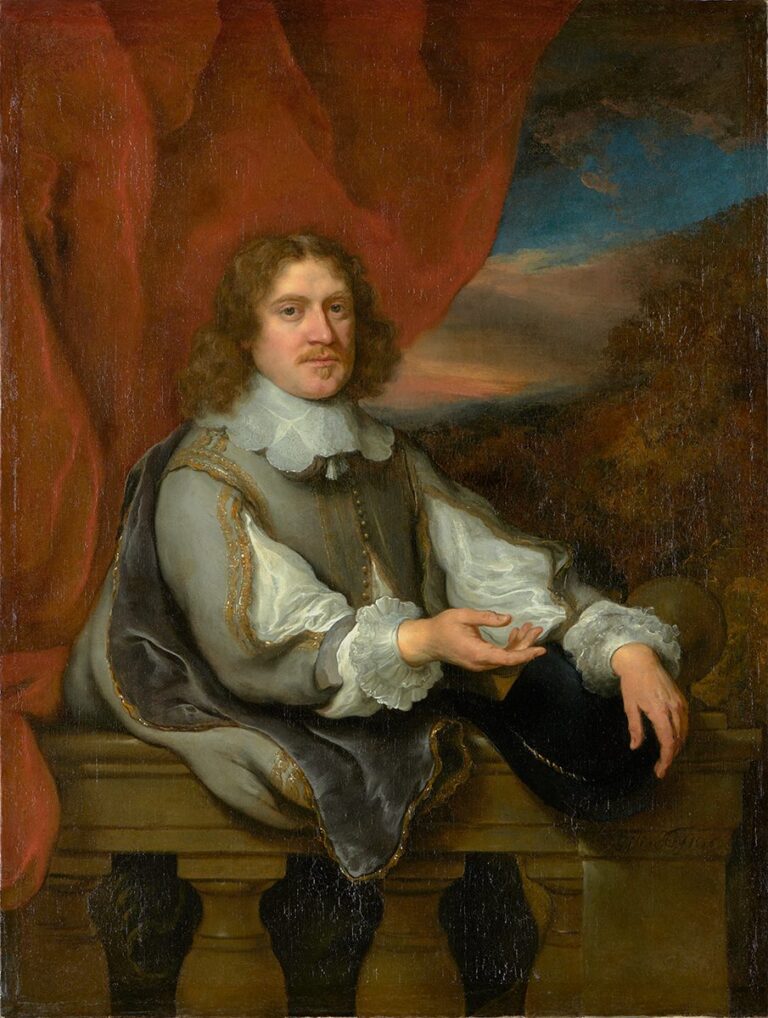
This oil painting is part of a portrait pair that was created when a Dutch couple married in 1646. The pair of portraits was intended to show off their newly combined wealth and power. Portraits like these were a way for the thriving 17th-century Dutch middle class to present a successful image of themselves to the world.
The subject of this portrait, Margaretha van Raephorst, is wearing what would have been the height of fashion when the painting was created. Most Dutch portraits from this time period depicted people dressed in black. Fashion started to become more extravagant and colorful around 1650. The luxurious fabric and delicate lace the woman is wearing indicates her wealth. Her jewelry puts an even greater emphasis on imported luxury. She wears several strands of small pearls on each wrist, a pearl necklace, a pearl-and-gold pendant, a large diamond brooch, and a diamond bracelet and ring. In the companion piece to this painting, Margaretha’s husband (Jan van Hellemont) is shown wearing fine lace and a cape with gold embroidery and a velvet lining. The couple’s ability to have their portraits painted by a well-known artist is also a sign of wealth.
Govaert Flinck was a Dutch Golden Age painter. During the Dutch Golden Age, Dutch trade, science, and art were among the best in the world. Dutch colonization and trade brought wealth and power to the Netherlands. Flinck is known for creating Baroque paintings that include realistic-looking portraits and genre scenes of everyday life. He studied painting under Rembrandt van Rijn, who was also a Dutch Golden Age painter. Their styles were so similar that Flinck’s early paintings were sometimes confused with Rembrandt’s paintings.