Dates of Use: Before 1 million years BCE–still in use today
Source: Natural inorganic pigment from a natural mineral
Chemical Name: Anhydrous iron (III) oxide
Formula: Fe2O3 (plus natural mineral impurities such as silica, calcium silicate, silicon, aluminum, phosphorus, and sulfur)
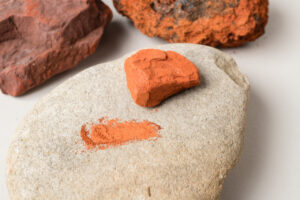
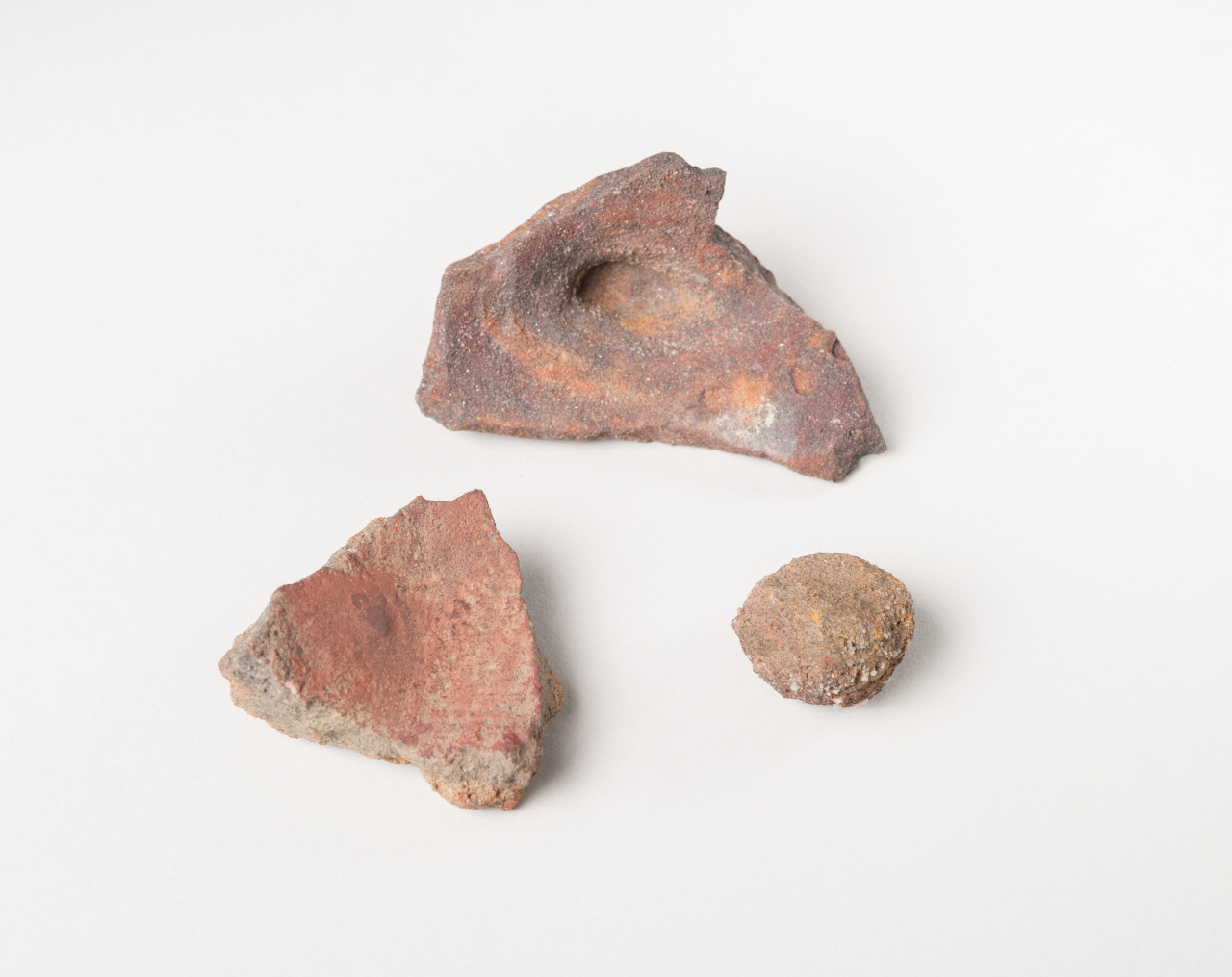
- Red ochre comes from a naturally occurring mineral that is composed mainly of iron oxide. As a natural mineral it can include many impurities such as silica, calcium silicate, silicon, aluminum, phosphorus, and sulfur.
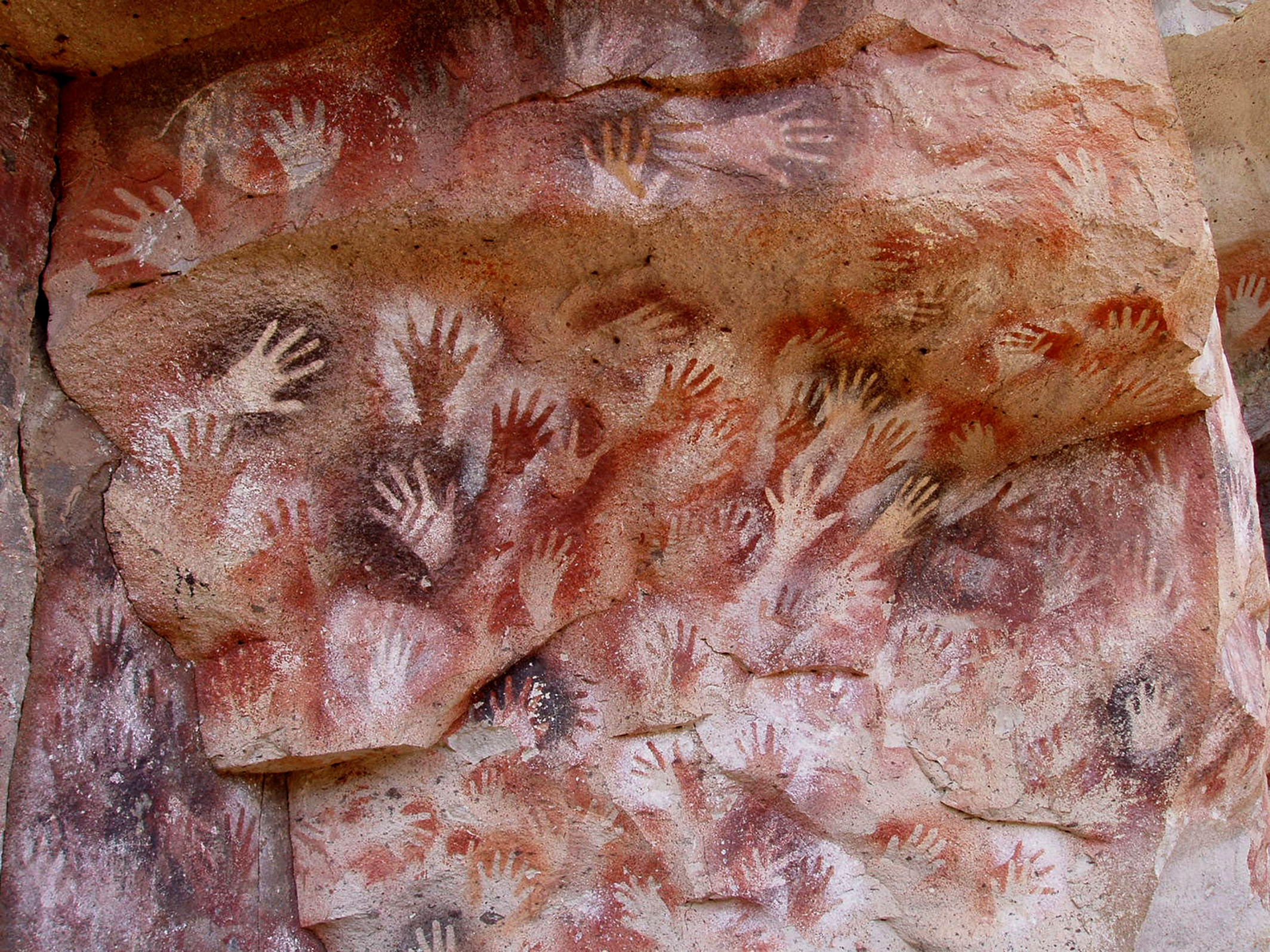
- Red ochre can be found throughout the world in many different red tones and levels of transparency and opacity.
- Many ancient cultures used the pigment in burials. It was sprinkled through graves and also sometimes used to paint the deceased person.
- A common name for red ochre is hematite or “bloodstone.” In ancient Greek the prefix “hem” means blood, and the suffix “-ite” means stone.
- Red ochre is chemically stable and resistant to fading. It was used and valued by almost every culture in every time period. It is still used extensively today.