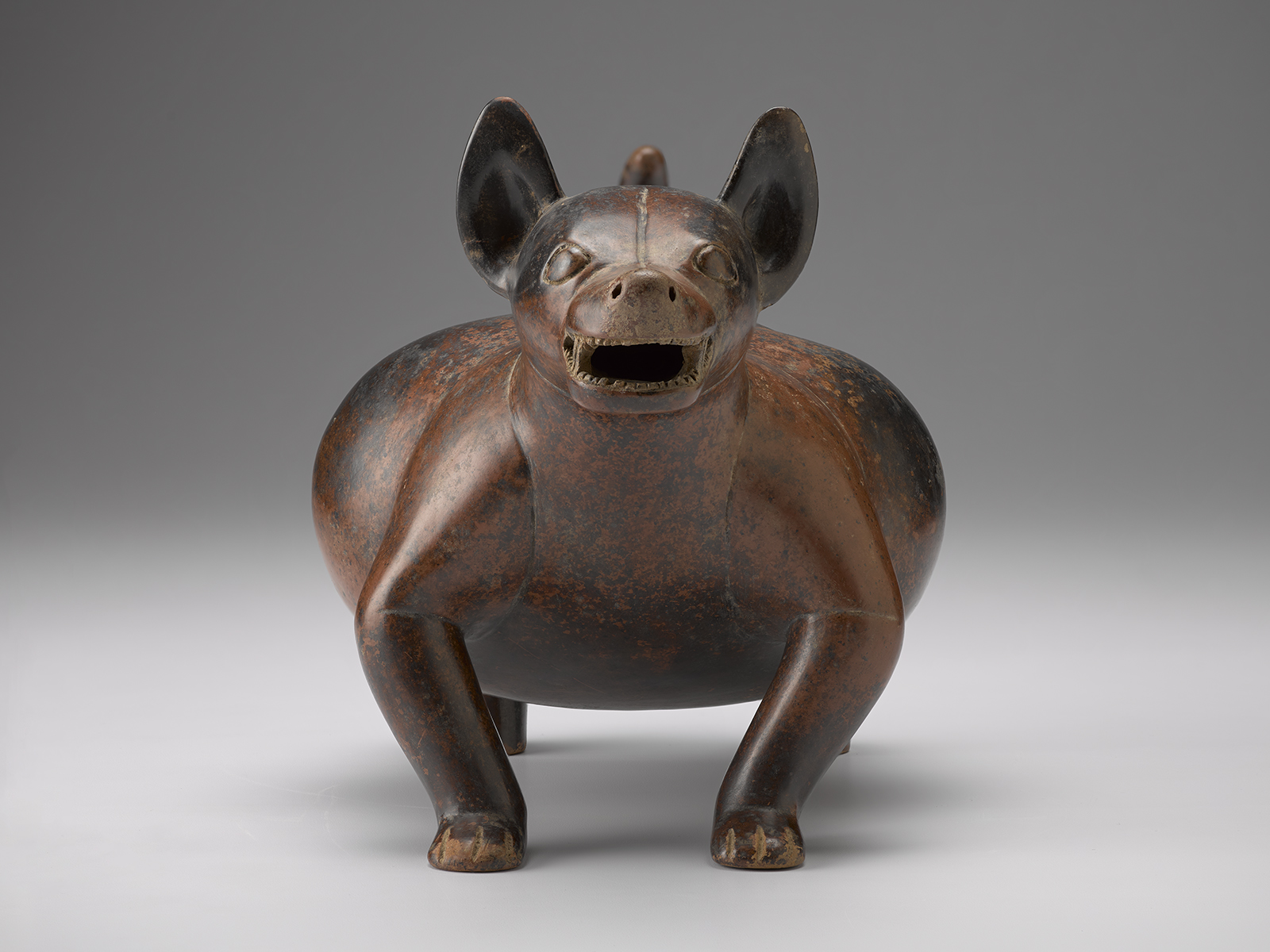
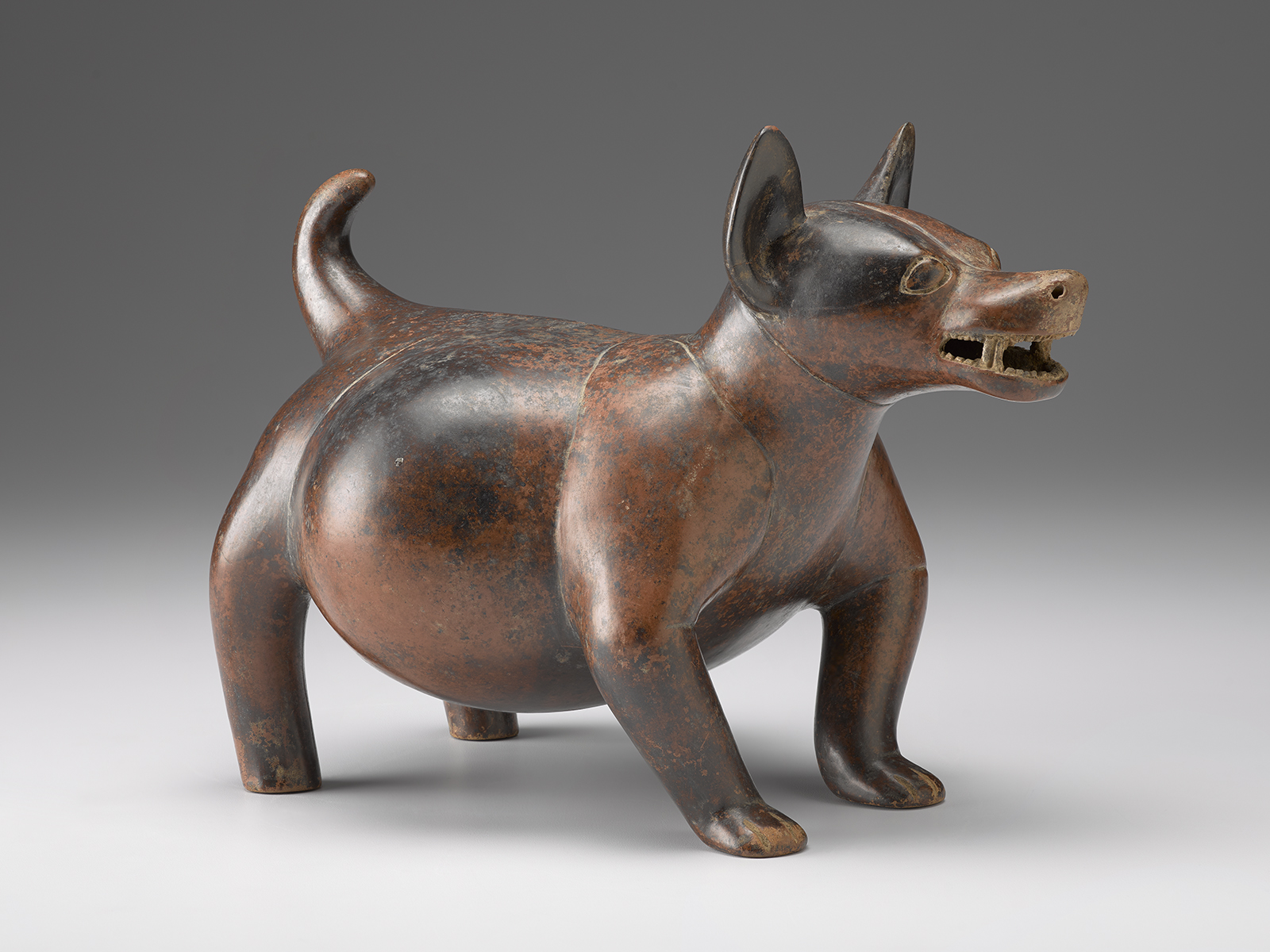
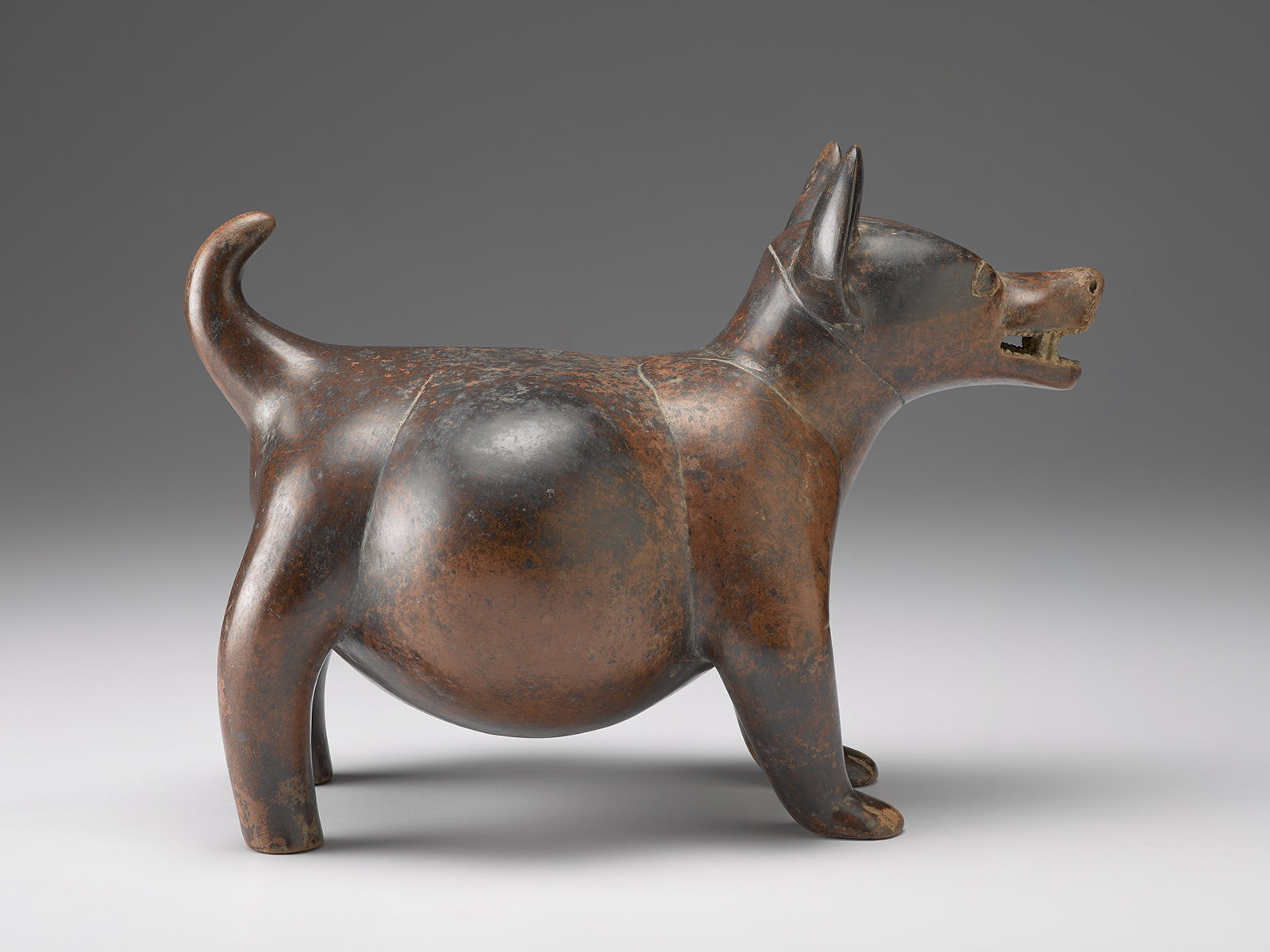
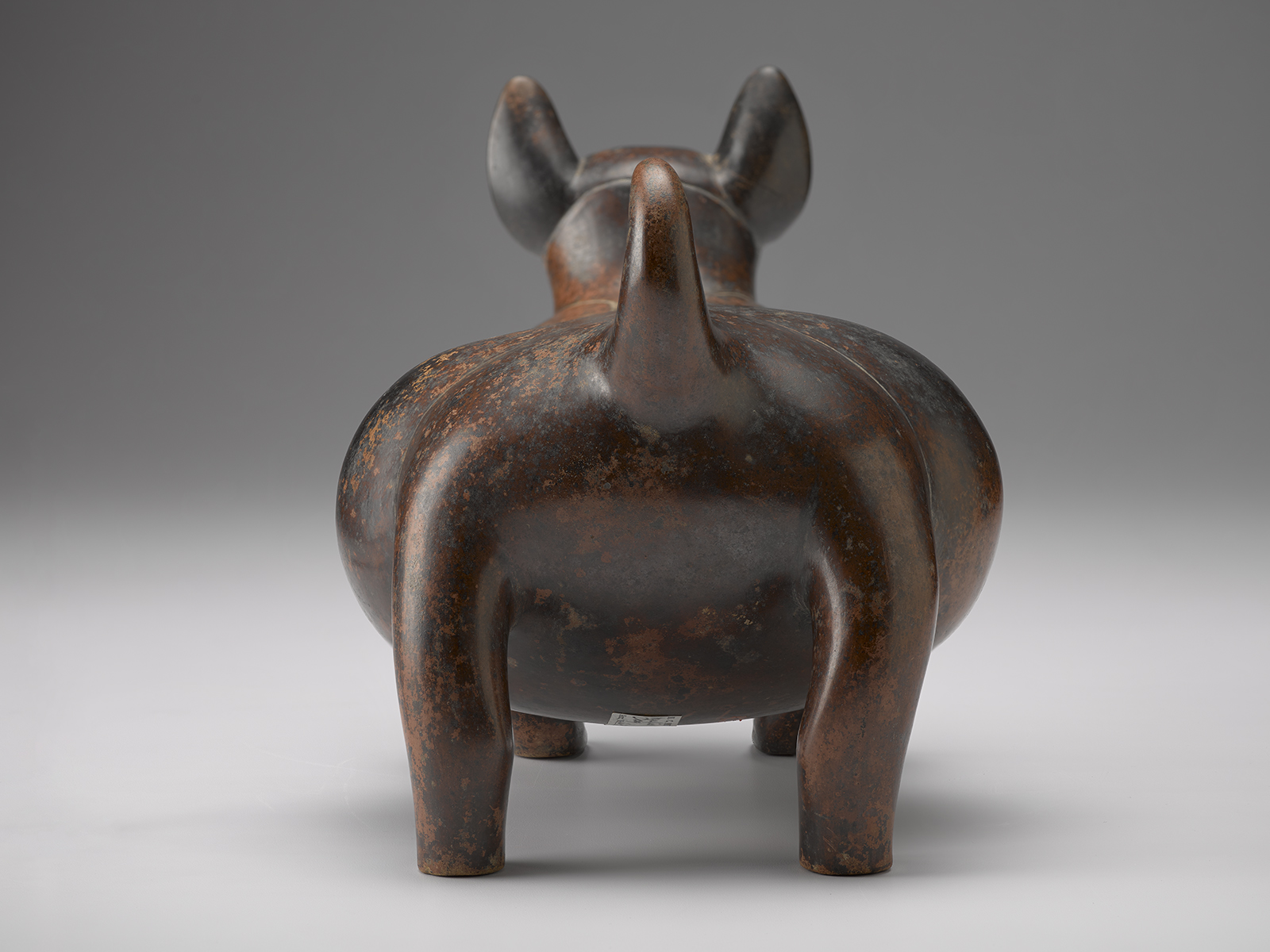
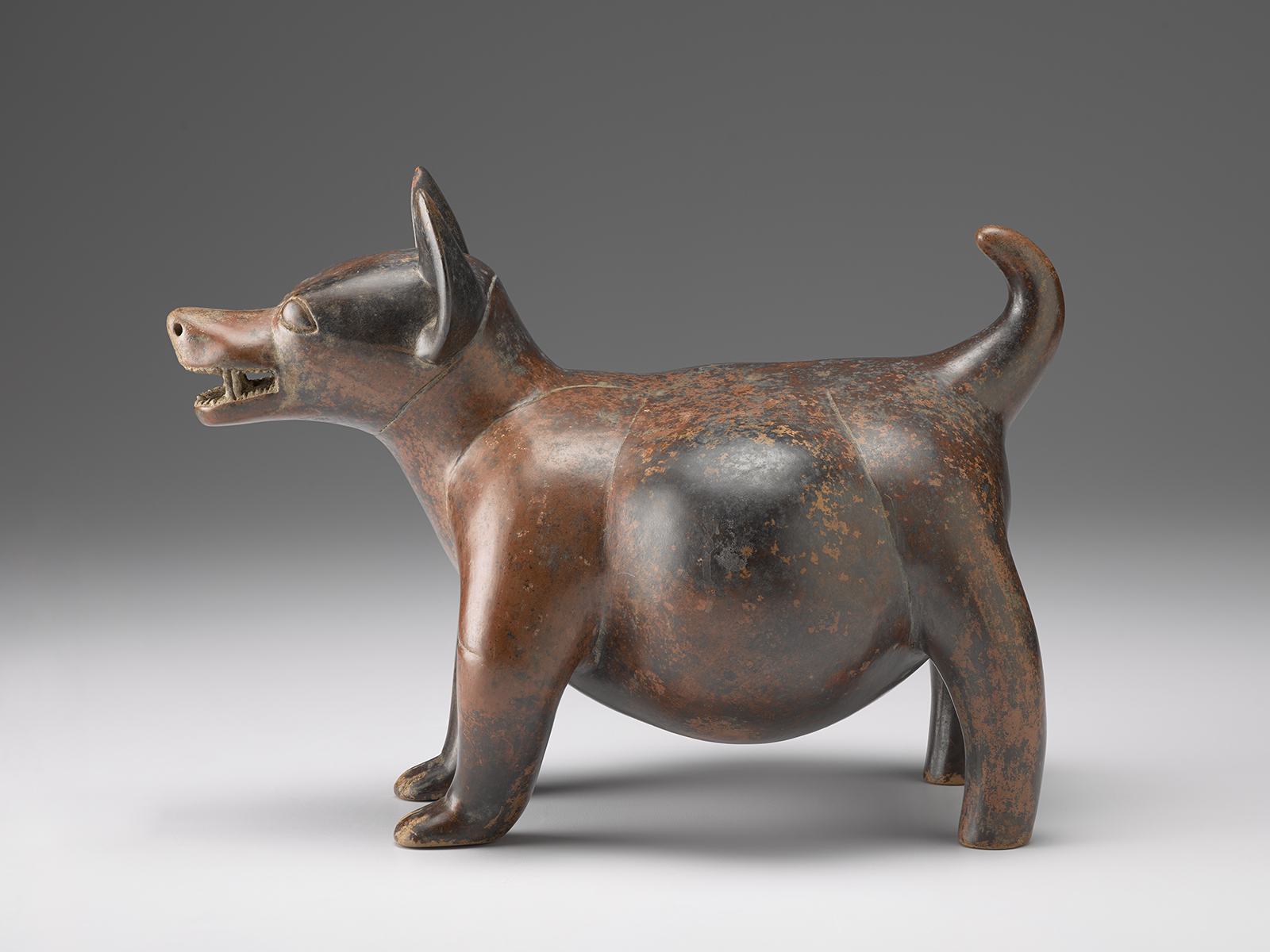
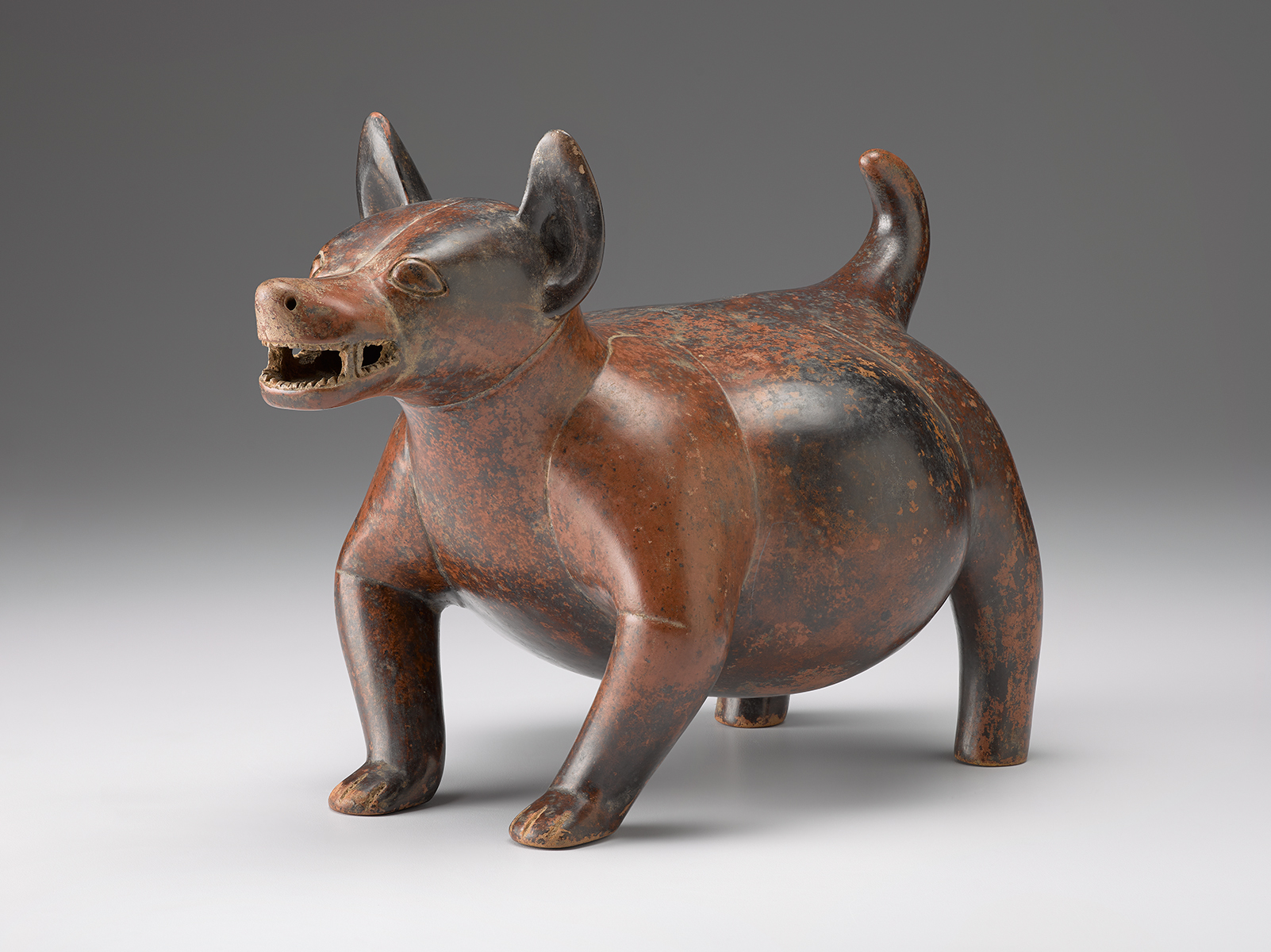
This is a hollow sculpture of a hairless dog, or xoloitzcuintli (pronounced show-low-eats-kweent-lee). This is the animal that is most frequently depicted in Colima art. The vessel itself is zoomorphic, which means it is in the form of an animal. It has a reddish-brown finish, and its body is depicted realistically. It has carved eyes, and its mouth is open and showing the teeth in an aggressive expression. The dog’s neck and tail appear to have been restored, and there is a chip in its front left leg.
In West Mexico, where this dog effigy was found, mourners placed ceramic “guide dogs” in tombs because they were considered proper company for the dead. Mesoamerican societies believed that dogs provided companionship and protection to people in daily life, and in the afterlife they helped guide the souls of the deceased to the underworld. The journey to the underworld included the challenge of crossing a river, and only a dog could help the person’s soul reach the other side.
tags: function, ritual, observation